Yue Cao, Longfei Lai, Qingyuan Bao, Yiru Sheng, Peng Ye, Zhaogang Teng and Yang Zhou
{"title":"含Ar等离子体诱导硫空位的CoS2/ZnIn2S4异质结构增强呋喃唑酮测定电催化活性的策略工程","authors":"Yue Cao, Longfei Lai, Qingyuan Bao, Yiru Sheng, Peng Ye, Zhaogang Teng and Yang Zhou","doi":"10.1039/D5AN00288E","DOIUrl":null,"url":null,"abstract":"<p >In recent years, the overuse and improper disposal of antibiotics have led to their widespread presence in various environmental matrices and biological fluids. Exploring non-noble metal sulfides as electrocatalysts for reliable antibiotic detection holds substantial value but is limited by their inherent low electrochemical activity. Herein, CoS<small><sub>2</sub></small> nanoparticles were first synthesized <em>via</em> a hydrothermal method, and used for the <em>in situ</em> assembly of ZnIn<small><sub>2</sub></small>S<small><sub>4</sub></small> nanosheets. Then, plasma technology was employed for efficient and rapid generation of sulfur vacancies. Detailed studies illustrated the formation of heterojunctions, facilitating electron transfer from the thin, large-area ZnIn<small><sub>2</sub></small>S<small><sub>4</sub></small> to CoS<small><sub>2</sub></small>, which acts as a co-catalyst due to its inherent conductivity and metallicity. The plasma-assisted generation of vacancies resulted in the formation of numerous exposed metal catalytic centers. Also, both the heterojunction and vacancy construction afforded a narrowed energy gap, an upregulated conduction band, and an enhanced carrier density, favoring electron injection during the electro-reduction process. Thus, an electrochemical platform was established using this material as an electrode substrate for furazolidone (Fz) detection, achieving a detection limit of 1.2 nM. The constructed platform was finally applied to evaluate Fz in actual samples of river water and urine, thanks to its good selectivity, high stability, and acceptable repeatability. In addition, <em>in situ</em> Fourier transform infrared technology was also used to monitor the electrocatalytic process. This work paves the way for preparing low-cost non-precious metal sulfides, which can be used as promising candidates for electrocatalysts in antibiotic testing.</p>","PeriodicalId":63,"journal":{"name":"Analyst","volume":" 10","pages":" 2137-2145"},"PeriodicalIF":3.3000,"publicationDate":"2025-04-14","publicationTypes":"Journal Article","fieldsOfStudy":null,"isOpenAccess":false,"openAccessPdf":"","citationCount":"0","resultStr":"{\"title\":\"Strategic engineering of CoS2/ZnIn2S4 heterostructures incorporating Ar plasma-induced sulfur vacancies for potentiating electrocatalytic activity in furazolidone determination†\",\"authors\":\"Yue Cao, Longfei Lai, Qingyuan Bao, Yiru Sheng, Peng Ye, Zhaogang Teng and Yang Zhou\",\"doi\":\"10.1039/D5AN00288E\",\"DOIUrl\":null,\"url\":null,\"abstract\":\"<p >In recent years, the overuse and improper disposal of antibiotics have led to their widespread presence in various environmental matrices and biological fluids. Exploring non-noble metal sulfides as electrocatalysts for reliable antibiotic detection holds substantial value but is limited by their inherent low electrochemical activity. Herein, CoS<small><sub>2</sub></small> nanoparticles were first synthesized <em>via</em> a hydrothermal method, and used for the <em>in situ</em> assembly of ZnIn<small><sub>2</sub></small>S<small><sub>4</sub></small> nanosheets. Then, plasma technology was employed for efficient and rapid generation of sulfur vacancies. Detailed studies illustrated the formation of heterojunctions, facilitating electron transfer from the thin, large-area ZnIn<small><sub>2</sub></small>S<small><sub>4</sub></small> to CoS<small><sub>2</sub></small>, which acts as a co-catalyst due to its inherent conductivity and metallicity. The plasma-assisted generation of vacancies resulted in the formation of numerous exposed metal catalytic centers. Also, both the heterojunction and vacancy construction afforded a narrowed energy gap, an upregulated conduction band, and an enhanced carrier density, favoring electron injection during the electro-reduction process. Thus, an electrochemical platform was established using this material as an electrode substrate for furazolidone (Fz) detection, achieving a detection limit of 1.2 nM. The constructed platform was finally applied to evaluate Fz in actual samples of river water and urine, thanks to its good selectivity, high stability, and acceptable repeatability. In addition, <em>in situ</em> Fourier transform infrared technology was also used to monitor the electrocatalytic process. This work paves the way for preparing low-cost non-precious metal sulfides, which can be used as promising candidates for electrocatalysts in antibiotic testing.</p>\",\"PeriodicalId\":63,\"journal\":{\"name\":\"Analyst\",\"volume\":\" 10\",\"pages\":\" 2137-2145\"},\"PeriodicalIF\":3.3000,\"publicationDate\":\"2025-04-14\",\"publicationTypes\":\"Journal Article\",\"fieldsOfStudy\":null,\"isOpenAccess\":false,\"openAccessPdf\":\"\",\"citationCount\":\"0\",\"resultStr\":null,\"platform\":\"Semanticscholar\",\"paperid\":null,\"PeriodicalName\":\"Analyst\",\"FirstCategoryId\":\"92\",\"ListUrlMain\":\"https://pubs.rsc.org/en/content/articlelanding/2025/an/d5an00288e\",\"RegionNum\":3,\"RegionCategory\":\"化学\",\"ArticlePicture\":[],\"TitleCN\":null,\"AbstractTextCN\":null,\"PMCID\":null,\"EPubDate\":\"\",\"PubModel\":\"\",\"JCR\":\"Q2\",\"JCRName\":\"CHEMISTRY, ANALYTICAL\",\"Score\":null,\"Total\":0}","platform":"Semanticscholar","paperid":null,"PeriodicalName":"Analyst","FirstCategoryId":"92","ListUrlMain":"https://pubs.rsc.org/en/content/articlelanding/2025/an/d5an00288e","RegionNum":3,"RegionCategory":"化学","ArticlePicture":[],"TitleCN":null,"AbstractTextCN":null,"PMCID":null,"EPubDate":"","PubModel":"","JCR":"Q2","JCRName":"CHEMISTRY, ANALYTICAL","Score":null,"Total":0}
Strategic engineering of CoS2/ZnIn2S4 heterostructures incorporating Ar plasma-induced sulfur vacancies for potentiating electrocatalytic activity in furazolidone determination†
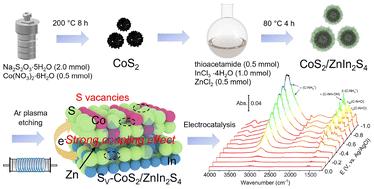
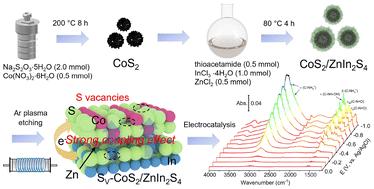
In recent years, the overuse and improper disposal of antibiotics have led to their widespread presence in various environmental matrices and biological fluids. Exploring non-noble metal sulfides as electrocatalysts for reliable antibiotic detection holds substantial value but is limited by their inherent low electrochemical activity. Herein, CoS2 nanoparticles were first synthesized via a hydrothermal method, and used for the in situ assembly of ZnIn2S4 nanosheets. Then, plasma technology was employed for efficient and rapid generation of sulfur vacancies. Detailed studies illustrated the formation of heterojunctions, facilitating electron transfer from the thin, large-area ZnIn2S4 to CoS2, which acts as a co-catalyst due to its inherent conductivity and metallicity. The plasma-assisted generation of vacancies resulted in the formation of numerous exposed metal catalytic centers. Also, both the heterojunction and vacancy construction afforded a narrowed energy gap, an upregulated conduction band, and an enhanced carrier density, favoring electron injection during the electro-reduction process. Thus, an electrochemical platform was established using this material as an electrode substrate for furazolidone (Fz) detection, achieving a detection limit of 1.2 nM. The constructed platform was finally applied to evaluate Fz in actual samples of river water and urine, thanks to its good selectivity, high stability, and acceptable repeatability. In addition, in situ Fourier transform infrared technology was also used to monitor the electrocatalytic process. This work paves the way for preparing low-cost non-precious metal sulfides, which can be used as promising candidates for electrocatalysts in antibiotic testing.




 京公网安备 11010802042870号
京ICP备2023020795号-1
京公网安备 11010802042870号
京ICP备2023020795号-1

 分享
分享
 求助内容:
求助内容: 应助结果提醒方式:
 扫码关注我们
