Lin Zhang , Helin Wang , Xiaohan Liu , Hongbin Zhan , Uwe Schneidewind , Stefan Krause , Menggui Jin , Xing Liang , Yanfeng Liu , Ping Li
{"title":"在地下水位波动下,反硝化作用主导硝酸盐衰减和氧化亚氮流出","authors":"Lin Zhang , Helin Wang , Xiaohan Liu , Hongbin Zhan , Uwe Schneidewind , Stefan Krause , Menggui Jin , Xing Liang , Yanfeng Liu , Ping Li","doi":"10.1016/j.jhazmat.2025.138325","DOIUrl":null,"url":null,"abstract":"<div><div>Agricultural soils in riparian zones near rivers often experience frequent water table fluctuations, which can lead to increased nitrogen losses and greenhouse gas emissions via the nitrogen biogeochemical processes. However, the influence of water table fluctuations on the multiple nitrogen transformation processes that dominate nitrate attenuation and nitrous oxide (N<sub>2</sub>O) effluxes remains poorly understood. In this study, the dynamic changes in depth-dependent nitrate attenuation and soil N<sub>2</sub>O effluxes, and the responses of microbial communities influenced by water table fluctuations were studied using a series of large column experiments. Our results revealed that dissolved oxygen (DO) concentrations at a depth of −10 cm in sand columns with three different grain sizes (fine→medium→coarse) oscillated, producing oxidizing conditions during drainage and reducing conditions during imbibition periods. DO micro-sensors installed in a layered (sand and sandy loam) column as well as in two sandy loam columns with different regimes in induced water table changes all revealed steady hypoxic conditions. The diversity of the microbial community was significantly correlated with total nitrogen, total organic carbon, and nitrate concentrations, as well as potential denitrification rates. The dominant microbial populations related to the <em>nrfA</em> gene were <em>Methanothrix</em> and <em>Sedimentibacte</em>, whereas those related to denitrification (<em>nirK</em>, <em>nirS</em>, and <em>nosZ</em>) were <em>Pseudomonas</em> and <em>Sulfuricaulis</em>. These findings improve our understanding of the effects of water table fluctuations on groundwater nitrate loss in riparian corridors.</div></div>","PeriodicalId":361,"journal":{"name":"Journal of Hazardous Materials","volume":"493 ","pages":"Article 138325"},"PeriodicalIF":10.6000,"publicationDate":"2025-08-05","publicationTypes":"Journal Article","fieldsOfStudy":null,"isOpenAccess":false,"openAccessPdf":"","citationCount":"0","resultStr":"{\"title\":\"Denitrification dominates nitrate attenuation and nitrous oxide effluxes under water table fluctuations\",\"authors\":\"Lin Zhang , Helin Wang , Xiaohan Liu , Hongbin Zhan , Uwe Schneidewind , Stefan Krause , Menggui Jin , Xing Liang , Yanfeng Liu , Ping Li\",\"doi\":\"10.1016/j.jhazmat.2025.138325\",\"DOIUrl\":null,\"url\":null,\"abstract\":\"<div><div>Agricultural soils in riparian zones near rivers often experience frequent water table fluctuations, which can lead to increased nitrogen losses and greenhouse gas emissions via the nitrogen biogeochemical processes. However, the influence of water table fluctuations on the multiple nitrogen transformation processes that dominate nitrate attenuation and nitrous oxide (N<sub>2</sub>O) effluxes remains poorly understood. In this study, the dynamic changes in depth-dependent nitrate attenuation and soil N<sub>2</sub>O effluxes, and the responses of microbial communities influenced by water table fluctuations were studied using a series of large column experiments. Our results revealed that dissolved oxygen (DO) concentrations at a depth of −10 cm in sand columns with three different grain sizes (fine→medium→coarse) oscillated, producing oxidizing conditions during drainage and reducing conditions during imbibition periods. DO micro-sensors installed in a layered (sand and sandy loam) column as well as in two sandy loam columns with different regimes in induced water table changes all revealed steady hypoxic conditions. The diversity of the microbial community was significantly correlated with total nitrogen, total organic carbon, and nitrate concentrations, as well as potential denitrification rates. The dominant microbial populations related to the <em>nrfA</em> gene were <em>Methanothrix</em> and <em>Sedimentibacte</em>, whereas those related to denitrification (<em>nirK</em>, <em>nirS</em>, and <em>nosZ</em>) were <em>Pseudomonas</em> and <em>Sulfuricaulis</em>. These findings improve our understanding of the effects of water table fluctuations on groundwater nitrate loss in riparian corridors.</div></div>\",\"PeriodicalId\":361,\"journal\":{\"name\":\"Journal of Hazardous Materials\",\"volume\":\"493 \",\"pages\":\"Article 138325\"},\"PeriodicalIF\":10.6000,\"publicationDate\":\"2025-08-05\",\"publicationTypes\":\"Journal Article\",\"fieldsOfStudy\":null,\"isOpenAccess\":false,\"openAccessPdf\":\"\",\"citationCount\":\"0\",\"resultStr\":null,\"platform\":\"Semanticscholar\",\"paperid\":null,\"PeriodicalName\":\"Journal of Hazardous Materials\",\"FirstCategoryId\":\"93\",\"ListUrlMain\":\"https://www.sciencedirect.com/science/article/pii/S0304389425012403\",\"RegionNum\":1,\"RegionCategory\":\"环境科学与生态学\",\"ArticlePicture\":[],\"TitleCN\":null,\"AbstractTextCN\":null,\"PMCID\":null,\"EPubDate\":\"2025/4/17 0:00:00\",\"PubModel\":\"Epub\",\"JCR\":\"Q1\",\"JCRName\":\"ENGINEERING, ENVIRONMENTAL\",\"Score\":null,\"Total\":0}","platform":"Semanticscholar","paperid":null,"PeriodicalName":"Journal of Hazardous Materials","FirstCategoryId":"93","ListUrlMain":"https://www.sciencedirect.com/science/article/pii/S0304389425012403","RegionNum":1,"RegionCategory":"环境科学与生态学","ArticlePicture":[],"TitleCN":null,"AbstractTextCN":null,"PMCID":null,"EPubDate":"2025/4/17 0:00:00","PubModel":"Epub","JCR":"Q1","JCRName":"ENGINEERING, ENVIRONMENTAL","Score":null,"Total":0}
Denitrification dominates nitrate attenuation and nitrous oxide effluxes under water table fluctuations
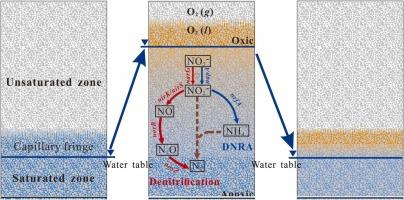
Agricultural soils in riparian zones near rivers often experience frequent water table fluctuations, which can lead to increased nitrogen losses and greenhouse gas emissions via the nitrogen biogeochemical processes. However, the influence of water table fluctuations on the multiple nitrogen transformation processes that dominate nitrate attenuation and nitrous oxide (N2O) effluxes remains poorly understood. In this study, the dynamic changes in depth-dependent nitrate attenuation and soil N2O effluxes, and the responses of microbial communities influenced by water table fluctuations were studied using a series of large column experiments. Our results revealed that dissolved oxygen (DO) concentrations at a depth of −10 cm in sand columns with three different grain sizes (fine→medium→coarse) oscillated, producing oxidizing conditions during drainage and reducing conditions during imbibition periods. DO micro-sensors installed in a layered (sand and sandy loam) column as well as in two sandy loam columns with different regimes in induced water table changes all revealed steady hypoxic conditions. The diversity of the microbial community was significantly correlated with total nitrogen, total organic carbon, and nitrate concentrations, as well as potential denitrification rates. The dominant microbial populations related to the nrfA gene were Methanothrix and Sedimentibacte, whereas those related to denitrification (nirK, nirS, and nosZ) were Pseudomonas and Sulfuricaulis. These findings improve our understanding of the effects of water table fluctuations on groundwater nitrate loss in riparian corridors.
期刊介绍:
The Journal of Hazardous Materials serves as a global platform for promoting cutting-edge research in the field of Environmental Science and Engineering. Our publication features a wide range of articles, including full-length research papers, review articles, and perspectives, with the aim of enhancing our understanding of the dangers and risks associated with various materials concerning public health and the environment. It is important to note that the term "environmental contaminants" refers specifically to substances that pose hazardous effects through contamination, while excluding those that do not have such impacts on the environment or human health. Moreover, we emphasize the distinction between wastes and hazardous materials in order to provide further clarity on the scope of the journal. We have a keen interest in exploring specific compounds and microbial agents that have adverse effects on the environment.




 京公网安备 11010802042870号
京ICP备2023020795号-1
京公网安备 11010802042870号
京ICP备2023020795号-1

 分享
分享
 求助内容:
求助内容: 应助结果提醒方式:
 扫码关注我们
