Pinxi Zhou , Mengzhu Wang , Shane DuBay , Yiwei Cao , Shangmingyu Zhang , Jiayu Zhang , Zhengrui Hu , Zhixiong Yang , Yibo Wang , Xiaoying Zhao , Lin Sun , Jiachen Dang , Xingcheng He , Yongjie Wu
{"title":"鸟类肠道中广泛存在的微塑料和纳米塑料污染:来自中国成都的案例研究","authors":"Pinxi Zhou , Mengzhu Wang , Shane DuBay , Yiwei Cao , Shangmingyu Zhang , Jiayu Zhang , Zhengrui Hu , Zhixiong Yang , Yibo Wang , Xiaoying Zhao , Lin Sun , Jiachen Dang , Xingcheng He , Yongjie Wu","doi":"10.1016/j.jhazmat.2025.138369","DOIUrl":null,"url":null,"abstract":"<div><div>Widespread pollution of microplastics (MPs) and nanoplastics (NPs) poses significant threats to organisms and human health. However, the extent of MPs and NPs contamination and their ecological risks to wildlife remain underexplored. In this study, we used Laser Direct Infrared (LDIR) spectroscopy to identify and characterize MPs in the intestinal contents of 49 bird species, and Pyrolysis-Gas Chromatography/Mass Spectrometry (Py-GC/MS) to identify NPs in the intestinal contents of five species. LDIR analysis indicated that chlorinated polyethylene (CPE) and polyvinyl chloride (PVC) were the most prevalent plastics among 32 identified types. MP particle sizes below 100 μm were most abundant, and MPs were predominantly in the form of fragments or pellets. We also found that birds with narrower dietary niche breadth had more MPs. Herbivorous and carnivorous birds had higher MP abundance than omnivorous species, which suggests the capacity of MP accumulation across diet categories. The Polymer Hazard Index (PHI) for MPs revealed that most species sampled were classified at hazard levels III or IV. Py-GC/MS identified four types of NPs in bird intestines, including nylon 66 (PA66), PVC, polyethylene (PE), and polypropylene (PP). This study advances our knowledge of plastic pollution ingested by terrestrial organisms and the risks associated with increased plastic pollution in the environment.</div></div>","PeriodicalId":361,"journal":{"name":"Journal of Hazardous Materials","volume":"493 ","pages":"Article 138369"},"PeriodicalIF":10.6000,"publicationDate":"2025-08-05","publicationTypes":"Journal Article","fieldsOfStudy":null,"isOpenAccess":false,"openAccessPdf":"","citationCount":"0","resultStr":"{\"title\":\"Widespread microplastic and nanoplastic contamination in the intestines of birds: A case study from Chengdu, China\",\"authors\":\"Pinxi Zhou , Mengzhu Wang , Shane DuBay , Yiwei Cao , Shangmingyu Zhang , Jiayu Zhang , Zhengrui Hu , Zhixiong Yang , Yibo Wang , Xiaoying Zhao , Lin Sun , Jiachen Dang , Xingcheng He , Yongjie Wu\",\"doi\":\"10.1016/j.jhazmat.2025.138369\",\"DOIUrl\":null,\"url\":null,\"abstract\":\"<div><div>Widespread pollution of microplastics (MPs) and nanoplastics (NPs) poses significant threats to organisms and human health. However, the extent of MPs and NPs contamination and their ecological risks to wildlife remain underexplored. In this study, we used Laser Direct Infrared (LDIR) spectroscopy to identify and characterize MPs in the intestinal contents of 49 bird species, and Pyrolysis-Gas Chromatography/Mass Spectrometry (Py-GC/MS) to identify NPs in the intestinal contents of five species. LDIR analysis indicated that chlorinated polyethylene (CPE) and polyvinyl chloride (PVC) were the most prevalent plastics among 32 identified types. MP particle sizes below 100 μm were most abundant, and MPs were predominantly in the form of fragments or pellets. We also found that birds with narrower dietary niche breadth had more MPs. Herbivorous and carnivorous birds had higher MP abundance than omnivorous species, which suggests the capacity of MP accumulation across diet categories. The Polymer Hazard Index (PHI) for MPs revealed that most species sampled were classified at hazard levels III or IV. Py-GC/MS identified four types of NPs in bird intestines, including nylon 66 (PA66), PVC, polyethylene (PE), and polypropylene (PP). This study advances our knowledge of plastic pollution ingested by terrestrial organisms and the risks associated with increased plastic pollution in the environment.</div></div>\",\"PeriodicalId\":361,\"journal\":{\"name\":\"Journal of Hazardous Materials\",\"volume\":\"493 \",\"pages\":\"Article 138369\"},\"PeriodicalIF\":10.6000,\"publicationDate\":\"2025-08-05\",\"publicationTypes\":\"Journal Article\",\"fieldsOfStudy\":null,\"isOpenAccess\":false,\"openAccessPdf\":\"\",\"citationCount\":\"0\",\"resultStr\":null,\"platform\":\"Semanticscholar\",\"paperid\":null,\"PeriodicalName\":\"Journal of Hazardous Materials\",\"FirstCategoryId\":\"93\",\"ListUrlMain\":\"https://www.sciencedirect.com/science/article/pii/S0304389425012841\",\"RegionNum\":1,\"RegionCategory\":\"环境科学与生态学\",\"ArticlePicture\":[],\"TitleCN\":null,\"AbstractTextCN\":null,\"PMCID\":null,\"EPubDate\":\"2025/4/22 0:00:00\",\"PubModel\":\"Epub\",\"JCR\":\"Q1\",\"JCRName\":\"ENGINEERING, ENVIRONMENTAL\",\"Score\":null,\"Total\":0}","platform":"Semanticscholar","paperid":null,"PeriodicalName":"Journal of Hazardous Materials","FirstCategoryId":"93","ListUrlMain":"https://www.sciencedirect.com/science/article/pii/S0304389425012841","RegionNum":1,"RegionCategory":"环境科学与生态学","ArticlePicture":[],"TitleCN":null,"AbstractTextCN":null,"PMCID":null,"EPubDate":"2025/4/22 0:00:00","PubModel":"Epub","JCR":"Q1","JCRName":"ENGINEERING, ENVIRONMENTAL","Score":null,"Total":0}
Widespread microplastic and nanoplastic contamination in the intestines of birds: A case study from Chengdu, China
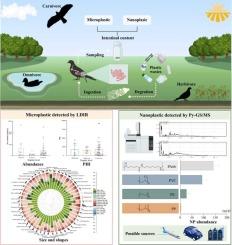
Widespread pollution of microplastics (MPs) and nanoplastics (NPs) poses significant threats to organisms and human health. However, the extent of MPs and NPs contamination and their ecological risks to wildlife remain underexplored. In this study, we used Laser Direct Infrared (LDIR) spectroscopy to identify and characterize MPs in the intestinal contents of 49 bird species, and Pyrolysis-Gas Chromatography/Mass Spectrometry (Py-GC/MS) to identify NPs in the intestinal contents of five species. LDIR analysis indicated that chlorinated polyethylene (CPE) and polyvinyl chloride (PVC) were the most prevalent plastics among 32 identified types. MP particle sizes below 100 μm were most abundant, and MPs were predominantly in the form of fragments or pellets. We also found that birds with narrower dietary niche breadth had more MPs. Herbivorous and carnivorous birds had higher MP abundance than omnivorous species, which suggests the capacity of MP accumulation across diet categories. The Polymer Hazard Index (PHI) for MPs revealed that most species sampled were classified at hazard levels III or IV. Py-GC/MS identified four types of NPs in bird intestines, including nylon 66 (PA66), PVC, polyethylene (PE), and polypropylene (PP). This study advances our knowledge of plastic pollution ingested by terrestrial organisms and the risks associated with increased plastic pollution in the environment.
期刊介绍:
The Journal of Hazardous Materials serves as a global platform for promoting cutting-edge research in the field of Environmental Science and Engineering. Our publication features a wide range of articles, including full-length research papers, review articles, and perspectives, with the aim of enhancing our understanding of the dangers and risks associated with various materials concerning public health and the environment. It is important to note that the term "environmental contaminants" refers specifically to substances that pose hazardous effects through contamination, while excluding those that do not have such impacts on the environment or human health. Moreover, we emphasize the distinction between wastes and hazardous materials in order to provide further clarity on the scope of the journal. We have a keen interest in exploring specific compounds and microbial agents that have adverse effects on the environment.




 京公网安备 11010802042870号
京ICP备2023020795号-1
京公网安备 11010802042870号
京ICP备2023020795号-1

 分享
分享
 求助内容:
求助内容: 应助结果提醒方式:
 扫码关注我们
