Hyunki Cho , Si-Eun Sung , Hyunsoo Lim , Seonyong Chung , Young Jun Kim , Heung-Bin Lim , Youngsam Kim
{"title":"香烟滤嘴衍生微塑料在大水蚤中的毒理学评价","authors":"Hyunki Cho , Si-Eun Sung , Hyunsoo Lim , Seonyong Chung , Young Jun Kim , Heung-Bin Lim , Youngsam Kim","doi":"10.1016/j.jhazmat.2025.138368","DOIUrl":null,"url":null,"abstract":"<div><div>Cigarette filters are the most common form of litter worldwide and pose significant ecological risks because they degrade into microfibers and microplastics in aquatic environments. While previous studies have focused on the acute toxicity of cigarette leachate, the long-term ecological consequences of microplastic release from cigarette filters remain largely unexplored. This study evaluated the toxicity of cigarette filter-derived microplastics, including non-smoked cellulose acetate filters (CAF), smoked cigarette filters (GSF), on <em>Daphnia magna</em>, as well as leachate from smoked filter (LSF) for comparison. Imaging analysis confirmed that <em>D. magna</em> ingested cigarette filter-derived microplastics, which acted as carriers, gradually releasing harmful substances within organisms, a phenomenon consistent with the Trojan horse effect. Acute toxicity tests revealed similar 48-hour EC<sub>50</sub> values (∼50 mg/L) for both GSF and LSF; however, GSF induced more pronounced long-term toxic effects. Chronic exposure to GSF significantly impairs reproduction, delays the timing of the first brood, reduces offspring size, and disrupts ecdysteroid-regulated genes. These findings indicate that cigarette filters are a persistent source of chemical pollution, threatening aquatic ecosystems. Specifically, microplastics from discarded cigarette filters act as Trojan horses, continuously releasing toxic chemicals and transporting hydrophobic contaminants, amplifying their environmental impact.</div></div>","PeriodicalId":361,"journal":{"name":"Journal of Hazardous Materials","volume":"493 ","pages":"Article 138368"},"PeriodicalIF":11.3000,"publicationDate":"2025-08-05","publicationTypes":"Journal Article","fieldsOfStudy":null,"isOpenAccess":false,"openAccessPdf":"","citationCount":"0","resultStr":"{\"title\":\"Toxicological assessment of cigarette filter-derived microplastics in Daphnia magna\",\"authors\":\"Hyunki Cho , Si-Eun Sung , Hyunsoo Lim , Seonyong Chung , Young Jun Kim , Heung-Bin Lim , Youngsam Kim\",\"doi\":\"10.1016/j.jhazmat.2025.138368\",\"DOIUrl\":null,\"url\":null,\"abstract\":\"<div><div>Cigarette filters are the most common form of litter worldwide and pose significant ecological risks because they degrade into microfibers and microplastics in aquatic environments. While previous studies have focused on the acute toxicity of cigarette leachate, the long-term ecological consequences of microplastic release from cigarette filters remain largely unexplored. This study evaluated the toxicity of cigarette filter-derived microplastics, including non-smoked cellulose acetate filters (CAF), smoked cigarette filters (GSF), on <em>Daphnia magna</em>, as well as leachate from smoked filter (LSF) for comparison. Imaging analysis confirmed that <em>D. magna</em> ingested cigarette filter-derived microplastics, which acted as carriers, gradually releasing harmful substances within organisms, a phenomenon consistent with the Trojan horse effect. Acute toxicity tests revealed similar 48-hour EC<sub>50</sub> values (∼50 mg/L) for both GSF and LSF; however, GSF induced more pronounced long-term toxic effects. Chronic exposure to GSF significantly impairs reproduction, delays the timing of the first brood, reduces offspring size, and disrupts ecdysteroid-regulated genes. These findings indicate that cigarette filters are a persistent source of chemical pollution, threatening aquatic ecosystems. Specifically, microplastics from discarded cigarette filters act as Trojan horses, continuously releasing toxic chemicals and transporting hydrophobic contaminants, amplifying their environmental impact.</div></div>\",\"PeriodicalId\":361,\"journal\":{\"name\":\"Journal of Hazardous Materials\",\"volume\":\"493 \",\"pages\":\"Article 138368\"},\"PeriodicalIF\":11.3000,\"publicationDate\":\"2025-08-05\",\"publicationTypes\":\"Journal Article\",\"fieldsOfStudy\":null,\"isOpenAccess\":false,\"openAccessPdf\":\"\",\"citationCount\":\"0\",\"resultStr\":null,\"platform\":\"Semanticscholar\",\"paperid\":null,\"PeriodicalName\":\"Journal of Hazardous Materials\",\"FirstCategoryId\":\"93\",\"ListUrlMain\":\"https://www.sciencedirect.com/science/article/pii/S030438942501283X\",\"RegionNum\":1,\"RegionCategory\":\"环境科学与生态学\",\"ArticlePicture\":[],\"TitleCN\":null,\"AbstractTextCN\":null,\"PMCID\":null,\"EPubDate\":\"2025/4/21 0:00:00\",\"PubModel\":\"Epub\",\"JCR\":\"Q1\",\"JCRName\":\"ENGINEERING, ENVIRONMENTAL\",\"Score\":null,\"Total\":0}","platform":"Semanticscholar","paperid":null,"PeriodicalName":"Journal of Hazardous Materials","FirstCategoryId":"93","ListUrlMain":"https://www.sciencedirect.com/science/article/pii/S030438942501283X","RegionNum":1,"RegionCategory":"环境科学与生态学","ArticlePicture":[],"TitleCN":null,"AbstractTextCN":null,"PMCID":null,"EPubDate":"2025/4/21 0:00:00","PubModel":"Epub","JCR":"Q1","JCRName":"ENGINEERING, ENVIRONMENTAL","Score":null,"Total":0}
Toxicological assessment of cigarette filter-derived microplastics in Daphnia magna
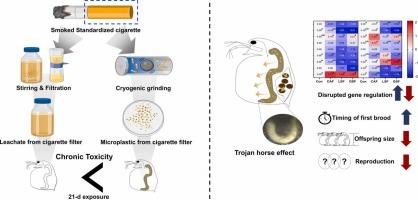
Cigarette filters are the most common form of litter worldwide and pose significant ecological risks because they degrade into microfibers and microplastics in aquatic environments. While previous studies have focused on the acute toxicity of cigarette leachate, the long-term ecological consequences of microplastic release from cigarette filters remain largely unexplored. This study evaluated the toxicity of cigarette filter-derived microplastics, including non-smoked cellulose acetate filters (CAF), smoked cigarette filters (GSF), on Daphnia magna, as well as leachate from smoked filter (LSF) for comparison. Imaging analysis confirmed that D. magna ingested cigarette filter-derived microplastics, which acted as carriers, gradually releasing harmful substances within organisms, a phenomenon consistent with the Trojan horse effect. Acute toxicity tests revealed similar 48-hour EC50 values (∼50 mg/L) for both GSF and LSF; however, GSF induced more pronounced long-term toxic effects. Chronic exposure to GSF significantly impairs reproduction, delays the timing of the first brood, reduces offspring size, and disrupts ecdysteroid-regulated genes. These findings indicate that cigarette filters are a persistent source of chemical pollution, threatening aquatic ecosystems. Specifically, microplastics from discarded cigarette filters act as Trojan horses, continuously releasing toxic chemicals and transporting hydrophobic contaminants, amplifying their environmental impact.
期刊介绍:
The Journal of Hazardous Materials serves as a global platform for promoting cutting-edge research in the field of Environmental Science and Engineering. Our publication features a wide range of articles, including full-length research papers, review articles, and perspectives, with the aim of enhancing our understanding of the dangers and risks associated with various materials concerning public health and the environment. It is important to note that the term "environmental contaminants" refers specifically to substances that pose hazardous effects through contamination, while excluding those that do not have such impacts on the environment or human health. Moreover, we emphasize the distinction between wastes and hazardous materials in order to provide further clarity on the scope of the journal. We have a keen interest in exploring specific compounds and microbial agents that have adverse effects on the environment.




 京公网安备 11010802042870号
京ICP备2023020795号-1
京公网安备 11010802042870号
京ICP备2023020795号-1

 分享
分享
 求助内容:
求助内容: 应助结果提醒方式:
 扫码关注我们
