Joneclei Alves Barreto , Matheus Victor Maso Lacôrte e Silva , Danieli Canaver Marin , Michel Brienzo , Ana Paula Jacobus , Jonas Contiero , Jeferson Gross
{"title":"利用EasyGuide CRISPR系统设计大肠杆菌在蔗糖上生长的自适应等位基因","authors":"Joneclei Alves Barreto , Matheus Victor Maso Lacôrte e Silva , Danieli Canaver Marin , Michel Brienzo , Ana Paula Jacobus , Jonas Contiero , Jeferson Gross","doi":"10.1016/j.jbiotec.2025.04.016","DOIUrl":null,"url":null,"abstract":"<div><div>Adaptive Laboratory Evolution (ALE) is a powerful approach for mining genetic data to engineer industrial microorganisms. This evolution-informed design requires robust genetic tools to incorporate the discovered alleles into target strains. Here, we introduce the EasyGuide CRISPR, a five-plasmid platform that exploits <em>E. coli</em>’s natural recombination system to assemble gRNA plasmids from overlapping PCR fragments. The production of gRNAs and donor DNA is further facilitated by using recombination cassettes generated through PCR with 40–60-mer oligos. With the new CRISPR toolkit, we constructed 22 gene edits in <em>E. coli</em> DH5α, most of which corresponded to alleles mapped in <em>E. coli</em> DH5α and E2348/69 ALE populations selected for sucrose propagation. For DH5α ALE, sucrose consumption was supported by the <em>cscBKA</em> operon expression from a high-copy plasmid. During ALE, plasmid integration into the chromosome, or its copy number reduction due to the <em>pcnB</em> deletion, conferred a 30–35 % fitness gain, as demonstrated by CRISPR-engineered strains. A ∼5 % advantage was also associated with a ∼40.4 kb deletion involving <em>fli</em> operons for flagella assembly. In E2348/69 ALE, inactivation of the <em>hfl</em> system suggested selection pressures for maintaining λ-prophage dormancy (lysogeny). We further enhanced our CRISPR toolkit using yeast for in vivo assembly of donors and expression cassettes, enabling the establishment of polyhydroxybutyrate synthesis from sucrose. Overall, our study highlights the importance of combining ALE with streamlined CRISPR-mediated allele editing to advance microbial production using cost-effective carbon sources.</div></div>","PeriodicalId":15153,"journal":{"name":"Journal of biotechnology","volume":"403 ","pages":"Pages 126-139"},"PeriodicalIF":4.0000,"publicationDate":"2025-07-01","publicationTypes":"Journal Article","fieldsOfStudy":null,"isOpenAccess":false,"openAccessPdf":"","citationCount":"0","resultStr":"{\"title\":\"Engineering adaptive alleles for Escherichia coli growth on sucrose using the EasyGuide CRISPR system\",\"authors\":\"Joneclei Alves Barreto , Matheus Victor Maso Lacôrte e Silva , Danieli Canaver Marin , Michel Brienzo , Ana Paula Jacobus , Jonas Contiero , Jeferson Gross\",\"doi\":\"10.1016/j.jbiotec.2025.04.016\",\"DOIUrl\":null,\"url\":null,\"abstract\":\"<div><div>Adaptive Laboratory Evolution (ALE) is a powerful approach for mining genetic data to engineer industrial microorganisms. This evolution-informed design requires robust genetic tools to incorporate the discovered alleles into target strains. Here, we introduce the EasyGuide CRISPR, a five-plasmid platform that exploits <em>E. coli</em>’s natural recombination system to assemble gRNA plasmids from overlapping PCR fragments. The production of gRNAs and donor DNA is further facilitated by using recombination cassettes generated through PCR with 40–60-mer oligos. With the new CRISPR toolkit, we constructed 22 gene edits in <em>E. coli</em> DH5α, most of which corresponded to alleles mapped in <em>E. coli</em> DH5α and E2348/69 ALE populations selected for sucrose propagation. For DH5α ALE, sucrose consumption was supported by the <em>cscBKA</em> operon expression from a high-copy plasmid. During ALE, plasmid integration into the chromosome, or its copy number reduction due to the <em>pcnB</em> deletion, conferred a 30–35 % fitness gain, as demonstrated by CRISPR-engineered strains. A ∼5 % advantage was also associated with a ∼40.4 kb deletion involving <em>fli</em> operons for flagella assembly. In E2348/69 ALE, inactivation of the <em>hfl</em> system suggested selection pressures for maintaining λ-prophage dormancy (lysogeny). We further enhanced our CRISPR toolkit using yeast for in vivo assembly of donors and expression cassettes, enabling the establishment of polyhydroxybutyrate synthesis from sucrose. Overall, our study highlights the importance of combining ALE with streamlined CRISPR-mediated allele editing to advance microbial production using cost-effective carbon sources.</div></div>\",\"PeriodicalId\":15153,\"journal\":{\"name\":\"Journal of biotechnology\",\"volume\":\"403 \",\"pages\":\"Pages 126-139\"},\"PeriodicalIF\":4.0000,\"publicationDate\":\"2025-07-01\",\"publicationTypes\":\"Journal Article\",\"fieldsOfStudy\":null,\"isOpenAccess\":false,\"openAccessPdf\":\"\",\"citationCount\":\"0\",\"resultStr\":null,\"platform\":\"Semanticscholar\",\"paperid\":null,\"PeriodicalName\":\"Journal of biotechnology\",\"FirstCategoryId\":\"5\",\"ListUrlMain\":\"https://www.sciencedirect.com/science/article/pii/S0168165625001026\",\"RegionNum\":2,\"RegionCategory\":\"生物学\",\"ArticlePicture\":[],\"TitleCN\":null,\"AbstractTextCN\":null,\"PMCID\":null,\"EPubDate\":\"2025/4/17 0:00:00\",\"PubModel\":\"Epub\",\"JCR\":\"Q2\",\"JCRName\":\"BIOTECHNOLOGY & APPLIED MICROBIOLOGY\",\"Score\":null,\"Total\":0}","platform":"Semanticscholar","paperid":null,"PeriodicalName":"Journal of biotechnology","FirstCategoryId":"5","ListUrlMain":"https://www.sciencedirect.com/science/article/pii/S0168165625001026","RegionNum":2,"RegionCategory":"生物学","ArticlePicture":[],"TitleCN":null,"AbstractTextCN":null,"PMCID":null,"EPubDate":"2025/4/17 0:00:00","PubModel":"Epub","JCR":"Q2","JCRName":"BIOTECHNOLOGY & APPLIED MICROBIOLOGY","Score":null,"Total":0}
Engineering adaptive alleles for Escherichia coli growth on sucrose using the EasyGuide CRISPR system
Adaptive Laboratory Evolution (ALE) is a powerful approach for mining genetic data to engineer industrial microorganisms. This evolution-informed design requires robust genetic tools to incorporate the discovered alleles into target strains. Here, we introduce the EasyGuide CRISPR, a five-plasmid platform that exploits E. coli’s natural recombination system to assemble gRNA plasmids from overlapping PCR fragments. The production of gRNAs and donor DNA is further facilitated by using recombination cassettes generated through PCR with 40–60-mer oligos. With the new CRISPR toolkit, we constructed 22 gene edits in E. coli DH5α, most of which corresponded to alleles mapped in E. coli DH5α and E2348/69 ALE populations selected for sucrose propagation. For DH5α ALE, sucrose consumption was supported by the cscBKA operon expression from a high-copy plasmid. During ALE, plasmid integration into the chromosome, or its copy number reduction due to the pcnB deletion, conferred a 30–35 % fitness gain, as demonstrated by CRISPR-engineered strains. A ∼5 % advantage was also associated with a ∼40.4 kb deletion involving fli operons for flagella assembly. In E2348/69 ALE, inactivation of the hfl system suggested selection pressures for maintaining λ-prophage dormancy (lysogeny). We further enhanced our CRISPR toolkit using yeast for in vivo assembly of donors and expression cassettes, enabling the establishment of polyhydroxybutyrate synthesis from sucrose. Overall, our study highlights the importance of combining ALE with streamlined CRISPR-mediated allele editing to advance microbial production using cost-effective carbon sources.
期刊介绍:
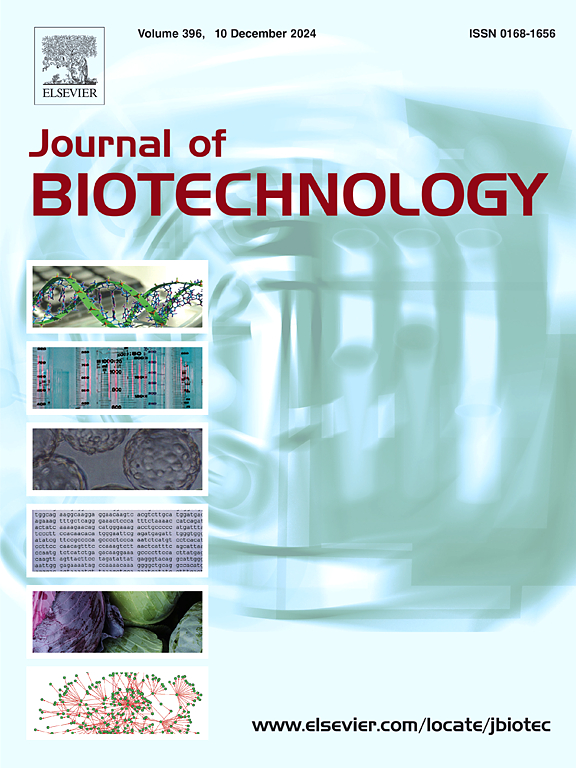
The Journal of Biotechnology has an open access mirror journal, the Journal of Biotechnology: X, sharing the same aims and scope, editorial team, submission system and rigorous peer review.
The Journal provides a medium for the rapid publication of both full-length articles and short communications on novel and innovative aspects of biotechnology. The Journal will accept papers ranging from genetic or molecular biological positions to those covering biochemical, chemical or bioprocess engineering aspects as well as computer application of new software concepts, provided that in each case the material is directly relevant to biotechnological systems. Papers presenting information of a multidisciplinary nature that would not be suitable for publication in a journal devoted to a single discipline, are particularly welcome.




 京公网安备 11010802042870号
京ICP备2023020795号-1
京公网安备 11010802042870号
京ICP备2023020795号-1

 分享
分享
 求助内容:
求助内容: 应助结果提醒方式:
 扫码关注我们
