Tlou N. Moja, Zebron Phiri, Jemal F. Nure, Thabo T.I. Nkambule, Lueta-Ann de Kock
{"title":"聚己内酯-壳聚糖-蒙脱土复合材料去除Pb(II)和Cd(II)的研究进展","authors":"Tlou N. Moja, Zebron Phiri, Jemal F. Nure, Thabo T.I. Nkambule, Lueta-Ann de Kock","doi":"10.1002/slct.202500798","DOIUrl":null,"url":null,"abstract":"<p>Industries frequently discharge elevated levels of lead and cadmium into the environment, posing significant threats to ecological balance and public health. This study developed a novel polycaprolactone–chitosan–montmorillonite (PCL/CS/MMT) composite to adsorb Pb(II) and Cd(II) from aqueous solutions. The composite was synthesized via twin-screw melt extrusion and subsequently characterized using X-ray diffraction (XRD), scanning electron microscopy (SEM), energy-dispersive X-ray spectroscopy (EDS), Fourier transform infrared spectroscopy (FTIR), and thermogravimetric analysis (TGA), revealing a crystalline structure, cracked surface morphology, functionalized surface groups, and thermal stability. Under optimal batch conditions, the adsorbent achieved maximum adsorption capacities of 12.35 mg/g for Pb(II) and 16.92 mg/g for Cd(II). Adsorption behavior followed the Langmuir isotherm model, and kinetic data aligned with the pseudo second-order model, indicating a chemisorption-driven mechanism. The composite demonstrated effective regeneration, retaining over 55% adsorption efficiency after seven desorption cycles with 0.1 M <span></span><math></math> (pH 8). These findings position the PCL/CS/MMT composite as a promising, sustainable adsorbent for wastewater treatment, offering a viable solution to heavy metal pollution and advancing the development of eco-friendly materials for environmental remediation.</p>","PeriodicalId":146,"journal":{"name":"ChemistrySelect","volume":"10 16","pages":""},"PeriodicalIF":2.0000,"publicationDate":"2025-04-24","publicationTypes":"Journal Article","fieldsOfStudy":null,"isOpenAccess":false,"openAccessPdf":"https://onlinelibrary.wiley.com/doi/epdf/10.1002/slct.202500798","citationCount":"0","resultStr":"{\"title\":\"Insights into Preparation of Polycaprolactone–Chitosan–Montmorillonite Composite for Pb(II) and Cd(II) Removal\",\"authors\":\"Tlou N. Moja, Zebron Phiri, Jemal F. Nure, Thabo T.I. Nkambule, Lueta-Ann de Kock\",\"doi\":\"10.1002/slct.202500798\",\"DOIUrl\":null,\"url\":null,\"abstract\":\"<p>Industries frequently discharge elevated levels of lead and cadmium into the environment, posing significant threats to ecological balance and public health. This study developed a novel polycaprolactone–chitosan–montmorillonite (PCL/CS/MMT) composite to adsorb Pb(II) and Cd(II) from aqueous solutions. The composite was synthesized via twin-screw melt extrusion and subsequently characterized using X-ray diffraction (XRD), scanning electron microscopy (SEM), energy-dispersive X-ray spectroscopy (EDS), Fourier transform infrared spectroscopy (FTIR), and thermogravimetric analysis (TGA), revealing a crystalline structure, cracked surface morphology, functionalized surface groups, and thermal stability. Under optimal batch conditions, the adsorbent achieved maximum adsorption capacities of 12.35 mg/g for Pb(II) and 16.92 mg/g for Cd(II). Adsorption behavior followed the Langmuir isotherm model, and kinetic data aligned with the pseudo second-order model, indicating a chemisorption-driven mechanism. The composite demonstrated effective regeneration, retaining over 55% adsorption efficiency after seven desorption cycles with 0.1 M <span></span><math></math> (pH 8). These findings position the PCL/CS/MMT composite as a promising, sustainable adsorbent for wastewater treatment, offering a viable solution to heavy metal pollution and advancing the development of eco-friendly materials for environmental remediation.</p>\",\"PeriodicalId\":146,\"journal\":{\"name\":\"ChemistrySelect\",\"volume\":\"10 16\",\"pages\":\"\"},\"PeriodicalIF\":2.0000,\"publicationDate\":\"2025-04-24\",\"publicationTypes\":\"Journal Article\",\"fieldsOfStudy\":null,\"isOpenAccess\":false,\"openAccessPdf\":\"https://onlinelibrary.wiley.com/doi/epdf/10.1002/slct.202500798\",\"citationCount\":\"0\",\"resultStr\":null,\"platform\":\"Semanticscholar\",\"paperid\":null,\"PeriodicalName\":\"ChemistrySelect\",\"FirstCategoryId\":\"92\",\"ListUrlMain\":\"https://chemistry-europe.onlinelibrary.wiley.com/doi/10.1002/slct.202500798\",\"RegionNum\":4,\"RegionCategory\":\"化学\",\"ArticlePicture\":[],\"TitleCN\":null,\"AbstractTextCN\":null,\"PMCID\":null,\"EPubDate\":\"\",\"PubModel\":\"\",\"JCR\":\"Q3\",\"JCRName\":\"CHEMISTRY, MULTIDISCIPLINARY\",\"Score\":null,\"Total\":0}","platform":"Semanticscholar","paperid":null,"PeriodicalName":"ChemistrySelect","FirstCategoryId":"92","ListUrlMain":"https://chemistry-europe.onlinelibrary.wiley.com/doi/10.1002/slct.202500798","RegionNum":4,"RegionCategory":"化学","ArticlePicture":[],"TitleCN":null,"AbstractTextCN":null,"PMCID":null,"EPubDate":"","PubModel":"","JCR":"Q3","JCRName":"CHEMISTRY, MULTIDISCIPLINARY","Score":null,"Total":0}
引用次数: 0
摘要
工业经常向环境中排放高浓度的铅和镉,对生态平衡和公众健康构成重大威胁。研究了一种新型的聚己内酯-壳聚糖-蒙脱土(PCL/CS/MMT)复合材料,用于吸附水溶液中的铅(II)和镉(II)。采用双螺杆熔融挤压法制备了该复合材料,并利用x射线衍射(XRD)、扫描电镜(SEM)、能谱(EDS)、傅立叶变换红外光谱(FTIR)和热重分析(TGA)对其进行了表征,揭示了该复合材料的晶体结构、裂纹表面形貌、表面官能团和热稳定性。在最佳间歇条件下,吸附剂对Pb(II)的最大吸附量为12.35 mg/g,对Cd(II)的最大吸附量为16.92 mg/g。吸附行为符合Langmuir等温线模型,动力学数据符合拟二阶模型,表明其为化学吸附驱动机制。该复合材料在0.1 M (pH 8)条件下进行7次解吸循环后,其再生效果良好,吸附效率超过55%。这些研究结果表明,PCL/CS/MMT复合材料是一种有前景的、可持续的废水处理吸附剂,为重金属污染提供了可行的解决方案,并推动了环境修复生态材料的发展。
Insights into Preparation of Polycaprolactone–Chitosan–Montmorillonite Composite for Pb(II) and Cd(II) Removal
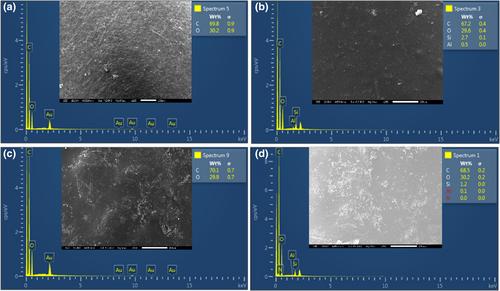
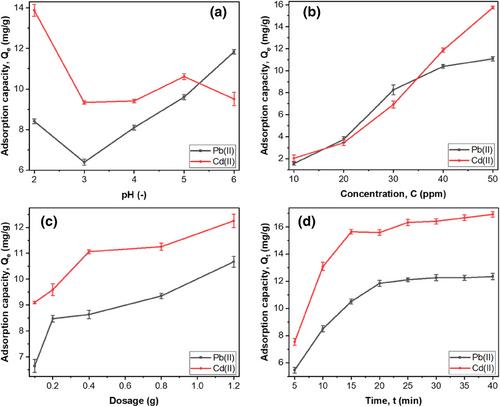
Industries frequently discharge elevated levels of lead and cadmium into the environment, posing significant threats to ecological balance and public health. This study developed a novel polycaprolactone–chitosan–montmorillonite (PCL/CS/MMT) composite to adsorb Pb(II) and Cd(II) from aqueous solutions. The composite was synthesized via twin-screw melt extrusion and subsequently characterized using X-ray diffraction (XRD), scanning electron microscopy (SEM), energy-dispersive X-ray spectroscopy (EDS), Fourier transform infrared spectroscopy (FTIR), and thermogravimetric analysis (TGA), revealing a crystalline structure, cracked surface morphology, functionalized surface groups, and thermal stability. Under optimal batch conditions, the adsorbent achieved maximum adsorption capacities of 12.35 mg/g for Pb(II) and 16.92 mg/g for Cd(II). Adsorption behavior followed the Langmuir isotherm model, and kinetic data aligned with the pseudo second-order model, indicating a chemisorption-driven mechanism. The composite demonstrated effective regeneration, retaining over 55% adsorption efficiency after seven desorption cycles with 0.1 M (pH 8). These findings position the PCL/CS/MMT composite as a promising, sustainable adsorbent for wastewater treatment, offering a viable solution to heavy metal pollution and advancing the development of eco-friendly materials for environmental remediation.
期刊介绍:
ChemistrySelect is the latest journal from ChemPubSoc Europe and Wiley-VCH. It offers researchers a quality society-owned journal in which to publish their work in all areas of chemistry. Manuscripts are evaluated by active researchers to ensure they add meaningfully to the scientific literature, and those accepted are processed quickly to ensure rapid online publication.






 京公网安备 11010802042870号
京ICP备2023020795号-1
京公网安备 11010802042870号
京ICP备2023020795号-1

 分享
分享
 求助内容:
求助内容: 应助结果提醒方式:
 扫码关注我们
