{"title":"“公正世界”信念对大学生学业焦虑的影响","authors":"Wei Na, Denggang Tian","doi":"10.1007/s12564-023-09887-5","DOIUrl":null,"url":null,"abstract":"<div><p>Colleges are increasingly cognizant of the value of attending to the emotional needs of students in pandemic-altered learning conditions, recognizing that academic anxiety has significant adverse impacts on their academic performance. This study explored whether the personality trait, a personal belief in a just world (PBJW), provided distinctive explanatory power to the degree of academic anxiety after considering the specific nature of the pandemic and examining if the applicable physical activities afforded the positive additional effect on alleviating academic anxiety symptoms. The sample comprised 96 college students (51.0% female), with groups matched by age and gender and controlled for the level of a PBJW and specified physical activity (PA). An augmented academic emotional Stroop method to assess the academic anxiety of college students was proposed based on the objective indicator rather than the subjective index derived from the self-assessment tool. The results indicated the participant’s low level of a PBJW may serve as an early predictor to identify students with academic anxiety. In addition, high correlations among PA, a PBJW, and academic anxiety were identified, and the specified moderate PA, doing household chores, may serve as an early intervention to help college students manage academic anxiety. The findings hold relevance for further research on the role of personality traits in the academic process and the design of interventions addressing academic emotions.</p></div>","PeriodicalId":47344,"journal":{"name":"Asia Pacific Education Review","volume":"27 1","pages":"1 - 13"},"PeriodicalIF":2.3000,"publicationDate":"2023-07-26","publicationTypes":"Journal Article","fieldsOfStudy":null,"isOpenAccess":false,"openAccessPdf":"","citationCount":"0","resultStr":"{\"title\":\"Effect of personal belief in a just world on academic anxiety of college students during COVID-19 pandemic\",\"authors\":\"Wei Na, Denggang Tian\",\"doi\":\"10.1007/s12564-023-09887-5\",\"DOIUrl\":null,\"url\":null,\"abstract\":\"<div><p>Colleges are increasingly cognizant of the value of attending to the emotional needs of students in pandemic-altered learning conditions, recognizing that academic anxiety has significant adverse impacts on their academic performance. This study explored whether the personality trait, a personal belief in a just world (PBJW), provided distinctive explanatory power to the degree of academic anxiety after considering the specific nature of the pandemic and examining if the applicable physical activities afforded the positive additional effect on alleviating academic anxiety symptoms. The sample comprised 96 college students (51.0% female), with groups matched by age and gender and controlled for the level of a PBJW and specified physical activity (PA). An augmented academic emotional Stroop method to assess the academic anxiety of college students was proposed based on the objective indicator rather than the subjective index derived from the self-assessment tool. The results indicated the participant’s low level of a PBJW may serve as an early predictor to identify students with academic anxiety. In addition, high correlations among PA, a PBJW, and academic anxiety were identified, and the specified moderate PA, doing household chores, may serve as an early intervention to help college students manage academic anxiety. The findings hold relevance for further research on the role of personality traits in the academic process and the design of interventions addressing academic emotions.</p></div>\",\"PeriodicalId\":47344,\"journal\":{\"name\":\"Asia Pacific Education Review\",\"volume\":\"27 1\",\"pages\":\"1 - 13\"},\"PeriodicalIF\":2.3000,\"publicationDate\":\"2023-07-26\",\"publicationTypes\":\"Journal Article\",\"fieldsOfStudy\":null,\"isOpenAccess\":false,\"openAccessPdf\":\"\",\"citationCount\":\"0\",\"resultStr\":null,\"platform\":\"Semanticscholar\",\"paperid\":null,\"PeriodicalName\":\"Asia Pacific Education Review\",\"FirstCategoryId\":\"95\",\"ListUrlMain\":\"https://link.springer.com/article/10.1007/s12564-023-09887-5\",\"RegionNum\":3,\"RegionCategory\":\"教育学\",\"ArticlePicture\":[],\"TitleCN\":null,\"AbstractTextCN\":null,\"PMCID\":null,\"EPubDate\":\"\",\"PubModel\":\"\",\"JCR\":\"Q1\",\"JCRName\":\"EDUCATION & EDUCATIONAL RESEARCH\",\"Score\":null,\"Total\":0}","platform":"Semanticscholar","paperid":null,"PeriodicalName":"Asia Pacific Education Review","FirstCategoryId":"95","ListUrlMain":"https://link.springer.com/article/10.1007/s12564-023-09887-5","RegionNum":3,"RegionCategory":"教育学","ArticlePicture":[],"TitleCN":null,"AbstractTextCN":null,"PMCID":null,"EPubDate":"","PubModel":"","JCR":"Q1","JCRName":"EDUCATION & EDUCATIONAL RESEARCH","Score":null,"Total":0}
Effect of personal belief in a just world on academic anxiety of college students during COVID-19 pandemic
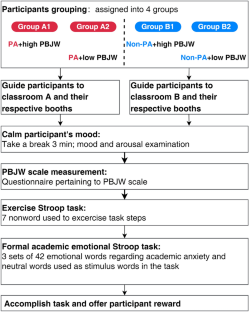
Colleges are increasingly cognizant of the value of attending to the emotional needs of students in pandemic-altered learning conditions, recognizing that academic anxiety has significant adverse impacts on their academic performance. This study explored whether the personality trait, a personal belief in a just world (PBJW), provided distinctive explanatory power to the degree of academic anxiety after considering the specific nature of the pandemic and examining if the applicable physical activities afforded the positive additional effect on alleviating academic anxiety symptoms. The sample comprised 96 college students (51.0% female), with groups matched by age and gender and controlled for the level of a PBJW and specified physical activity (PA). An augmented academic emotional Stroop method to assess the academic anxiety of college students was proposed based on the objective indicator rather than the subjective index derived from the self-assessment tool. The results indicated the participant’s low level of a PBJW may serve as an early predictor to identify students with academic anxiety. In addition, high correlations among PA, a PBJW, and academic anxiety were identified, and the specified moderate PA, doing household chores, may serve as an early intervention to help college students manage academic anxiety. The findings hold relevance for further research on the role of personality traits in the academic process and the design of interventions addressing academic emotions.
期刊介绍:
The Asia Pacific Education Review (APER) aims to stimulate research, encourage academic exchange, and enhance the professional development of scholars and other researchers who are interested in educational and cultural issues in the Asia Pacific region. APER covers all areas of educational research, with a focus on cross-cultural, comparative and other studies with a broad Asia-Pacific context.
APER is a peer reviewed journal produced by the Education Research Institute at Seoul National University. It was founded by the Institute of Asia Pacific Education Development, Seoul National University in 2000, which is owned and operated by Education Research Institute at Seoul National University since 2003.
APER requires all submitted manuscripts to follow the seventh edition of the Publication Manual of the American Psychological Association (APA; http://www.apastyle.org/index.aspx).




 京公网安备 11010802042870号
京ICP备2023020795号-1
京公网安备 11010802042870号
京ICP备2023020795号-1

 分享
分享
 求助内容:
求助内容: 应助结果提醒方式:
 扫码关注我们
