Erin R Aho, April M Weissmiller, Stephen W Fesik, William P Tansey
{"title":"以 WDR5 为靶点:一种制胜的抗癌策略?","authors":"Erin R Aho, April M Weissmiller, Stephen W Fesik, William P Tansey","doi":"10.1177/2516865719865282","DOIUrl":null,"url":null,"abstract":"<p><p>WDR5 is a component of multiple epigenetic regulatory complexes, including the mixed lineage leukemia (MLL)/SET complexes that deposit histone H3 lysine 4 methylation. Inhibitors of an arginine-binding cavity in WDR5, known as the WDR5-interaction (WIN) site, have been proposed to selectively kill MLL-rearranged malignancies via an epigenetic mechanism. We discovered potent WIN site inhibitors and found that they kill MLL cancer cells not through changes in histone methylation, but by displacing WDR5 from chromatin at protein synthesis genes, choking the translational capacity of these cells, and inducing death via a nucleolar stress response. The mechanism of action of WIN site inhibitors reveals new aspects of WDR5 function and forecasts broad therapeutic utility as anti-cancer agents.</p>","PeriodicalId":371,"journal":{"name":"Journal of Molecular Liquids","volume":"337 1","pages":"2516865719865282"},"PeriodicalIF":5.2000,"publicationDate":"2019-07-18","publicationTypes":"Journal Article","fieldsOfStudy":null,"isOpenAccess":false,"openAccessPdf":"https://www.ncbi.nlm.nih.gov/pmc/articles/PMC6640055/pdf/","citationCount":"0","resultStr":"{\"title\":\"Targeting WDR5: A WINning Anti-Cancer Strategy?\",\"authors\":\"Erin R Aho, April M Weissmiller, Stephen W Fesik, William P Tansey\",\"doi\":\"10.1177/2516865719865282\",\"DOIUrl\":null,\"url\":null,\"abstract\":\"<p><p>WDR5 is a component of multiple epigenetic regulatory complexes, including the mixed lineage leukemia (MLL)/SET complexes that deposit histone H3 lysine 4 methylation. Inhibitors of an arginine-binding cavity in WDR5, known as the WDR5-interaction (WIN) site, have been proposed to selectively kill MLL-rearranged malignancies via an epigenetic mechanism. We discovered potent WIN site inhibitors and found that they kill MLL cancer cells not through changes in histone methylation, but by displacing WDR5 from chromatin at protein synthesis genes, choking the translational capacity of these cells, and inducing death via a nucleolar stress response. The mechanism of action of WIN site inhibitors reveals new aspects of WDR5 function and forecasts broad therapeutic utility as anti-cancer agents.</p>\",\"PeriodicalId\":371,\"journal\":{\"name\":\"Journal of Molecular Liquids\",\"volume\":\"337 1\",\"pages\":\"2516865719865282\"},\"PeriodicalIF\":5.2000,\"publicationDate\":\"2019-07-18\",\"publicationTypes\":\"Journal Article\",\"fieldsOfStudy\":null,\"isOpenAccess\":false,\"openAccessPdf\":\"https://www.ncbi.nlm.nih.gov/pmc/articles/PMC6640055/pdf/\",\"citationCount\":\"0\",\"resultStr\":null,\"platform\":\"Semanticscholar\",\"paperid\":null,\"PeriodicalName\":\"Journal of Molecular Liquids\",\"FirstCategoryId\":\"92\",\"ListUrlMain\":\"https://doi.org/10.1177/2516865719865282\",\"RegionNum\":2,\"RegionCategory\":\"化学\",\"ArticlePicture\":[],\"TitleCN\":null,\"AbstractTextCN\":null,\"PMCID\":null,\"EPubDate\":\"2019/1/1 0:00:00\",\"PubModel\":\"eCollection\",\"JCR\":\"Q2\",\"JCRName\":\"CHEMISTRY, PHYSICAL\",\"Score\":null,\"Total\":0}","platform":"Semanticscholar","paperid":null,"PeriodicalName":"Journal of Molecular Liquids","FirstCategoryId":"92","ListUrlMain":"https://doi.org/10.1177/2516865719865282","RegionNum":2,"RegionCategory":"化学","ArticlePicture":[],"TitleCN":null,"AbstractTextCN":null,"PMCID":null,"EPubDate":"2019/1/1 0:00:00","PubModel":"eCollection","JCR":"Q2","JCRName":"CHEMISTRY, PHYSICAL","Score":null,"Total":0}
WDR5 is a component of multiple epigenetic regulatory complexes, including the mixed lineage leukemia (MLL)/SET complexes that deposit histone H3 lysine 4 methylation. Inhibitors of an arginine-binding cavity in WDR5, known as the WDR5-interaction (WIN) site, have been proposed to selectively kill MLL-rearranged malignancies via an epigenetic mechanism. We discovered potent WIN site inhibitors and found that they kill MLL cancer cells not through changes in histone methylation, but by displacing WDR5 from chromatin at protein synthesis genes, choking the translational capacity of these cells, and inducing death via a nucleolar stress response. The mechanism of action of WIN site inhibitors reveals new aspects of WDR5 function and forecasts broad therapeutic utility as anti-cancer agents.
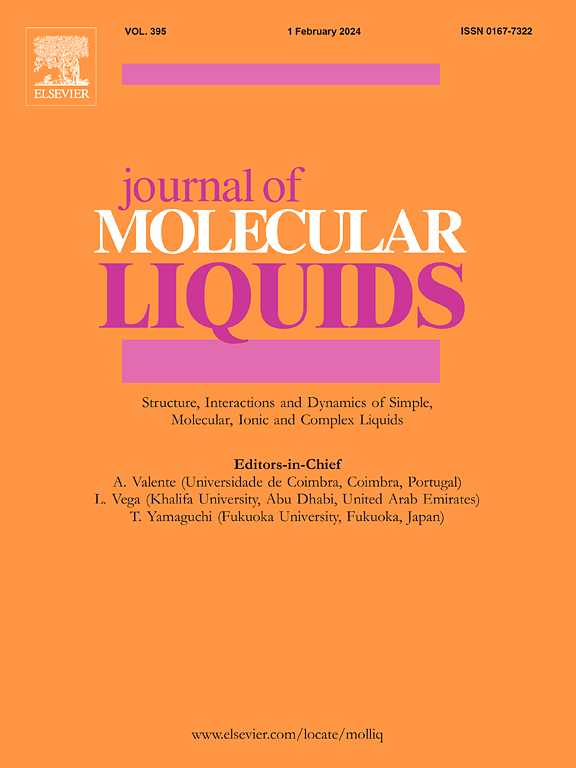
期刊介绍:
The journal includes papers in the following areas:
– Simple organic liquids and mixtures
– Ionic liquids
– Surfactant solutions (including micelles and vesicles) and liquid interfaces
– Colloidal solutions and nanoparticles
– Thermotropic and lyotropic liquid crystals
– Ferrofluids
– Water, aqueous solutions and other hydrogen-bonded liquids
– Lubricants, polymer solutions and melts
– Molten metals and salts
– Phase transitions and critical phenomena in liquids and confined fluids
– Self assembly in complex liquids.– Biomolecules in solution
The emphasis is on the molecular (or microscopic) understanding of particular liquids or liquid systems, especially concerning structure, dynamics and intermolecular forces. The experimental techniques used may include:
– Conventional spectroscopy (mid-IR and far-IR, Raman, NMR, etc.)
– Non-linear optics and time resolved spectroscopy (psec, fsec, asec, ISRS, etc.)
– Light scattering (Rayleigh, Brillouin, PCS, etc.)
– Dielectric relaxation
– X-ray and neutron scattering and diffraction.
Experimental studies, computer simulations (MD or MC) and analytical theory will be considered for publication; papers just reporting experimental results that do not contribute to the understanding of the fundamentals of molecular and ionic liquids will not be accepted. Only papers of a non-routine nature and advancing the field will be considered for publication.





 京公网安备 11010802042870号
京ICP备2023020795号-1
京公网安备 11010802042870号
京ICP备2023020795号-1

 分享
分享
 求助内容:
求助内容: 应助结果提醒方式:
 扫码关注我们
