Anna A. Boyko , Tatyana L. Azhikina , Maria A. Streltsova , Alexander M. Sapozhnikov , Elena I. Kovalenko
{"title":"人类多形核白细胞和单核白细胞中的 HSP70:HSPA 基因的蛋白质含量和转录活性比较。","authors":"Anna A. Boyko , Tatyana L. Azhikina , Maria A. Streltsova , Alexander M. Sapozhnikov , Elena I. Kovalenko","doi":"10.1007/s12192-016-0744-y","DOIUrl":null,"url":null,"abstract":"<div><div>Cell-type specific variations are typical for the expression of different members of the HSP70 family. In circulating immune cells, HSP70 proteins interact with units of signaling pathways involved in the immune responses and may promote cell survival in sites of inflammation. In this work, we compared basal HSP70 expression and stress-induced HSP70 response in polymorphonuclear and mononuclear human leukocytes. The intracellular content of inducible and constitutive forms of HSP70 was analyzed in relation to the transcriptional activity of <em>HSPA</em> genes. Hyperthermia was used as the stress model for induction of HSP70 synthesis in the cells. Our results demonstrated that granulocytes (mainly neutrophils) and mononuclear cells differ significantly by both basal HSP70 expression and levels of HSP70 induction under hyperthermia. The differences were observed at the levels of <em>HSPA</em> gene transcription and intracellular HSP70 content. The expression of constitutive Hsс70 protein was much higher in mononuclear cells consisting of monocytes and lymphocytes than in granulocytes. At the same time, intact neutrophils showed increased expression of inducible Hsp70 protein compared to mononuclear cells. Heat treatment induced additional expression of <em>HSPA</em> genes in leukocytes. The most pronounced increase in the expression was observed in polymorphonuclear and mononuclear leukocytes for <em>HSPA1A/B</em>. However, in granulocytes, the induction of the transcription of the <em>HSPA8</em> gene encoding the Hsc70 protein was significantly higher than in mononuclear cells. These variations in transcriptional activity of <em>HSPA</em> genes and intracellular HSP70 content in different populations of leukocytes may reflect specified requirements for the chaperone activity in the cells with a distinct functional role in the immune system.</div></div>","PeriodicalId":9684,"journal":{"name":"Cell Stress & Chaperones","volume":"22 1","pages":"Pages 67-76"},"PeriodicalIF":3.2000,"publicationDate":"2017-01-01","publicationTypes":"Journal Article","fieldsOfStudy":null,"isOpenAccess":false,"openAccessPdf":"https://www.ncbi.nlm.nih.gov/pmc/articles/PMC5225062/pdf/","citationCount":"0","resultStr":"{\"title\":\"HSP70 in human polymorphonuclear and mononuclear leukocytes: comparison of the protein content and transcriptional activity of HSPA genes\",\"authors\":\"Anna A. Boyko , Tatyana L. Azhikina , Maria A. Streltsova , Alexander M. Sapozhnikov , Elena I. Kovalenko\",\"doi\":\"10.1007/s12192-016-0744-y\",\"DOIUrl\":null,\"url\":null,\"abstract\":\"<div><div>Cell-type specific variations are typical for the expression of different members of the HSP70 family. In circulating immune cells, HSP70 proteins interact with units of signaling pathways involved in the immune responses and may promote cell survival in sites of inflammation. In this work, we compared basal HSP70 expression and stress-induced HSP70 response in polymorphonuclear and mononuclear human leukocytes. The intracellular content of inducible and constitutive forms of HSP70 was analyzed in relation to the transcriptional activity of <em>HSPA</em> genes. Hyperthermia was used as the stress model for induction of HSP70 synthesis in the cells. Our results demonstrated that granulocytes (mainly neutrophils) and mononuclear cells differ significantly by both basal HSP70 expression and levels of HSP70 induction under hyperthermia. The differences were observed at the levels of <em>HSPA</em> gene transcription and intracellular HSP70 content. The expression of constitutive Hsс70 protein was much higher in mononuclear cells consisting of monocytes and lymphocytes than in granulocytes. At the same time, intact neutrophils showed increased expression of inducible Hsp70 protein compared to mononuclear cells. Heat treatment induced additional expression of <em>HSPA</em> genes in leukocytes. The most pronounced increase in the expression was observed in polymorphonuclear and mononuclear leukocytes for <em>HSPA1A/B</em>. However, in granulocytes, the induction of the transcription of the <em>HSPA8</em> gene encoding the Hsc70 protein was significantly higher than in mononuclear cells. These variations in transcriptional activity of <em>HSPA</em> genes and intracellular HSP70 content in different populations of leukocytes may reflect specified requirements for the chaperone activity in the cells with a distinct functional role in the immune system.</div></div>\",\"PeriodicalId\":9684,\"journal\":{\"name\":\"Cell Stress & Chaperones\",\"volume\":\"22 1\",\"pages\":\"Pages 67-76\"},\"PeriodicalIF\":3.2000,\"publicationDate\":\"2017-01-01\",\"publicationTypes\":\"Journal Article\",\"fieldsOfStudy\":null,\"isOpenAccess\":false,\"openAccessPdf\":\"https://www.ncbi.nlm.nih.gov/pmc/articles/PMC5225062/pdf/\",\"citationCount\":\"0\",\"resultStr\":null,\"platform\":\"Semanticscholar\",\"paperid\":null,\"PeriodicalName\":\"Cell Stress & Chaperones\",\"FirstCategoryId\":\"99\",\"ListUrlMain\":\"https://www.sciencedirect.com/science/article/pii/S1355814523001530\",\"RegionNum\":3,\"RegionCategory\":\"生物学\",\"ArticlePicture\":[],\"TitleCN\":null,\"AbstractTextCN\":null,\"PMCID\":null,\"EPubDate\":\"2016/10/25 0:00:00\",\"PubModel\":\"Epub\",\"JCR\":\"Q3\",\"JCRName\":\"CELL BIOLOGY\",\"Score\":null,\"Total\":0}","platform":"Semanticscholar","paperid":null,"PeriodicalName":"Cell Stress & Chaperones","FirstCategoryId":"99","ListUrlMain":"https://www.sciencedirect.com/science/article/pii/S1355814523001530","RegionNum":3,"RegionCategory":"生物学","ArticlePicture":[],"TitleCN":null,"AbstractTextCN":null,"PMCID":null,"EPubDate":"2016/10/25 0:00:00","PubModel":"Epub","JCR":"Q3","JCRName":"CELL BIOLOGY","Score":null,"Total":0}
HSP70 in human polymorphonuclear and mononuclear leukocytes: comparison of the protein content and transcriptional activity of HSPA genes
Cell-type specific variations are typical for the expression of different members of the HSP70 family. In circulating immune cells, HSP70 proteins interact with units of signaling pathways involved in the immune responses and may promote cell survival in sites of inflammation. In this work, we compared basal HSP70 expression and stress-induced HSP70 response in polymorphonuclear and mononuclear human leukocytes. The intracellular content of inducible and constitutive forms of HSP70 was analyzed in relation to the transcriptional activity of HSPA genes. Hyperthermia was used as the stress model for induction of HSP70 synthesis in the cells. Our results demonstrated that granulocytes (mainly neutrophils) and mononuclear cells differ significantly by both basal HSP70 expression and levels of HSP70 induction under hyperthermia. The differences were observed at the levels of HSPA gene transcription and intracellular HSP70 content. The expression of constitutive Hsс70 protein was much higher in mononuclear cells consisting of monocytes and lymphocytes than in granulocytes. At the same time, intact neutrophils showed increased expression of inducible Hsp70 protein compared to mononuclear cells. Heat treatment induced additional expression of HSPA genes in leukocytes. The most pronounced increase in the expression was observed in polymorphonuclear and mononuclear leukocytes for HSPA1A/B. However, in granulocytes, the induction of the transcription of the HSPA8 gene encoding the Hsc70 protein was significantly higher than in mononuclear cells. These variations in transcriptional activity of HSPA genes and intracellular HSP70 content in different populations of leukocytes may reflect specified requirements for the chaperone activity in the cells with a distinct functional role in the immune system.
期刊介绍:
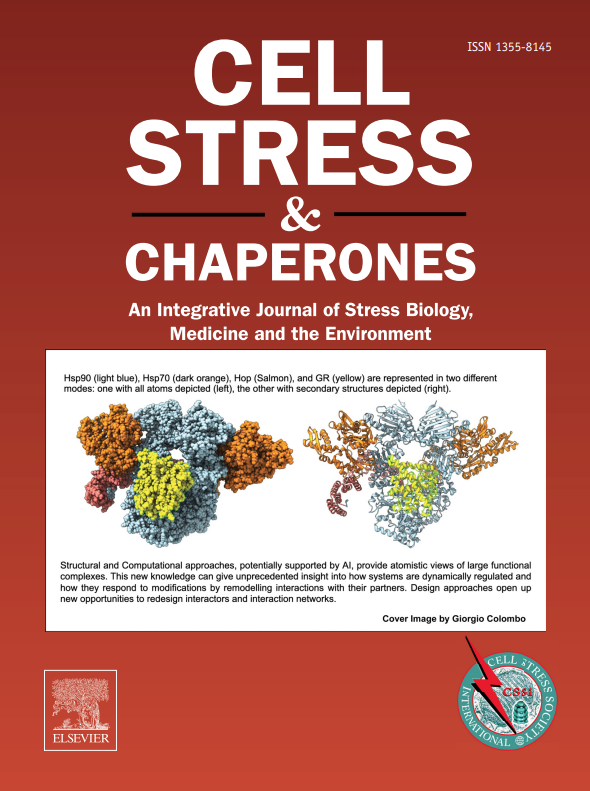
Cell Stress and Chaperones is an integrative journal that bridges the gap between laboratory model systems and natural populations. The journal captures the eclectic spirit of the cellular stress response field in a single, concentrated source of current information. Major emphasis is placed on the effects of climate change on individual species in the natural environment and their capacity to adapt. This emphasis expands our focus on stress biology and medicine by linking climate change effects to research on cellular stress responses of animals, micro-organisms and plants.



 京公网安备 11010802042870号
京ICP备2023020795号-1
京公网安备 11010802042870号
京ICP备2023020795号-1

 分享
分享
 求助内容:
求助内容: 应助结果提醒方式:
 扫码关注我们
