{"title":"获批疫苗对预防 COVID-19 的功效:对随机试验中重建的患者个体数据进行系统回顾和网络荟萃分析。","authors":"Alhassane Diallo, Miguel Carlos-Bolumbu, Mamadou Hassimiou Diallo, Alain Makinson, Florence Galtier","doi":"10.1007/s10389-022-01707-1","DOIUrl":null,"url":null,"abstract":"<p><strong>Aim: </strong>To optimize vaccination strategy, evidence on vaccine efficacy against COVID-19 is needed.</p><p><strong>Method: </strong>The present network meta-analysis uses reconstructed individual patient data from phase III trials on vaccine efficacy (VE), identified through MEDLINE, EMBASE, and Cochrane library (CENTRAL) peer-reviewed and published in English before August 31, 2021. The primary outcome was the VE against confirmed COVID-19 at any time after the first dose as defined in each study. VE was re-estimated using the two-stage approach. Poisson regression models were applied to each trial at the first stage, and the incidence risk ratio (IRR) and their 95% CI were aggregated to allow random-effects network meta-analysis (NMA) at the second stage. VE was expressed as: (1-IRR) × 100. The study protocol is registered in PROSPERO (CRD42020200012).</p><p><strong>Results: </strong>A total of eight studies, evaluating nine different vaccines were identified and analyzed. Between April 23, 2020 and January 05, 2021, 210,418 participants were recruited in 354 sites worldwide. During a median (IQR) follow-up duration of 69.8 (69.7-70.3) days, 2131 confirmed COVID-19 cases occurred (604; 26.0 per 1000 person-years in vaccine recipients and 1527; 85.9 per 1000 person-years in the control group). The mRNA-1273 vaccine was the most effective (P-score 0.99); at any time after dose 1, incidence reduction for mRNA-1273 ranged from 78% to 98% compared to the other vaccines.</p><p><strong>Conclusion: </strong>Our results provide evidence for the short-term superiority of mRNA vaccines, especially the mRNA-1273 vaccine in prevention of COVID-19 in different populations.</p><p><strong>Supplementary information: </strong>The online version contains supplementary material available at 10.1007/s10389-022-01707-1.</p>","PeriodicalId":14888,"journal":{"name":"Journal of Algebra","volume":"277 1","pages":"1-10"},"PeriodicalIF":0.8000,"publicationDate":"2022-03-23","publicationTypes":"Journal Article","fieldsOfStudy":null,"isOpenAccess":false,"openAccessPdf":"https://www.ncbi.nlm.nih.gov/pmc/articles/PMC8942153/pdf/","citationCount":"0","resultStr":"{\"title\":\"Efficacy of approved vaccines to prevent COVID-19: a systematic review and network meta-analysis of reconstructed individual patient data from randomized trials.\",\"authors\":\"Alhassane Diallo, Miguel Carlos-Bolumbu, Mamadou Hassimiou Diallo, Alain Makinson, Florence Galtier\",\"doi\":\"10.1007/s10389-022-01707-1\",\"DOIUrl\":null,\"url\":null,\"abstract\":\"<p><strong>Aim: </strong>To optimize vaccination strategy, evidence on vaccine efficacy against COVID-19 is needed.</p><p><strong>Method: </strong>The present network meta-analysis uses reconstructed individual patient data from phase III trials on vaccine efficacy (VE), identified through MEDLINE, EMBASE, and Cochrane library (CENTRAL) peer-reviewed and published in English before August 31, 2021. The primary outcome was the VE against confirmed COVID-19 at any time after the first dose as defined in each study. VE was re-estimated using the two-stage approach. Poisson regression models were applied to each trial at the first stage, and the incidence risk ratio (IRR) and their 95% CI were aggregated to allow random-effects network meta-analysis (NMA) at the second stage. VE was expressed as: (1-IRR) × 100. The study protocol is registered in PROSPERO (CRD42020200012).</p><p><strong>Results: </strong>A total of eight studies, evaluating nine different vaccines were identified and analyzed. Between April 23, 2020 and January 05, 2021, 210,418 participants were recruited in 354 sites worldwide. During a median (IQR) follow-up duration of 69.8 (69.7-70.3) days, 2131 confirmed COVID-19 cases occurred (604; 26.0 per 1000 person-years in vaccine recipients and 1527; 85.9 per 1000 person-years in the control group). The mRNA-1273 vaccine was the most effective (P-score 0.99); at any time after dose 1, incidence reduction for mRNA-1273 ranged from 78% to 98% compared to the other vaccines.</p><p><strong>Conclusion: </strong>Our results provide evidence for the short-term superiority of mRNA vaccines, especially the mRNA-1273 vaccine in prevention of COVID-19 in different populations.</p><p><strong>Supplementary information: </strong>The online version contains supplementary material available at 10.1007/s10389-022-01707-1.</p>\",\"PeriodicalId\":14888,\"journal\":{\"name\":\"Journal of Algebra\",\"volume\":\"277 1\",\"pages\":\"1-10\"},\"PeriodicalIF\":0.8000,\"publicationDate\":\"2022-03-23\",\"publicationTypes\":\"Journal Article\",\"fieldsOfStudy\":null,\"isOpenAccess\":false,\"openAccessPdf\":\"https://www.ncbi.nlm.nih.gov/pmc/articles/PMC8942153/pdf/\",\"citationCount\":\"0\",\"resultStr\":null,\"platform\":\"Semanticscholar\",\"paperid\":null,\"PeriodicalName\":\"Journal of Algebra\",\"FirstCategoryId\":\"1085\",\"ListUrlMain\":\"https://doi.org/10.1007/s10389-022-01707-1\",\"RegionNum\":2,\"RegionCategory\":\"数学\",\"ArticlePicture\":[],\"TitleCN\":null,\"AbstractTextCN\":null,\"PMCID\":null,\"EPubDate\":\"\",\"PubModel\":\"\",\"JCR\":\"Q2\",\"JCRName\":\"MATHEMATICS\",\"Score\":null,\"Total\":0}","platform":"Semanticscholar","paperid":null,"PeriodicalName":"Journal of Algebra","FirstCategoryId":"1085","ListUrlMain":"https://doi.org/10.1007/s10389-022-01707-1","RegionNum":2,"RegionCategory":"数学","ArticlePicture":[],"TitleCN":null,"AbstractTextCN":null,"PMCID":null,"EPubDate":"","PubModel":"","JCR":"Q2","JCRName":"MATHEMATICS","Score":null,"Total":0}
Efficacy of approved vaccines to prevent COVID-19: a systematic review and network meta-analysis of reconstructed individual patient data from randomized trials.
Aim: To optimize vaccination strategy, evidence on vaccine efficacy against COVID-19 is needed.
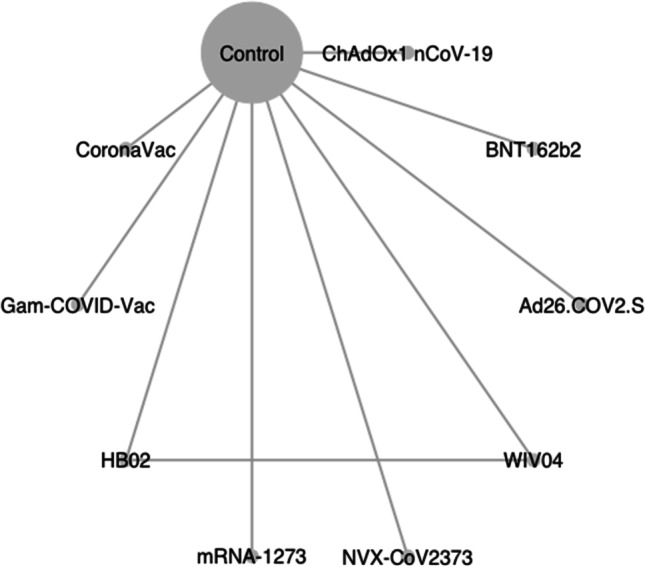
Method: The present network meta-analysis uses reconstructed individual patient data from phase III trials on vaccine efficacy (VE), identified through MEDLINE, EMBASE, and Cochrane library (CENTRAL) peer-reviewed and published in English before August 31, 2021. The primary outcome was the VE against confirmed COVID-19 at any time after the first dose as defined in each study. VE was re-estimated using the two-stage approach. Poisson regression models were applied to each trial at the first stage, and the incidence risk ratio (IRR) and their 95% CI were aggregated to allow random-effects network meta-analysis (NMA) at the second stage. VE was expressed as: (1-IRR) × 100. The study protocol is registered in PROSPERO (CRD42020200012).
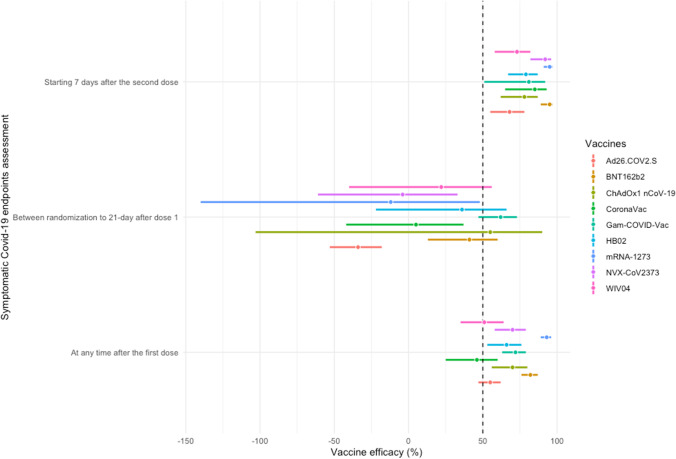
Results: A total of eight studies, evaluating nine different vaccines were identified and analyzed. Between April 23, 2020 and January 05, 2021, 210,418 participants were recruited in 354 sites worldwide. During a median (IQR) follow-up duration of 69.8 (69.7-70.3) days, 2131 confirmed COVID-19 cases occurred (604; 26.0 per 1000 person-years in vaccine recipients and 1527; 85.9 per 1000 person-years in the control group). The mRNA-1273 vaccine was the most effective (P-score 0.99); at any time after dose 1, incidence reduction for mRNA-1273 ranged from 78% to 98% compared to the other vaccines.
Conclusion: Our results provide evidence for the short-term superiority of mRNA vaccines, especially the mRNA-1273 vaccine in prevention of COVID-19 in different populations.
Supplementary information: The online version contains supplementary material available at 10.1007/s10389-022-01707-1.
期刊介绍:
The Journal of Algebra is a leading international journal and publishes papers that demonstrate high quality research results in algebra and related computational aspects. Only the very best and most interesting papers are to be considered for publication in the journal. With this in mind, it is important that the contribution offer a substantial result that will have a lasting effect upon the field. The journal also seeks work that presents innovative techniques that offer promising results for future research.





 京公网安备 11010802042870号
京ICP备2023020795号-1
京公网安备 11010802042870号
京ICP备2023020795号-1

 分享
分享
 求助内容:
求助内容: 应助结果提醒方式:
 扫码关注我们
