Karla C Maita, Francisco R Avila, Ricardo A Torres-Guzman, Rachel Sarabia-Estrada, Abba C Zubair, Alfredo Quinones-Hinojosa, Antonio J Forte
{"title":"体外增强人间质干细胞在聚(乳酸-共-羟基乙酸)支架中的成骨潜能:系统综述。","authors":"Karla C Maita, Francisco R Avila, Ricardo A Torres-Guzman, Rachel Sarabia-Estrada, Abba C Zubair, Alfredo Quinones-Hinojosa, Antonio J Forte","doi":"10.1177/19433875231157454","DOIUrl":null,"url":null,"abstract":"<p><strong>Study design: </strong>Human bone marrow stem cells (hBMSCs) and human adipose-derived stem cells (hADSCs) have demonstrated the capability to regenerate bone once they have differentiated into osteoblasts.</p><p><strong>Objective: </strong>This systematic review aimed to evaluate the in vitro osteogenic differentiation potential of these cells when seeded in a poly (lactic-<i>co</i>-glycolic) acid (PLGA) scaffold.</p><p><strong>Methods: </strong>A literature search of 4 databases following Preferred Reporting Items for Systematic Reviews and Meta-Analyses (PRISMA) guidelines was conducted in January 2021 for studies evaluating the osteogenic differentiation potential of hBMSCs and hADSCs seeded in a PLGA scaffold. Only in vitro models were included. Studies in languages other than English were excluded.</p><p><strong>Results: </strong>A total of 257 studies were identified after the removal of duplicates. Seven articles fulfilled our inclusion and exclusion criteria. Four of these reviews used hADSCs and three used hBMSCs in the scaffold. Upregulation in osteogenic gene expression was seen in all the cells seeded in a 3-dimensional scaffold compared with 2-dimensional films. High angiogenic gene expression was found in hADSCs. Addition of inorganic material to the scaffold material affected cell performance.</p><p><strong>Conclusions: </strong>Viability, proliferation, and differentiation of cells strongly depend on the environment where they grow. There are several factors that can enhance the differentiation capacity of stem cells. A PLGA scaffold proved to be a biocompatible material capable of boosting the osteogenic differentiation potential and mineralization capacity in hBMSCs and hADSCs.</p>","PeriodicalId":20328,"journal":{"name":"Postharvest Biology and Technology","volume":"30 1","pages":"61-73"},"PeriodicalIF":6.8000,"publicationDate":"2024-03-01","publicationTypes":"Journal Article","fieldsOfStudy":null,"isOpenAccess":false,"openAccessPdf":"https://www.ncbi.nlm.nih.gov/pmc/articles/PMC10874209/pdf/","citationCount":"0","resultStr":"{\"title\":\"In Vitro Enhanced Osteogenic Potential of Human Mesenchymal Stem Cells Seeded in a Poly (Lactic-<i>co</i>-Glycolic) Acid Scaffold: A Systematic Review.\",\"authors\":\"Karla C Maita, Francisco R Avila, Ricardo A Torres-Guzman, Rachel Sarabia-Estrada, Abba C Zubair, Alfredo Quinones-Hinojosa, Antonio J Forte\",\"doi\":\"10.1177/19433875231157454\",\"DOIUrl\":null,\"url\":null,\"abstract\":\"<p><strong>Study design: </strong>Human bone marrow stem cells (hBMSCs) and human adipose-derived stem cells (hADSCs) have demonstrated the capability to regenerate bone once they have differentiated into osteoblasts.</p><p><strong>Objective: </strong>This systematic review aimed to evaluate the in vitro osteogenic differentiation potential of these cells when seeded in a poly (lactic-<i>co</i>-glycolic) acid (PLGA) scaffold.</p><p><strong>Methods: </strong>A literature search of 4 databases following Preferred Reporting Items for Systematic Reviews and Meta-Analyses (PRISMA) guidelines was conducted in January 2021 for studies evaluating the osteogenic differentiation potential of hBMSCs and hADSCs seeded in a PLGA scaffold. Only in vitro models were included. Studies in languages other than English were excluded.</p><p><strong>Results: </strong>A total of 257 studies were identified after the removal of duplicates. Seven articles fulfilled our inclusion and exclusion criteria. Four of these reviews used hADSCs and three used hBMSCs in the scaffold. Upregulation in osteogenic gene expression was seen in all the cells seeded in a 3-dimensional scaffold compared with 2-dimensional films. High angiogenic gene expression was found in hADSCs. Addition of inorganic material to the scaffold material affected cell performance.</p><p><strong>Conclusions: </strong>Viability, proliferation, and differentiation of cells strongly depend on the environment where they grow. There are several factors that can enhance the differentiation capacity of stem cells. A PLGA scaffold proved to be a biocompatible material capable of boosting the osteogenic differentiation potential and mineralization capacity in hBMSCs and hADSCs.</p>\",\"PeriodicalId\":20328,\"journal\":{\"name\":\"Postharvest Biology and Technology\",\"volume\":\"30 1\",\"pages\":\"61-73\"},\"PeriodicalIF\":6.8000,\"publicationDate\":\"2024-03-01\",\"publicationTypes\":\"Journal Article\",\"fieldsOfStudy\":null,\"isOpenAccess\":false,\"openAccessPdf\":\"https://www.ncbi.nlm.nih.gov/pmc/articles/PMC10874209/pdf/\",\"citationCount\":\"0\",\"resultStr\":null,\"platform\":\"Semanticscholar\",\"paperid\":null,\"PeriodicalName\":\"Postharvest Biology and Technology\",\"FirstCategoryId\":\"97\",\"ListUrlMain\":\"https://doi.org/10.1177/19433875231157454\",\"RegionNum\":1,\"RegionCategory\":\"农林科学\",\"ArticlePicture\":[],\"TitleCN\":null,\"AbstractTextCN\":null,\"PMCID\":null,\"EPubDate\":\"2023/2/13 0:00:00\",\"PubModel\":\"Epub\",\"JCR\":\"Q1\",\"JCRName\":\"AGRONOMY\",\"Score\":null,\"Total\":0}","platform":"Semanticscholar","paperid":null,"PeriodicalName":"Postharvest Biology and Technology","FirstCategoryId":"97","ListUrlMain":"https://doi.org/10.1177/19433875231157454","RegionNum":1,"RegionCategory":"农林科学","ArticlePicture":[],"TitleCN":null,"AbstractTextCN":null,"PMCID":null,"EPubDate":"2023/2/13 0:00:00","PubModel":"Epub","JCR":"Q1","JCRName":"AGRONOMY","Score":null,"Total":0}
In Vitro Enhanced Osteogenic Potential of Human Mesenchymal Stem Cells Seeded in a Poly (Lactic-co-Glycolic) Acid Scaffold: A Systematic Review.
Study design: Human bone marrow stem cells (hBMSCs) and human adipose-derived stem cells (hADSCs) have demonstrated the capability to regenerate bone once they have differentiated into osteoblasts.
Objective: This systematic review aimed to evaluate the in vitro osteogenic differentiation potential of these cells when seeded in a poly (lactic-co-glycolic) acid (PLGA) scaffold.
Methods: A literature search of 4 databases following Preferred Reporting Items for Systematic Reviews and Meta-Analyses (PRISMA) guidelines was conducted in January 2021 for studies evaluating the osteogenic differentiation potential of hBMSCs and hADSCs seeded in a PLGA scaffold. Only in vitro models were included. Studies in languages other than English were excluded.
Results: A total of 257 studies were identified after the removal of duplicates. Seven articles fulfilled our inclusion and exclusion criteria. Four of these reviews used hADSCs and three used hBMSCs in the scaffold. Upregulation in osteogenic gene expression was seen in all the cells seeded in a 3-dimensional scaffold compared with 2-dimensional films. High angiogenic gene expression was found in hADSCs. Addition of inorganic material to the scaffold material affected cell performance.
Conclusions: Viability, proliferation, and differentiation of cells strongly depend on the environment where they grow. There are several factors that can enhance the differentiation capacity of stem cells. A PLGA scaffold proved to be a biocompatible material capable of boosting the osteogenic differentiation potential and mineralization capacity in hBMSCs and hADSCs.
期刊介绍:
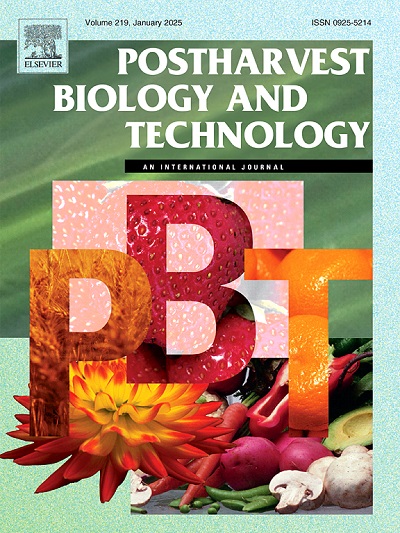
The journal is devoted exclusively to the publication of original papers, review articles and frontiers articles on biological and technological postharvest research. This includes the areas of postharvest storage, treatments and underpinning mechanisms, quality evaluation, packaging, handling and distribution of fresh horticultural crops including fruit, vegetables, flowers and nuts, but excluding grains, seeds and forages.
Papers reporting novel insights from fundamental and interdisciplinary research will be particularly encouraged. These disciplines include systems biology, bioinformatics, entomology, plant physiology, plant pathology, (bio)chemistry, engineering, modelling, and technologies for nondestructive testing.
Manuscripts on fresh food crops that will be further processed after postharvest storage, or on food processes beyond refrigeration, packaging and minimal processing will not be considered.




 京公网安备 11010802042870号
京ICP备2023020795号-1
京公网安备 11010802042870号
京ICP备2023020795号-1

 分享
分享
 求助内容:
求助内容: 应助结果提醒方式:
 扫码关注我们
