{"title":"石墨-石墨烯复合材料作为锂离子电池的负极","authors":"E. Strativnov, A. Khovavko, G. Nie, P.-G. Ji","doi":"10.1007/s13204-023-02904-4","DOIUrl":null,"url":null,"abstract":"<div><p>Graphite-graphene composites (GGC) have been obtained as a result of mechanical treatment of thermoexpanded graphite (TEG). Raman spectroscopy proves the presence of ordered graphene in the GGC. The predominant formation of no more than 5 graphene sheets in the material is concluded from Raman data and SEM micrographs. Electrochemical tests of GGC samples show that in spite of quite low specific discharge capacity (290 mAhg<sup>−1</sup>), a 20-fold increase in current density (from 50 to 1000 mA g<sup>−1</sup>) does not lead to a change in the specific capacity upon deintercalation of lithium ions. This feature favorably differs the material studied from existing analogues. A decrease in the specific capacity during cycling of the GGC at a current density of 100 mA g<sup>−1</sup> after 95 cycles has not been noted. Exceptionally low decrease in the specific capacity upon the increase of the power load, perfect cycling stability and high Coulombic efficiency supported by electrochemical impedance analysis indicate good prospects of using GGC as a lithium-ion battery anode and for utilizing graphene additives to electrode materials of lithium-ion batteries operating at high discharge currents.</p></div>","PeriodicalId":471,"journal":{"name":"Applied Nanoscience","volume":"13 12","pages":"7531 - 7536"},"PeriodicalIF":3.6740,"publicationDate":"2023-08-11","publicationTypes":"Journal Article","fieldsOfStudy":null,"isOpenAccess":false,"openAccessPdf":"","citationCount":"0","resultStr":"{\"title\":\"Graphite-graphene composite as an anode for lithium-ion batteries\",\"authors\":\"E. Strativnov, A. Khovavko, G. Nie, P.-G. Ji\",\"doi\":\"10.1007/s13204-023-02904-4\",\"DOIUrl\":null,\"url\":null,\"abstract\":\"<div><p>Graphite-graphene composites (GGC) have been obtained as a result of mechanical treatment of thermoexpanded graphite (TEG). Raman spectroscopy proves the presence of ordered graphene in the GGC. The predominant formation of no more than 5 graphene sheets in the material is concluded from Raman data and SEM micrographs. Electrochemical tests of GGC samples show that in spite of quite low specific discharge capacity (290 mAhg<sup>−1</sup>), a 20-fold increase in current density (from 50 to 1000 mA g<sup>−1</sup>) does not lead to a change in the specific capacity upon deintercalation of lithium ions. This feature favorably differs the material studied from existing analogues. A decrease in the specific capacity during cycling of the GGC at a current density of 100 mA g<sup>−1</sup> after 95 cycles has not been noted. Exceptionally low decrease in the specific capacity upon the increase of the power load, perfect cycling stability and high Coulombic efficiency supported by electrochemical impedance analysis indicate good prospects of using GGC as a lithium-ion battery anode and for utilizing graphene additives to electrode materials of lithium-ion batteries operating at high discharge currents.</p></div>\",\"PeriodicalId\":471,\"journal\":{\"name\":\"Applied Nanoscience\",\"volume\":\"13 12\",\"pages\":\"7531 - 7536\"},\"PeriodicalIF\":3.6740,\"publicationDate\":\"2023-08-11\",\"publicationTypes\":\"Journal Article\",\"fieldsOfStudy\":null,\"isOpenAccess\":false,\"openAccessPdf\":\"\",\"citationCount\":\"0\",\"resultStr\":null,\"platform\":\"Semanticscholar\",\"paperid\":null,\"PeriodicalName\":\"Applied Nanoscience\",\"FirstCategoryId\":\"5\",\"ListUrlMain\":\"https://link.springer.com/article/10.1007/s13204-023-02904-4\",\"RegionNum\":4,\"RegionCategory\":\"工程技术\",\"ArticlePicture\":[],\"TitleCN\":null,\"AbstractTextCN\":null,\"PMCID\":null,\"EPubDate\":\"\",\"PubModel\":\"\",\"JCR\":\"Q1\",\"JCRName\":\"Engineering\",\"Score\":null,\"Total\":0}","platform":"Semanticscholar","paperid":null,"PeriodicalName":"Applied Nanoscience","FirstCategoryId":"5","ListUrlMain":"https://link.springer.com/article/10.1007/s13204-023-02904-4","RegionNum":4,"RegionCategory":"工程技术","ArticlePicture":[],"TitleCN":null,"AbstractTextCN":null,"PMCID":null,"EPubDate":"","PubModel":"","JCR":"Q1","JCRName":"Engineering","Score":null,"Total":0}
引用次数: 0
摘要
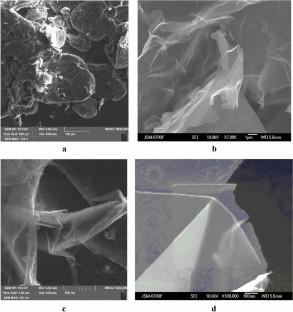
通过对热膨胀石墨(TEG)进行机械处理,获得了石墨-石墨烯复合材料(GGC)。拉曼光谱证明 GGC 中存在有序石墨烯。根据拉曼数据和扫描电镜显微照片得出的结论是,材料中主要形成的石墨烯薄片不超过 5 片。GGC 样品的电化学测试表明,尽管比放电容量很低(290 mAhg-1),但电流密度增加 20 倍(从 50 mA g-1 到 1000 mA g-1)也不会导致锂离子脱插后的比容量发生变化。这一特点使所研究的材料有别于现有的类似材料。在 100 mA g-1 的电流密度下循环使用 GGC 95 次后,比容量没有下降。通过电化学阻抗分析,GGC 在功率负荷增加时的比容量降幅极小,循环稳定性极佳,库仑效率高,这表明将 GGC 用作锂离子电池阳极以及将石墨烯添加剂用于高放电电流锂离子电池电极材料具有良好的前景。
Graphite-graphene composite as an anode for lithium-ion batteries
Graphite-graphene composites (GGC) have been obtained as a result of mechanical treatment of thermoexpanded graphite (TEG). Raman spectroscopy proves the presence of ordered graphene in the GGC. The predominant formation of no more than 5 graphene sheets in the material is concluded from Raman data and SEM micrographs. Electrochemical tests of GGC samples show that in spite of quite low specific discharge capacity (290 mAhg−1), a 20-fold increase in current density (from 50 to 1000 mA g−1) does not lead to a change in the specific capacity upon deintercalation of lithium ions. This feature favorably differs the material studied from existing analogues. A decrease in the specific capacity during cycling of the GGC at a current density of 100 mA g−1 after 95 cycles has not been noted. Exceptionally low decrease in the specific capacity upon the increase of the power load, perfect cycling stability and high Coulombic efficiency supported by electrochemical impedance analysis indicate good prospects of using GGC as a lithium-ion battery anode and for utilizing graphene additives to electrode materials of lithium-ion batteries operating at high discharge currents.
期刊介绍:
Applied Nanoscience is a hybrid journal that publishes original articles about state of the art nanoscience and the application of emerging nanotechnologies to areas fundamental to building technologically advanced and sustainable civilization, including areas as diverse as water science, advanced materials, energy, electronics, environmental science and medicine. The journal accepts original and review articles as well as book reviews for publication. All the manuscripts are single-blind peer-reviewed for scientific quality and acceptance.





 京公网安备 11010802042870号
京ICP备2023020795号-1
京公网安备 11010802042870号
京ICP备2023020795号-1

 分享
分享
 求助内容:
求助内容: 应助结果提醒方式:
 扫码关注我们
