{"title":"利用自然杀伤细胞介导的先天免疫反应治疗癌症:进展和挑战。","authors":"Anil Kumar, Adeleh Taghi Khani, Srividya Swaminathan","doi":"10.14218/ERHM.2022.00024","DOIUrl":null,"url":null,"abstract":"<p><p>Natural killer (NK) cells are a gatekeeper of the body's innate defense system against cancers and infections. A growing body of literature from us and others finds that NK cells promote anti-cancer immune surveillance, and that defects in NK cell development are associated with poor clinical prognosis of cancers. In preclinical studies, NK cells were found to drive tumor regression and delay tumor relapse. Because NK cells are potentially less damaging to the body and are easier to develop than T cell-based therapies, efforts are being made to improve NK cell cytotoxicity and <i>in vivo</i> persistence for use as an adoptive, off-the-shelf immunotherapy. In this review, we discuss how tumor-intrinsic and -extrinsic factors suppress NK cells in the cancer microenvironment. We also outline current strategies that restore NK surveillance in cancer and challenges facing the clinical use of NK cell-based therapies.</p>","PeriodicalId":12074,"journal":{"name":"Exploratory Research and Hypothesis in Medicine","volume":"77 1","pages":"169-178"},"PeriodicalIF":0.0000,"publicationDate":"2022-01-01","publicationTypes":"Journal Article","fieldsOfStudy":null,"isOpenAccess":false,"openAccessPdf":"https://www.ncbi.nlm.nih.gov/pmc/articles/PMC12948183/pdf/","citationCount":"0","resultStr":"{\"title\":\"Harnessing Natural Killer Cell-Mediated Innate Immune Responses for Cancer Treatment: Advances and Challenges.\",\"authors\":\"Anil Kumar, Adeleh Taghi Khani, Srividya Swaminathan\",\"doi\":\"10.14218/ERHM.2022.00024\",\"DOIUrl\":null,\"url\":null,\"abstract\":\"<p><p>Natural killer (NK) cells are a gatekeeper of the body's innate defense system against cancers and infections. A growing body of literature from us and others finds that NK cells promote anti-cancer immune surveillance, and that defects in NK cell development are associated with poor clinical prognosis of cancers. In preclinical studies, NK cells were found to drive tumor regression and delay tumor relapse. Because NK cells are potentially less damaging to the body and are easier to develop than T cell-based therapies, efforts are being made to improve NK cell cytotoxicity and <i>in vivo</i> persistence for use as an adoptive, off-the-shelf immunotherapy. In this review, we discuss how tumor-intrinsic and -extrinsic factors suppress NK cells in the cancer microenvironment. We also outline current strategies that restore NK surveillance in cancer and challenges facing the clinical use of NK cell-based therapies.</p>\",\"PeriodicalId\":12074,\"journal\":{\"name\":\"Exploratory Research and Hypothesis in Medicine\",\"volume\":\"77 1\",\"pages\":\"169-178\"},\"PeriodicalIF\":0.0000,\"publicationDate\":\"2022-01-01\",\"publicationTypes\":\"Journal Article\",\"fieldsOfStudy\":null,\"isOpenAccess\":false,\"openAccessPdf\":\"https://www.ncbi.nlm.nih.gov/pmc/articles/PMC12948183/pdf/\",\"citationCount\":\"0\",\"resultStr\":null,\"platform\":\"Semanticscholar\",\"paperid\":null,\"PeriodicalName\":\"Exploratory Research and Hypothesis in Medicine\",\"FirstCategoryId\":\"1085\",\"ListUrlMain\":\"https://doi.org/10.14218/ERHM.2022.00024\",\"RegionNum\":0,\"RegionCategory\":null,\"ArticlePicture\":[],\"TitleCN\":null,\"AbstractTextCN\":null,\"PMCID\":null,\"EPubDate\":\"2022/3/28 0:00:00\",\"PubModel\":\"Epub\",\"JCR\":\"\",\"JCRName\":\"\",\"Score\":null,\"Total\":0}","platform":"Semanticscholar","paperid":null,"PeriodicalName":"Exploratory Research and Hypothesis in Medicine","FirstCategoryId":"1085","ListUrlMain":"https://doi.org/10.14218/ERHM.2022.00024","RegionNum":0,"RegionCategory":null,"ArticlePicture":[],"TitleCN":null,"AbstractTextCN":null,"PMCID":null,"EPubDate":"2022/3/28 0:00:00","PubModel":"Epub","JCR":"","JCRName":"","Score":null,"Total":0}
Harnessing Natural Killer Cell-Mediated Innate Immune Responses for Cancer Treatment: Advances and Challenges.
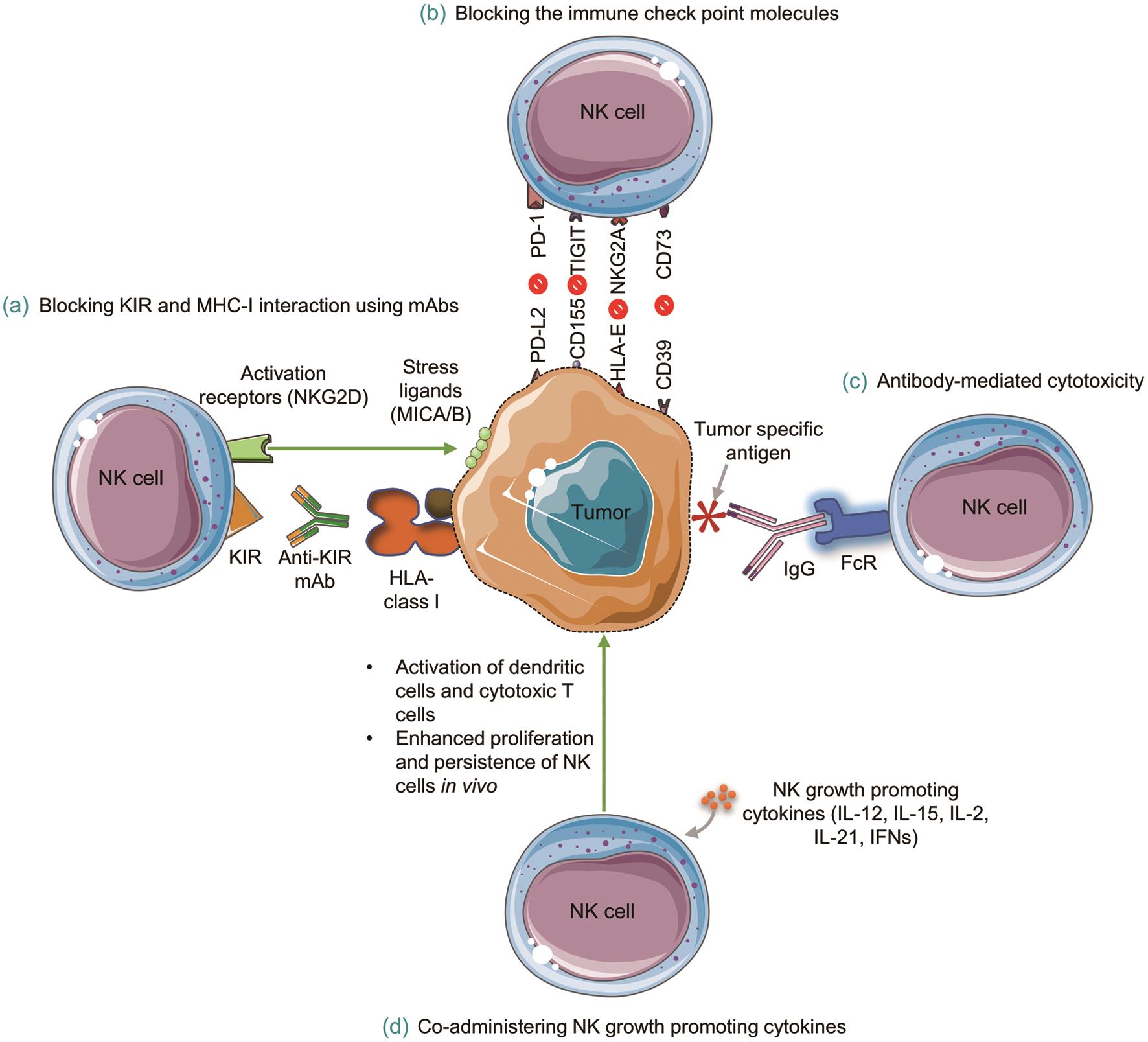
Natural killer (NK) cells are a gatekeeper of the body's innate defense system against cancers and infections. A growing body of literature from us and others finds that NK cells promote anti-cancer immune surveillance, and that defects in NK cell development are associated with poor clinical prognosis of cancers. In preclinical studies, NK cells were found to drive tumor regression and delay tumor relapse. Because NK cells are potentially less damaging to the body and are easier to develop than T cell-based therapies, efforts are being made to improve NK cell cytotoxicity and in vivo persistence for use as an adoptive, off-the-shelf immunotherapy. In this review, we discuss how tumor-intrinsic and -extrinsic factors suppress NK cells in the cancer microenvironment. We also outline current strategies that restore NK surveillance in cancer and challenges facing the clinical use of NK cell-based therapies.



 京公网安备 11010802042870号
京ICP备2023020795号-1
京公网安备 11010802042870号
京ICP备2023020795号-1

 分享
分享

 求助内容:
求助内容: 应助结果提醒方式:
 扫码关注我们
