K. Chaney, Leigh S. Wilton, Thekla Morgenroth, Rebecca Cipollina, Izilda Pereira-Jorge
{"title":"Predictors and Implications of Parents’ Beliefs About the Age Appropriateness of LGBTQ+ Topics for Children","authors":"K. Chaney, Leigh S. Wilton, Thekla Morgenroth, Rebecca Cipollina, Izilda Pereira-Jorge","doi":"10.1177/19485506241252198","DOIUrl":null,"url":null,"abstract":"U.S. policies increasingly limit lesbian, gay, bisexual, transgender, queer, or another marginalized gender identity or sexual orientation (LGBTQ +) education topics for children under the guise of age-appropriate curriculum, placing the responsibility of educating children about LGBTQ + identities and experiences on parents. We examined parents’ beliefs about the age-appropriateness of LGBTQ + topics for children, with implications for parent–child conversations and support for restricted LGBTQ + curriculum. In two studies, LGBTQ + and cisgender-heterosexual parents’ ( N = 837) belief that LGBTQ + topics are age-appropriate for children at an older age was related to fewer parent–child conversations about LGBTQ + topics and greater anticipated discomfort having such conversations (Studies 1 and 2). Counter to hypotheses, exposure to restrictive LGBTQ + education policies did not affect age-appropriateness beliefs (Studies 1 and 2). In line with hypotheses, parents’ belief that sexual orientation discussion should be minimized was associated with later age-appropriateness beliefs and greater support for restricting LGBTQ + curriculum (cisgender-heterosexual parents; Study 2). These studies highlight age-appropriateness beliefs as a key mechanism hindering critical parent–child LGBTQ + conversations.","PeriodicalId":4,"journal":{"name":"ACS Applied Energy Materials","volume":"7 3","pages":""},"PeriodicalIF":5.5000,"publicationDate":"2024-05-17","publicationTypes":"Journal Article","fieldsOfStudy":null,"isOpenAccess":false,"openAccessPdf":"","citationCount":"0","resultStr":null,"platform":"Semanticscholar","paperid":null,"PeriodicalName":"ACS Applied Energy Materials","FirstCategoryId":"102","ListUrlMain":"https://doi.org/10.1177/19485506241252198","RegionNum":3,"RegionCategory":"材料科学","ArticlePicture":[],"TitleCN":null,"AbstractTextCN":null,"PMCID":null,"EPubDate":"","PubModel":"","JCR":"Q2","JCRName":"CHEMISTRY, PHYSICAL","Score":null,"Total":0}
引用次数: 0
Abstract
U.S. policies increasingly limit lesbian, gay, bisexual, transgender, queer, or another marginalized gender identity or sexual orientation (LGBTQ +) education topics for children under the guise of age-appropriate curriculum, placing the responsibility of educating children about LGBTQ + identities and experiences on parents. We examined parents’ beliefs about the age-appropriateness of LGBTQ + topics for children, with implications for parent–child conversations and support for restricted LGBTQ + curriculum. In two studies, LGBTQ + and cisgender-heterosexual parents’ ( N = 837) belief that LGBTQ + topics are age-appropriate for children at an older age was related to fewer parent–child conversations about LGBTQ + topics and greater anticipated discomfort having such conversations (Studies 1 and 2). Counter to hypotheses, exposure to restrictive LGBTQ + education policies did not affect age-appropriateness beliefs (Studies 1 and 2). In line with hypotheses, parents’ belief that sexual orientation discussion should be minimized was associated with later age-appropriateness beliefs and greater support for restricting LGBTQ + curriculum (cisgender-heterosexual parents; Study 2). These studies highlight age-appropriateness beliefs as a key mechanism hindering critical parent–child LGBTQ + conversations.
期刊介绍:
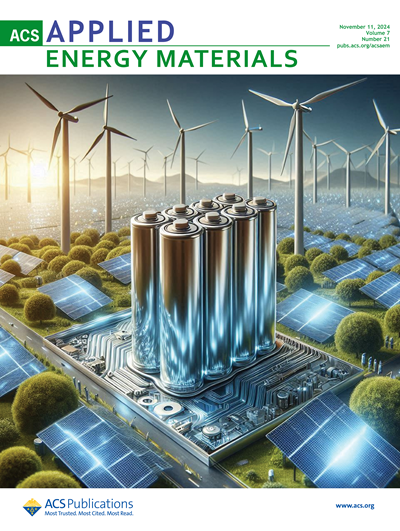
ACS Applied Energy Materials is an interdisciplinary journal publishing original research covering all aspects of materials, engineering, chemistry, physics and biology relevant to energy conversion and storage. The journal is devoted to reports of new and original experimental and theoretical research of an applied nature that integrate knowledge in the areas of materials, engineering, physics, bioscience, and chemistry into important energy applications.



 京公网安备 11010802042870号
京ICP备2023020795号-1
京公网安备 11010802042870号
京ICP备2023020795号-1

 分享
分享
 求助内容:
求助内容: 应助结果提醒方式:
 扫码关注我们
