Randall Loaiza, F. Fattahi, M. Kalbitz, Jamison J. Grailer, Mark W. Russell, José Jalife, Héctor H. Valdivia, F. Zetoune, Peter A. Ward
{"title":"The Impact of Extracellular Histones and Absence of Toll-like Receptors on Cardiac Functional and Electrical Disturbances in Mouse Hearts","authors":"Randall Loaiza, F. Fattahi, M. Kalbitz, Jamison J. Grailer, Mark W. Russell, José Jalife, Héctor H. Valdivia, F. Zetoune, Peter A. Ward","doi":"10.3390/ijms25168653","DOIUrl":null,"url":null,"abstract":"In polymicrobial sepsis, the extracellular histones, mainly released from activated neutrophils, significantly contribute to cardiac dysfunction (septic cardiomyopathy), as demonstrated in our previous studies using Echo-Doppler measurements. This study aims to elucidate the roles of extracellular histones and their interactions with Toll-like receptors (TLRs) in cardiac dysfunction. Through ex vivo assessments of ECG, left ventricle (LV) function parameters, and in vivo Echo-Doppler studies in mice perfused with extracellular histones, we aim to provide comprehensive insights into the mechanisms underlying sepsis-induced cardiac dysfunction. Langendorff-perfused hearts from both wild-type and TLR2, TLR3, or TLR4 knockout (KO) mice were examined. Paced mouse hearts were perfused with histones to assess contractility and relaxation. Echo-Doppler studies evaluated cardiac dysfunction after intravenous histone injection. Histone perfusion caused defects in contractility and relaxation, with TLR2 and TLR3 KO mice being partially protected. Specifically, TLR2 KO mice exhibited the greatest reduction in Echo-Doppler abnormalities, while TLR4 KO exacerbated cardiac dysfunction. Among individual histones, H1 induced the most pronounced abnormalities in cardiac function, apoptosis of cardiomyocytes, and LDH release. Our data highlight significant interactions between histones and TLRs, providing insights into histones especially H1 as potential therapeutic targets for septic cardiomyopathy. Further studies are needed to explore specific histone–TLR interactions and their mechanisms.","PeriodicalId":4,"journal":{"name":"ACS Applied Energy Materials","volume":"99 7","pages":""},"PeriodicalIF":5.5000,"publicationDate":"2024-08-08","publicationTypes":"Journal Article","fieldsOfStudy":null,"isOpenAccess":false,"openAccessPdf":"","citationCount":"0","resultStr":null,"platform":"Semanticscholar","paperid":null,"PeriodicalName":"ACS Applied Energy Materials","FirstCategoryId":"99","ListUrlMain":"https://doi.org/10.3390/ijms25168653","RegionNum":3,"RegionCategory":"材料科学","ArticlePicture":[],"TitleCN":null,"AbstractTextCN":null,"PMCID":null,"EPubDate":"","PubModel":"","JCR":"Q2","JCRName":"CHEMISTRY, PHYSICAL","Score":null,"Total":0}
引用次数: 0
Abstract
In polymicrobial sepsis, the extracellular histones, mainly released from activated neutrophils, significantly contribute to cardiac dysfunction (septic cardiomyopathy), as demonstrated in our previous studies using Echo-Doppler measurements. This study aims to elucidate the roles of extracellular histones and their interactions with Toll-like receptors (TLRs) in cardiac dysfunction. Through ex vivo assessments of ECG, left ventricle (LV) function parameters, and in vivo Echo-Doppler studies in mice perfused with extracellular histones, we aim to provide comprehensive insights into the mechanisms underlying sepsis-induced cardiac dysfunction. Langendorff-perfused hearts from both wild-type and TLR2, TLR3, or TLR4 knockout (KO) mice were examined. Paced mouse hearts were perfused with histones to assess contractility and relaxation. Echo-Doppler studies evaluated cardiac dysfunction after intravenous histone injection. Histone perfusion caused defects in contractility and relaxation, with TLR2 and TLR3 KO mice being partially protected. Specifically, TLR2 KO mice exhibited the greatest reduction in Echo-Doppler abnormalities, while TLR4 KO exacerbated cardiac dysfunction. Among individual histones, H1 induced the most pronounced abnormalities in cardiac function, apoptosis of cardiomyocytes, and LDH release. Our data highlight significant interactions between histones and TLRs, providing insights into histones especially H1 as potential therapeutic targets for septic cardiomyopathy. Further studies are needed to explore specific histone–TLR interactions and their mechanisms.
期刊介绍:
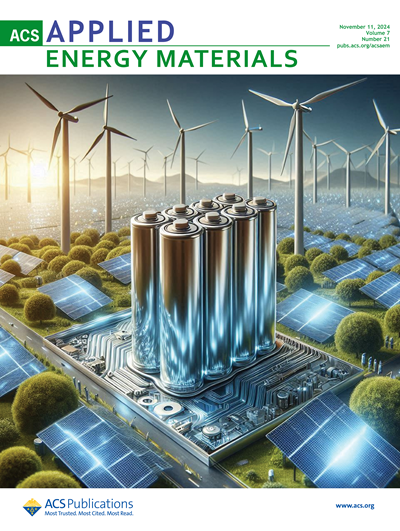
ACS Applied Energy Materials is an interdisciplinary journal publishing original research covering all aspects of materials, engineering, chemistry, physics and biology relevant to energy conversion and storage. The journal is devoted to reports of new and original experimental and theoretical research of an applied nature that integrate knowledge in the areas of materials, engineering, physics, bioscience, and chemistry into important energy applications.




 京公网安备 11010802042870号
京ICP备2023020795号-1
京公网安备 11010802042870号
京ICP备2023020795号-1

 分享
分享
 求助内容:
求助内容: 应助结果提醒方式:
 扫码关注我们
