Plant-based beverages have recently seen a significant increase in market demand. However, many of these products suffer from poor emulsion stability and low protein content. Gums have commonly been used to enhance emulsion stability but they do not improve the amino acid profile. This study investigated the use of multiples plant proteins to enhance both the stability and nutritional value of plant-based beverages.
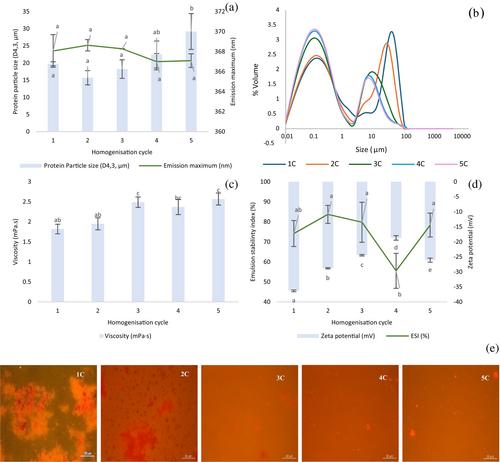
Pea and rice bran proteins both enhanced emulsion stability. Pea protein enhanced the viscosity of the continuous phase whereas rice bran protein lowered interfacial tension. When applied synergistically, competitive adhesion occurred. Rice bran protein gradually displaced pea protein from the oil droplet surface as its concentration increased, leading to emulsion destabilization due to the displaced pea protein. The use of high-pressure homogenization further enhanced the stability of the emulsion by unfolding protein partially. However, increasing homogenization pressure (>500 Bar) and homogenization cycle (>2 cycles) led to protein aggregation due to excessive exposure of its hydrophobic core. The emulsion formed was resistant to coalescence at 4 °C for 28 days and was stable under high pH and low ionic conditions.
The synergistic combination of plant proteins and the effective utilization of co-processing (homogenization) can enhance the functionality of the individual proteins significantly, leading to the formation of a stable emulsion. The use of plant protein mixture as a stabilizer not only improved the emulsion stability but also ensured a plant-based beverage with a complete amino acid profile for the vegan community. © 2024 The Author(s). Journal of the Science of Food and Agriculture published by John Wiley & Sons Ltd on behalf of Society of Chemical Industry.






 京公网安备 11010802042870号
京ICP备2023020795号-1
京公网安备 11010802042870号
京ICP备2023020795号-1

 分享
分享
 求助内容:
求助内容: 应助结果提醒方式:
 扫码关注我们
