Sarah Walter, RÍona McArdle, Emily A. Largent, Rebecca Edelmayer, Claire Sexton, Sandra Loyola Sandoval, Helen Medsger, Nancy Meserve, Roland Samaroo, Cynthia Sierra, Marlon M. P. Smeitink, Allison Gibson, Sarah Gregory, Diana Karamacoska, Iracema Leroi, Doris Molina-Henry, Aida Suarez-Gonzalez, Crystal M. Glover
{"title":"Public and participant involvement as a pathway to inclusive dementia research","authors":"Sarah Walter, RÍona McArdle, Emily A. Largent, Rebecca Edelmayer, Claire Sexton, Sandra Loyola Sandoval, Helen Medsger, Nancy Meserve, Roland Samaroo, Cynthia Sierra, Marlon M. P. Smeitink, Allison Gibson, Sarah Gregory, Diana Karamacoska, Iracema Leroi, Doris Molina-Henry, Aida Suarez-Gonzalez, Crystal M. Glover","doi":"10.1002/alz.14350","DOIUrl":null,"url":null,"abstract":"<div>\n \n \n <section>\n \n <p>The field of Alzheimer's disease and related dementias (ADRD) urgently requires inclusive research to ensure the priorities and outcomes of research apply to those most impacted. We postulate public and participant involvement (PPI) as a pathway to achieving the best science, both in research that informs health and social policy as well as in therapeutic studies to treat and prevent ADRD. This position paper aims to provide dementia researchers with evidence to understand how to apply PPI. We begin by highlighting the disparities experienced by people with dementia, including ageism, stigma of cognitive impairment, and health disparities for minoritized communities. We then provide examples of PPI in ADRD across the research lifecycle, from defining research topics of priority to those impacted by ADRD, through the design, analysis, dissemination, and translation to policy and practice. We also provide recommendations to create and maintain collaboration between researchers and communities through PPI.</p>\n </section>\n \n <section>\n \n <h3> Highlights</h3>\n \n <div>\n <ul>\n \n <li>A central premise of public and participant involvement (PPI) is collaborative relationships between researchers and community members.</li>\n \n <li>To build equitable partnerships, researchers must acknowledge and understand the context of research. This includes ageism, the stigma of dementia, and ongoing discrimination for many minoritized communities.</li>\n \n <li>Meaningful partnerships include choice, respect, shared decision making, access, inclusion, and representation. Notably, we recommend that researchers begin partnerships early in the research process and share the impact of PPI on research.</li>\n </ul>\n </div>\n </section>\n </div>","PeriodicalId":7471,"journal":{"name":"Alzheimer's & Dementia","volume":"21 1","pages":""},"PeriodicalIF":11.1000,"publicationDate":"2024-11-14","publicationTypes":"Journal Article","fieldsOfStudy":null,"isOpenAccess":false,"openAccessPdf":"https://onlinelibrary.wiley.com/doi/epdf/10.1002/alz.14350","citationCount":"0","resultStr":null,"platform":"Semanticscholar","paperid":null,"PeriodicalName":"Alzheimer's & Dementia","FirstCategoryId":"3","ListUrlMain":"https://alz-journals.onlinelibrary.wiley.com/doi/10.1002/alz.14350","RegionNum":1,"RegionCategory":"医学","ArticlePicture":[],"TitleCN":null,"AbstractTextCN":null,"PMCID":null,"EPubDate":"","PubModel":"","JCR":"Q1","JCRName":"CLINICAL NEUROLOGY","Score":null,"Total":0}
引用次数: 0
Abstract
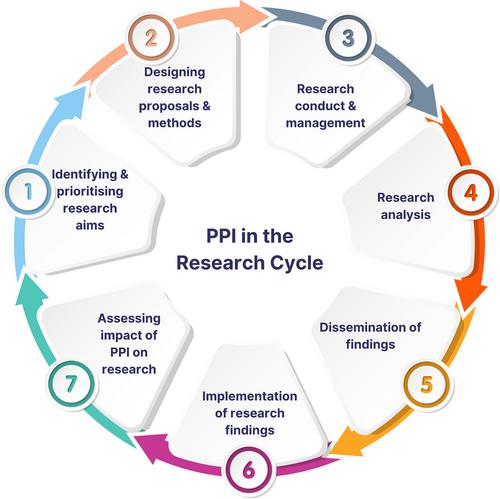
The field of Alzheimer's disease and related dementias (ADRD) urgently requires inclusive research to ensure the priorities and outcomes of research apply to those most impacted. We postulate public and participant involvement (PPI) as a pathway to achieving the best science, both in research that informs health and social policy as well as in therapeutic studies to treat and prevent ADRD. This position paper aims to provide dementia researchers with evidence to understand how to apply PPI. We begin by highlighting the disparities experienced by people with dementia, including ageism, stigma of cognitive impairment, and health disparities for minoritized communities. We then provide examples of PPI in ADRD across the research lifecycle, from defining research topics of priority to those impacted by ADRD, through the design, analysis, dissemination, and translation to policy and practice. We also provide recommendations to create and maintain collaboration between researchers and communities through PPI.
Highlights
A central premise of public and participant involvement (PPI) is collaborative relationships between researchers and community members.
To build equitable partnerships, researchers must acknowledge and understand the context of research. This includes ageism, the stigma of dementia, and ongoing discrimination for many minoritized communities.
Meaningful partnerships include choice, respect, shared decision making, access, inclusion, and representation. Notably, we recommend that researchers begin partnerships early in the research process and share the impact of PPI on research.
期刊介绍:
Alzheimer's & Dementia is a peer-reviewed journal that aims to bridge knowledge gaps in dementia research by covering the entire spectrum, from basic science to clinical trials to social and behavioral investigations. It provides a platform for rapid communication of new findings and ideas, optimal translation of research into practical applications, increasing knowledge across diverse disciplines for early detection, diagnosis, and intervention, and identifying promising new research directions. In July 2008, Alzheimer's & Dementia was accepted for indexing by MEDLINE, recognizing its scientific merit and contribution to Alzheimer's research.





 京公网安备 11010802042870号
京ICP备2023020795号-1
京公网安备 11010802042870号
京ICP备2023020795号-1

 分享
分享
 求助内容:
求助内容: 应助结果提醒方式:
 扫码关注我们
