Comparison of the effectiveness of self-care educational program using animation and role-playing on quality of life in adolescents with type 1 diabetes.
Parisa Hosseiniasl, Zohreh Karimi, Abdolkarim G Moghadam, Maryam A Mazaheri, Mohammad Zoladl
{"title":"Comparison of the effectiveness of self-care educational program using animation and role-playing on quality of life in adolescents with type 1 diabetes.","authors":"Parisa Hosseiniasl, Zohreh Karimi, Abdolkarim G Moghadam, Maryam A Mazaheri, Mohammad Zoladl","doi":"10.4103/jehp.jehp_32_24","DOIUrl":null,"url":null,"abstract":"<p><strong>Background: </strong>Type 1 diabetes is a chronic disease and the number of Adolescents diagnosed with it, is at an increase. Self-care education can reduce the complications of this disease. Therefore, this research was conducted to determine and compare the effectiveness of self-care educational programs, using animation and role-playing on quality of life in Adolescents with type 1 diabetes.</p><p><strong>Materials and methods: </strong>This quasi-experimental study consists of 111 Adolescents with type 1 diabetes, who visited Imam Hossein (PBUH) pediatric endocrinology clinic, Isfahan, May since August 2021, were selected through convenience sampling. The Diabetes Quality of Life for Youth scale was used, before and after the intervention. The interventions in each group were performed twice a week for 2 months. Data were analyzed through the one-way analysis of variance, Chi-square, Bonferroni <i>post</i> <i>hoc</i> and paired <i>t</i>-statistical tests.</p><p><strong>Results: </strong>After completing the interventions, the mean quality of life score in group 1 (animation) was significantly higher compared to that of group 2 (role-playing) (<i>P</i> = 0.001). In intervention group 1 (animation) and intervention group 2 (role-playing), the quality of life score and its subscales, after the completion of the research interventions had a significant increase, compared to the beginning of the study (<i>P</i> = 0.001).</p><p><strong>Conclusion: </strong>Both animation and role-playing educational methods caused statistically significant changes in the quality of life score, and the animation educational method was more effective than role-playing. Therefore, it is suggested that managers, policymakers and health team members consider the implementation of these educational methods in the educational program of adolescents with type 1 diabetes and use these two educational methods.</p>","PeriodicalId":15581,"journal":{"name":"Journal of Education and Health Promotion","volume":"13 ","pages":"364"},"PeriodicalIF":1.3000,"publicationDate":"2024-09-28","publicationTypes":"Journal Article","fieldsOfStudy":null,"isOpenAccess":false,"openAccessPdf":"https://www.ncbi.nlm.nih.gov/pmc/articles/PMC11639535/pdf/","citationCount":"0","resultStr":null,"platform":"Semanticscholar","paperid":null,"PeriodicalName":"Journal of Education and Health Promotion","FirstCategoryId":"1085","ListUrlMain":"https://doi.org/10.4103/jehp.jehp_32_24","RegionNum":0,"RegionCategory":null,"ArticlePicture":[],"TitleCN":null,"AbstractTextCN":null,"PMCID":null,"EPubDate":"2024/1/1 0:00:00","PubModel":"eCollection","JCR":"Q3","JCRName":"EDUCATION, SCIENTIFIC DISCIPLINES","Score":null,"Total":0}
引用次数: 0
Abstract
Background: Type 1 diabetes is a chronic disease and the number of Adolescents diagnosed with it, is at an increase. Self-care education can reduce the complications of this disease. Therefore, this research was conducted to determine and compare the effectiveness of self-care educational programs, using animation and role-playing on quality of life in Adolescents with type 1 diabetes.
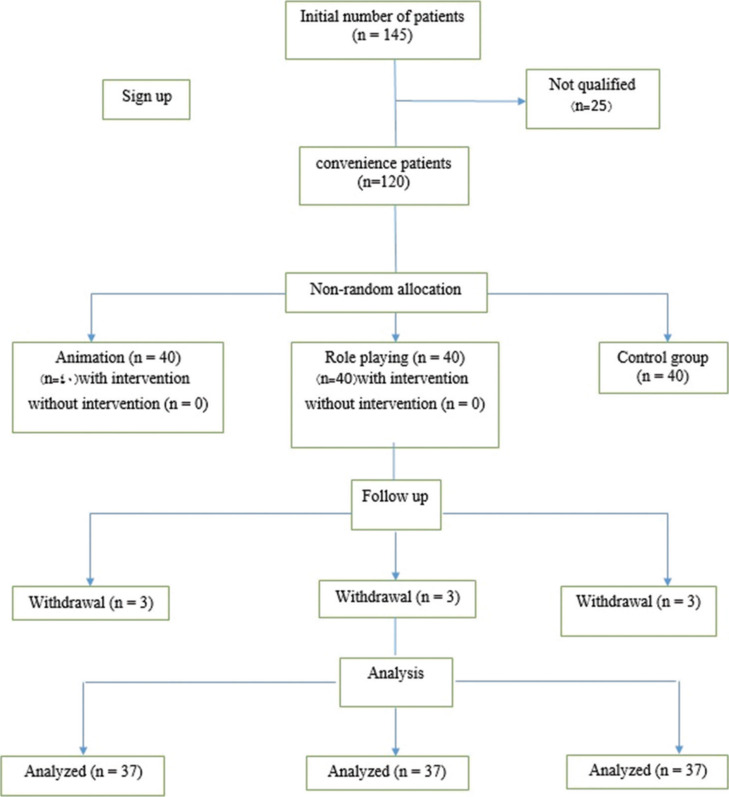
Materials and methods: This quasi-experimental study consists of 111 Adolescents with type 1 diabetes, who visited Imam Hossein (PBUH) pediatric endocrinology clinic, Isfahan, May since August 2021, were selected through convenience sampling. The Diabetes Quality of Life for Youth scale was used, before and after the intervention. The interventions in each group were performed twice a week for 2 months. Data were analyzed through the one-way analysis of variance, Chi-square, Bonferroni posthoc and paired t-statistical tests.
Results: After completing the interventions, the mean quality of life score in group 1 (animation) was significantly higher compared to that of group 2 (role-playing) (P = 0.001). In intervention group 1 (animation) and intervention group 2 (role-playing), the quality of life score and its subscales, after the completion of the research interventions had a significant increase, compared to the beginning of the study (P = 0.001).
Conclusion: Both animation and role-playing educational methods caused statistically significant changes in the quality of life score, and the animation educational method was more effective than role-playing. Therefore, it is suggested that managers, policymakers and health team members consider the implementation of these educational methods in the educational program of adolescents with type 1 diabetes and use these two educational methods.





 京公网安备 11010802042870号
京ICP备2023020795号-1
京公网安备 11010802042870号
京ICP备2023020795号-1

 分享
分享

 求助内容:
求助内容: 应助结果提醒方式:
 扫码关注我们
