Mara Schilling-Wilhelmi, Martiño Ríos-García, Sherjeel Shabih, María Victoria Gil, Santiago Miret, Christoph T. Koch, José A. Márquez and Kevin Maik Jablonka
{"title":"From text to insight: large language models for chemical data extraction","authors":"Mara Schilling-Wilhelmi, Martiño Ríos-García, Sherjeel Shabih, María Victoria Gil, Santiago Miret, Christoph T. Koch, José A. Márquez and Kevin Maik Jablonka","doi":"10.1039/D4CS00913D","DOIUrl":null,"url":null,"abstract":"<p >The vast majority of chemical knowledge exists in unstructured natural language, yet structured data is crucial for innovative and systematic materials design. Traditionally, the field has relied on manual curation and partial automation for data extraction for specific use cases. The advent of large language models (LLMs) represents a significant shift, potentially enabling non-experts to extract structured, actionable data from unstructured text efficiently. While applying LLMs to chemical and materials science data extraction presents unique challenges, domain knowledge offers opportunities to guide and validate LLM outputs. This tutorial review provides a comprehensive overview of LLM-based structured data extraction in chemistry, synthesizing current knowledge and outlining future directions. We address the lack of standardized guidelines and present frameworks for leveraging the synergy between LLMs and chemical expertise. This work serves as a foundational resource for researchers aiming to harness LLMs for data-driven chemical research. The insights presented here could significantly enhance how researchers across chemical disciplines access and utilize scientific information, potentially accelerating the development of novel compounds and materials for critical societal needs.</p>","PeriodicalId":68,"journal":{"name":"Chemical Society Reviews","volume":" 3","pages":" 1125-1150"},"PeriodicalIF":39.0000,"publicationDate":"2024-12-20","publicationTypes":"Journal Article","fieldsOfStudy":null,"isOpenAccess":false,"openAccessPdf":"https://pubs.rsc.org/en/content/articlepdf/2025/cs/d4cs00913d?page=search","citationCount":"0","resultStr":null,"platform":"Semanticscholar","paperid":null,"PeriodicalName":"Chemical Society Reviews","FirstCategoryId":"92","ListUrlMain":"https://pubs.rsc.org/en/content/articlelanding/2025/cs/d4cs00913d","RegionNum":1,"RegionCategory":"化学","ArticlePicture":[],"TitleCN":null,"AbstractTextCN":null,"PMCID":null,"EPubDate":"","PubModel":"","JCR":"Q1","JCRName":"CHEMISTRY, MULTIDISCIPLINARY","Score":null,"Total":0}
引用次数: 0
Abstract
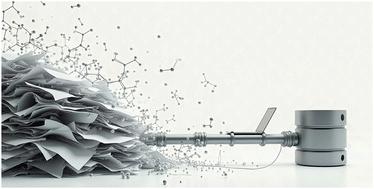
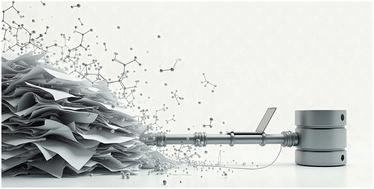
The vast majority of chemical knowledge exists in unstructured natural language, yet structured data is crucial for innovative and systematic materials design. Traditionally, the field has relied on manual curation and partial automation for data extraction for specific use cases. The advent of large language models (LLMs) represents a significant shift, potentially enabling non-experts to extract structured, actionable data from unstructured text efficiently. While applying LLMs to chemical and materials science data extraction presents unique challenges, domain knowledge offers opportunities to guide and validate LLM outputs. This tutorial review provides a comprehensive overview of LLM-based structured data extraction in chemistry, synthesizing current knowledge and outlining future directions. We address the lack of standardized guidelines and present frameworks for leveraging the synergy between LLMs and chemical expertise. This work serves as a foundational resource for researchers aiming to harness LLMs for data-driven chemical research. The insights presented here could significantly enhance how researchers across chemical disciplines access and utilize scientific information, potentially accelerating the development of novel compounds and materials for critical societal needs.
期刊介绍:
Chemical Society Reviews is published by: Royal Society of Chemistry.
Focus: Review articles on topics of current interest in chemistry;
Predecessors: Quarterly Reviews, Chemical Society (1947–1971);
Current title: Since 1971;
Impact factor: 60.615 (2021);
Themed issues: Occasional themed issues on new and emerging areas of research in the chemical sciences



 京公网安备 11010802042870号
京ICP备2023020795号-1
京公网安备 11010802042870号
京ICP备2023020795号-1

 分享
分享
 求助内容:
求助内容: 应助结果提醒方式:
 扫码关注我们
