Titanium dioxide-induced fibrotic liver model and the therapeutic effect of resveratrol by modulation of α-SMA and 8-oHdG expressions, oxidative stress, and inflammation
{"title":"Titanium dioxide-induced fibrotic liver model and the therapeutic effect of resveratrol by modulation of α-SMA and 8-oHdG expressions, oxidative stress, and inflammation","authors":"Feyza Başak , Tansu Kuşat , Yusuf Ersan , Tahir Kahraman","doi":"10.1016/j.tice.2025.102748","DOIUrl":null,"url":null,"abstract":"<div><div>The research sought to assess the therapeutic impact of resveratrol by biochemical, immunohistochemical, and histopathological analyses in a TiO<sub>2</sub>-induced liver fibrosis model. Titanium dioxide (100 mg/kg body weight) was delivered for 15 days to induce liver fibrosis, either alone or in conjunction with resveratrol (30 mg/kg body weight) therapy for the same duration. Resveratrol has been identified as a crucial therapeutic drug that provides an alternative treatment method for TiO<sub>2</sub>-induced liver fibrosis by mitigating inflammation, oxidative stress, and the expressions of α-SMA and 8-OHdG. Resveratrol treatment mitigated TiO<sub>2</sub>-induced liver fibrosis by repairing hepatocellular injury and decreasing plasma AST, ALT, and ALP levels. Resveratrol improves the activity of superoxide dismutase (SOD) and catalase (CAT), crucial enzymes for antioxidant defense, and elevates glutathione peroxidase (GSH-Px) levels, so augmenting antioxidant function. Furthermore, resveratrol decreased hepatic inflammation (IL-6 and IL-1β) and oxidative stress markers. Furthermore, histological alterations and immunohistochemistry expression of α-SMA and 8-OhdG were reinstated after resveratrol administration in the TiO<sub>2</sub>-induced liver fibrosis model. Our research indicates that resveratrol administration effectively protects against liver fibrosis produced by TiO<sub>2</sub>.</div></div>","PeriodicalId":23201,"journal":{"name":"Tissue & cell","volume":"93 ","pages":"Article 102748"},"PeriodicalIF":2.5000,"publicationDate":"2025-01-18","publicationTypes":"Journal Article","fieldsOfStudy":null,"isOpenAccess":false,"openAccessPdf":"","citationCount":"0","resultStr":null,"platform":"Semanticscholar","paperid":null,"PeriodicalName":"Tissue & cell","FirstCategoryId":"99","ListUrlMain":"https://www.sciencedirect.com/science/article/pii/S004081662500028X","RegionNum":4,"RegionCategory":"生物学","ArticlePicture":[],"TitleCN":null,"AbstractTextCN":null,"PMCID":null,"EPubDate":"","PubModel":"","JCR":"Q1","JCRName":"ANATOMY & MORPHOLOGY","Score":null,"Total":0}
引用次数: 0
Abstract
The research sought to assess the therapeutic impact of resveratrol by biochemical, immunohistochemical, and histopathological analyses in a TiO2-induced liver fibrosis model. Titanium dioxide (100 mg/kg body weight) was delivered for 15 days to induce liver fibrosis, either alone or in conjunction with resveratrol (30 mg/kg body weight) therapy for the same duration. Resveratrol has been identified as a crucial therapeutic drug that provides an alternative treatment method for TiO2-induced liver fibrosis by mitigating inflammation, oxidative stress, and the expressions of α-SMA and 8-OHdG. Resveratrol treatment mitigated TiO2-induced liver fibrosis by repairing hepatocellular injury and decreasing plasma AST, ALT, and ALP levels. Resveratrol improves the activity of superoxide dismutase (SOD) and catalase (CAT), crucial enzymes for antioxidant defense, and elevates glutathione peroxidase (GSH-Px) levels, so augmenting antioxidant function. Furthermore, resveratrol decreased hepatic inflammation (IL-6 and IL-1β) and oxidative stress markers. Furthermore, histological alterations and immunohistochemistry expression of α-SMA and 8-OhdG were reinstated after resveratrol administration in the TiO2-induced liver fibrosis model. Our research indicates that resveratrol administration effectively protects against liver fibrosis produced by TiO2.
期刊介绍:
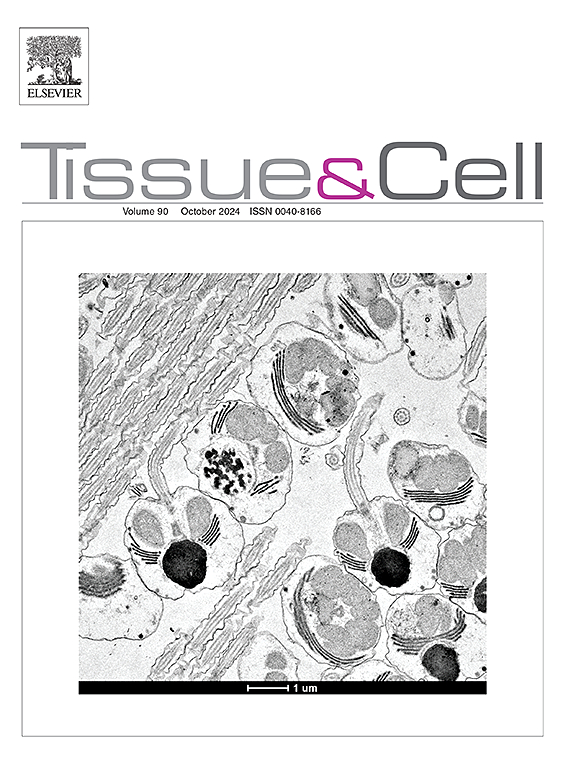
Tissue and Cell is devoted to original research on the organization of cells, subcellular and extracellular components at all levels, including the grouping and interrelations of cells in tissues and organs. The journal encourages submission of ultrastructural studies that provide novel insights into structure, function and physiology of cells and tissues, in health and disease. Bioengineering and stem cells studies focused on the description of morphological and/or histological data are also welcomed.
Studies investigating the effect of compounds and/or substances on structure of cells and tissues are generally outside the scope of this journal. For consideration, studies should contain a clear rationale on the use of (a) given substance(s), have a compelling morphological and structural focus and present novel incremental findings from previous literature.



 京公网安备 11010802042870号
京ICP备2023020795号-1
京公网安备 11010802042870号
京ICP备2023020795号-1

 分享
分享
 求助内容:
求助内容: 应助结果提醒方式:
 扫码关注我们
