Qinyuan Huang, Qinyi Zhong, Yanjing Zeng, Yimeng Li, James Wiley, Man Ping Wang, Jyu-Lin Chen, Jia Guo
{"title":"mHealth-Based Diabetes Prevention Program for Chinese Mothers With Abdominal Obesity: Randomized Controlled Trial.","authors":"Qinyuan Huang, Qinyi Zhong, Yanjing Zeng, Yimeng Li, James Wiley, Man Ping Wang, Jyu-Lin Chen, Jia Guo","doi":"10.2196/47837","DOIUrl":null,"url":null,"abstract":"<p><strong>Background: </strong>Among people with abdominal obesity, women are more likely to develop diabetes than men. Mobile health (mHealth)-based technologies provide the flexibility and resource-saving opportunities to improve lifestyles in an individualized way. However, mHealth-based diabetes prevention programs tailored for busy mothers with abdominal obesity have not been reported yet.</p><p><strong>Objective: </strong>The aim of this study is to evaluate the feasibility and acceptability of an mHealth-based diabetes prevention program and its preliminary efficacy in reducing weight-related variables, behavioral variables, psychological variables, and diabetes risk among Chinese mothers with abdominal obesity over 6 months.</p><p><strong>Methods: </strong>A randomized controlled trial was conducted at health management centers in 2 tertiary hospitals in Changsha, China. The mHealth group (n=40) received 12 weekly web-based lifestyle modification modules for diabetes prevention, 6 biweekly individualized health education messages based on their goal settings, and a Fitbit tracker. The control group (n=40) received 12 weekly web-based general health education modules, 6 biweekly general health education messages, and a Fitbit tracker. Data were collected at baseline, 3 months, and 6 months on the feasibility and acceptability outcomes, weight-related variables (waist circumference and BMI), diabetes risk scores, glycemic levels, behavioral variables (daily step count, active minutes, fruit and vegetable intake, calorie consumption, and sleep duration), and psychological variables (self-efficacy and social support for physical activity and diet, perceived stress, and quality of life). Generalized estimating equations were used for data analysis.</p><p><strong>Results: </strong>Approximately 85% (68/80) of the participants completed 6 months of follow-up assessments. Regarding the feasibility and acceptance of the program in the mHealth group, the average number of modules reviewed was 7.9 out of 12, and the satisfaction score was 4.37 out of 5. Significant improvements at 6 months between the intervention and control groups were found in waist circumference (β=-2.24, 95% CI -4.12 to -0.36; P=.02), modifiable diabetes risk scores (β=-2.5, 95% CI -4.57 to -0.44; P=.02), daily steps (β=1.67, 95% CI 0.06-3.29; P=.04), self-efficacy for physical activity (β=1.93, 95% CI 0.44-3.43; P=.01), social support for physical activity (β=2.27, 95% CI 0.80-3.74; P=.002), and physical health satisfaction (β=0.82, 95% CI 0.08-1.55; P=.03). No differences were found in BMI, total diabetes risk score, daily active minutes, daily intake of fruits and vegetables, sleep duration, daily calorie consumption, self-efficacy, and social support for diet (P>.05).</p><p><strong>Conclusions: </strong>This study addresses the potential role of tailored lifestyle interventions based on mHealth technology by offering tailored web-based health modules and health information in managing diabetes risk among mothers with abdominal obesity. The mHealth diabetes prevention program provides a flexible, customized, and resource-saving model for busy mothers. Future research could further explore the efficacy improvement on dietary behaviors to better serve the health care needs of this population.</p><p><strong>Trial registration: </strong>Chinese Clinical Trial Registry ChiCTR2400090554; https://www.chictr.org.cn/showproj.html?proj=226411.</p>","PeriodicalId":14756,"journal":{"name":"JMIR mHealth and uHealth","volume":"13 ","pages":"e47837"},"PeriodicalIF":6.2000,"publicationDate":"2025-01-24","publicationTypes":"Journal Article","fieldsOfStudy":null,"isOpenAccess":false,"openAccessPdf":"https://www.ncbi.nlm.nih.gov/pmc/articles/PMC11806265/pdf/","citationCount":"0","resultStr":null,"platform":"Semanticscholar","paperid":null,"PeriodicalName":"JMIR mHealth and uHealth","FirstCategoryId":"3","ListUrlMain":"https://doi.org/10.2196/47837","RegionNum":2,"RegionCategory":"医学","ArticlePicture":[],"TitleCN":null,"AbstractTextCN":null,"PMCID":null,"EPubDate":"","PubModel":"","JCR":"Q1","JCRName":"HEALTH CARE SCIENCES & SERVICES","Score":null,"Total":0}
引用次数: 0
Abstract
Background: Among people with abdominal obesity, women are more likely to develop diabetes than men. Mobile health (mHealth)-based technologies provide the flexibility and resource-saving opportunities to improve lifestyles in an individualized way. However, mHealth-based diabetes prevention programs tailored for busy mothers with abdominal obesity have not been reported yet.
Objective: The aim of this study is to evaluate the feasibility and acceptability of an mHealth-based diabetes prevention program and its preliminary efficacy in reducing weight-related variables, behavioral variables, psychological variables, and diabetes risk among Chinese mothers with abdominal obesity over 6 months.
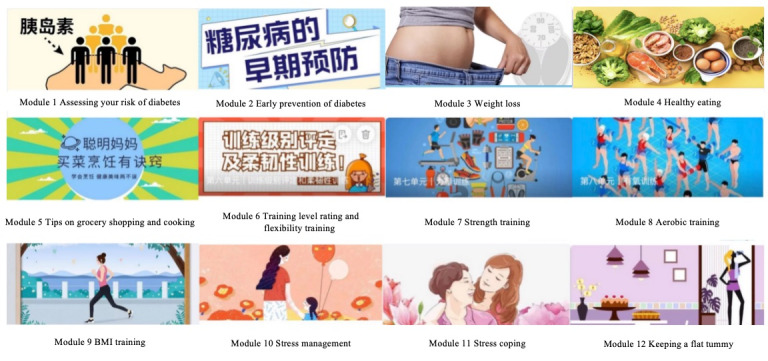
Methods: A randomized controlled trial was conducted at health management centers in 2 tertiary hospitals in Changsha, China. The mHealth group (n=40) received 12 weekly web-based lifestyle modification modules for diabetes prevention, 6 biweekly individualized health education messages based on their goal settings, and a Fitbit tracker. The control group (n=40) received 12 weekly web-based general health education modules, 6 biweekly general health education messages, and a Fitbit tracker. Data were collected at baseline, 3 months, and 6 months on the feasibility and acceptability outcomes, weight-related variables (waist circumference and BMI), diabetes risk scores, glycemic levels, behavioral variables (daily step count, active minutes, fruit and vegetable intake, calorie consumption, and sleep duration), and psychological variables (self-efficacy and social support for physical activity and diet, perceived stress, and quality of life). Generalized estimating equations were used for data analysis.
Results: Approximately 85% (68/80) of the participants completed 6 months of follow-up assessments. Regarding the feasibility and acceptance of the program in the mHealth group, the average number of modules reviewed was 7.9 out of 12, and the satisfaction score was 4.37 out of 5. Significant improvements at 6 months between the intervention and control groups were found in waist circumference (β=-2.24, 95% CI -4.12 to -0.36; P=.02), modifiable diabetes risk scores (β=-2.5, 95% CI -4.57 to -0.44; P=.02), daily steps (β=1.67, 95% CI 0.06-3.29; P=.04), self-efficacy for physical activity (β=1.93, 95% CI 0.44-3.43; P=.01), social support for physical activity (β=2.27, 95% CI 0.80-3.74; P=.002), and physical health satisfaction (β=0.82, 95% CI 0.08-1.55; P=.03). No differences were found in BMI, total diabetes risk score, daily active minutes, daily intake of fruits and vegetables, sleep duration, daily calorie consumption, self-efficacy, and social support for diet (P>.05).
Conclusions: This study addresses the potential role of tailored lifestyle interventions based on mHealth technology by offering tailored web-based health modules and health information in managing diabetes risk among mothers with abdominal obesity. The mHealth diabetes prevention program provides a flexible, customized, and resource-saving model for busy mothers. Future research could further explore the efficacy improvement on dietary behaviors to better serve the health care needs of this population.
Trial registration: Chinese Clinical Trial Registry ChiCTR2400090554; https://www.chictr.org.cn/showproj.html?proj=226411.
期刊介绍:
JMIR mHealth and uHealth (JMU, ISSN 2291-5222) is a spin-off journal of JMIR, the leading eHealth journal (Impact Factor 2016: 5.175). JMIR mHealth and uHealth is indexed in PubMed, PubMed Central, and Science Citation Index Expanded (SCIE), and in June 2017 received a stunning inaugural Impact Factor of 4.636.
The journal focusses on health and biomedical applications in mobile and tablet computing, pervasive and ubiquitous computing, wearable computing and domotics.
JMIR mHealth and uHealth publishes since 2013 and was the first mhealth journal in Pubmed. It publishes even faster and has a broader scope with including papers which are more technical or more formative/developmental than what would be published in the Journal of Medical Internet Research.





 京公网安备 11010802042870号
京ICP备2023020795号-1
京公网安备 11010802042870号
京ICP备2023020795号-1

 分享
分享
 求助内容:
求助内容: 应助结果提醒方式:
 扫码关注我们
