{"title":"Depression Recognition Using Daily Wearable-Derived Physiological Data.","authors":"Xinyu Shui, Hao Xu, Shuping Tan, Dan Zhang","doi":"10.3390/s25020567","DOIUrl":null,"url":null,"abstract":"<p><p>The objective identification of depression using physiological data has emerged as a significant research focus within the field of psychiatry. The advancement of wearable physiological measurement devices has opened new avenues for the identification of individuals with depression in everyday-life contexts. Compared to other objective measurement methods, wearables offer the potential for continuous, unobtrusive monitoring, which can capture subtle physiological changes indicative of depressive states. The present study leverages multimodal wristband devices to collect data from fifty-eight participants clinically diagnosed with depression during their normal daytime activities over six hours. Data collected include pulse wave, skin conductance, and triaxial acceleration. For comparison, we also utilized data from fifty-eight matched healthy controls from a publicly available dataset, collected using the same devices over equivalent durations. Our aim was to identify depressive individuals through the analysis of multimodal physiological measurements derived from wearable devices in daily life scenarios. We extracted static features such as the mean, variance, skewness, and kurtosis of physiological indicators like heart rate, skin conductance, and acceleration, as well as autoregressive coefficients of these signals reflecting the temporal dynamics. Utilizing a Random Forest algorithm, we distinguished depressive and non-depressive individuals with varying classification accuracies on data aggregated over 6 h, 2 h, 30 min, and 5 min segments, as 90.0%, 84.7%, 80.1%, and 76.0%, respectively. Our results demonstrate the feasibility of using daily wearable-derived physiological data for depression recognition. The achieved classification accuracies suggest that this approach could be integrated into clinical settings for the early detection and monitoring of depressive symptoms. Future work will explore the potential of these methods for personalized interventions and real-time monitoring, offering a promising avenue for enhancing mental health care through the integration of wearable technology.</p>","PeriodicalId":21698,"journal":{"name":"Sensors","volume":"25 2","pages":""},"PeriodicalIF":3.5000,"publicationDate":"2025-01-19","publicationTypes":"Journal Article","fieldsOfStudy":null,"isOpenAccess":false,"openAccessPdf":"https://www.ncbi.nlm.nih.gov/pmc/articles/PMC11768625/pdf/","citationCount":"0","resultStr":null,"platform":"Semanticscholar","paperid":null,"PeriodicalName":"Sensors","FirstCategoryId":"103","ListUrlMain":"https://doi.org/10.3390/s25020567","RegionNum":3,"RegionCategory":"综合性期刊","ArticlePicture":[],"TitleCN":null,"AbstractTextCN":null,"PMCID":null,"EPubDate":"","PubModel":"","JCR":"Q2","JCRName":"CHEMISTRY, ANALYTICAL","Score":null,"Total":0}
引用次数: 0
Abstract
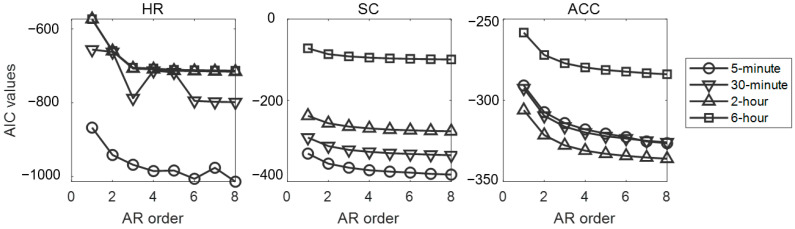
The objective identification of depression using physiological data has emerged as a significant research focus within the field of psychiatry. The advancement of wearable physiological measurement devices has opened new avenues for the identification of individuals with depression in everyday-life contexts. Compared to other objective measurement methods, wearables offer the potential for continuous, unobtrusive monitoring, which can capture subtle physiological changes indicative of depressive states. The present study leverages multimodal wristband devices to collect data from fifty-eight participants clinically diagnosed with depression during their normal daytime activities over six hours. Data collected include pulse wave, skin conductance, and triaxial acceleration. For comparison, we also utilized data from fifty-eight matched healthy controls from a publicly available dataset, collected using the same devices over equivalent durations. Our aim was to identify depressive individuals through the analysis of multimodal physiological measurements derived from wearable devices in daily life scenarios. We extracted static features such as the mean, variance, skewness, and kurtosis of physiological indicators like heart rate, skin conductance, and acceleration, as well as autoregressive coefficients of these signals reflecting the temporal dynamics. Utilizing a Random Forest algorithm, we distinguished depressive and non-depressive individuals with varying classification accuracies on data aggregated over 6 h, 2 h, 30 min, and 5 min segments, as 90.0%, 84.7%, 80.1%, and 76.0%, respectively. Our results demonstrate the feasibility of using daily wearable-derived physiological data for depression recognition. The achieved classification accuracies suggest that this approach could be integrated into clinical settings for the early detection and monitoring of depressive symptoms. Future work will explore the potential of these methods for personalized interventions and real-time monitoring, offering a promising avenue for enhancing mental health care through the integration of wearable technology.
期刊介绍:
Sensors (ISSN 1424-8220) provides an advanced forum for the science and technology of sensors and biosensors. It publishes reviews (including comprehensive reviews on the complete sensors products), regular research papers and short notes. Our aim is to encourage scientists to publish their experimental and theoretical results in as much detail as possible. There is no restriction on the length of the papers. The full experimental details must be provided so that the results can be reproduced.





 京公网安备 11010802042870号
京ICP备2023020795号-1
京公网安备 11010802042870号
京ICP备2023020795号-1

 分享
分享
 求助内容:
求助内容: 应助结果提醒方式:
 扫码关注我们
