{"title":"Glucose Supplementation Enhances the Bactericidal Effect of Penicillin and Gentamicin on <i>Streptococcus sanguinis</i> Persisters.","authors":"Kazuya Takada, Yoshie Yoshioka, Kazumasa Morikawa, Wataru Ariyoshi, Ryota Yamasaki","doi":"10.3390/antibiotics14010036","DOIUrl":null,"url":null,"abstract":"<p><p><b>Background</b>: <i>Streptococcus sanguinis</i> is a leading cause of infective endocarditis (IE), which causes diverse clinical symptoms and even death. Recurrence after treatment is a crucial problem in IE, possibly caused by the presence of \"persister\" cells, a small bacterial population that can survive antimicrobials. In this study, the residual risk for penicillin G (PCG) and gentamicin (GM), used for treating IE, to induce <i>Streptococcus sanguinis</i> persisters, was investigated. <b>Methods</b>: The bactericidal effects of PCG and GM on <i>S. sanguinis</i> were evaluated. Furthermore, we confirmed whether the <i>S. sanguinis</i> that survived following combination treatment with PCG and GM were persisters. The bactericidal effect of the combination of PCG and GM against <i>S. sanguinis</i> was measured after the addition of glucose or arginine. <b>Results</b>: Following 48 h of treatment with PCG (1600 μg/mL) and GM (64 μg/mL), <i>S. sanguinis</i> survived, albeit with a low bacterial count, indicating the presence of persisters. The addition of glucose or arginine to PCG and GM increased the bactericidal effect on residual persister cells and reduced the number of persister cells. Moreover, the addition of glucose at concentrations of 10 mg/mL or higher was substantially effective in achieving sterilization. <b>Conclusions</b>: Our findings demonstrate that persisters of <i>S. sanguinis</i> that survive antimicrobial treatment may make the treatment of IE challenging, and that combining antimicrobial treatment with glucose is effective for eliminating persisters of <i>S. sanguinis</i>. Taken together, these findings may facilitate the development of novel therapeutic strategies against IE caused by oral streptococcal infection.</p>","PeriodicalId":54246,"journal":{"name":"Antibiotics-Basel","volume":"14 1","pages":""},"PeriodicalIF":4.6000,"publicationDate":"2025-01-05","publicationTypes":"Journal Article","fieldsOfStudy":null,"isOpenAccess":false,"openAccessPdf":"https://www.ncbi.nlm.nih.gov/pmc/articles/PMC11762801/pdf/","citationCount":"0","resultStr":null,"platform":"Semanticscholar","paperid":null,"PeriodicalName":"Antibiotics-Basel","FirstCategoryId":"3","ListUrlMain":"https://doi.org/10.3390/antibiotics14010036","RegionNum":2,"RegionCategory":"医学","ArticlePicture":[],"TitleCN":null,"AbstractTextCN":null,"PMCID":null,"EPubDate":"","PubModel":"","JCR":"Q1","JCRName":"INFECTIOUS DISEASES","Score":null,"Total":0}
引用次数: 0
Abstract
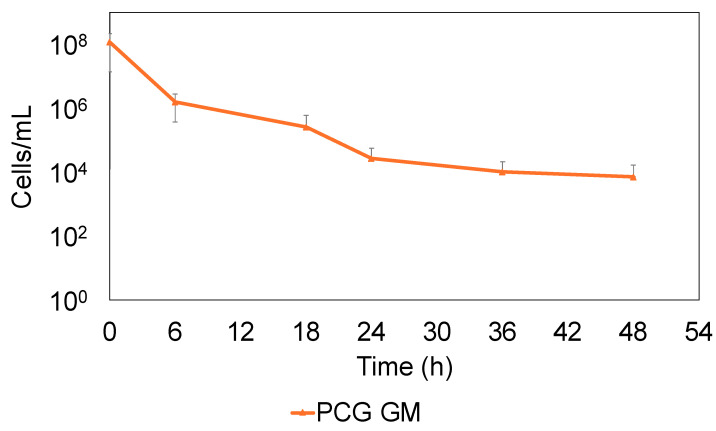
Background: Streptococcus sanguinis is a leading cause of infective endocarditis (IE), which causes diverse clinical symptoms and even death. Recurrence after treatment is a crucial problem in IE, possibly caused by the presence of "persister" cells, a small bacterial population that can survive antimicrobials. In this study, the residual risk for penicillin G (PCG) and gentamicin (GM), used for treating IE, to induce Streptococcus sanguinis persisters, was investigated. Methods: The bactericidal effects of PCG and GM on S. sanguinis were evaluated. Furthermore, we confirmed whether the S. sanguinis that survived following combination treatment with PCG and GM were persisters. The bactericidal effect of the combination of PCG and GM against S. sanguinis was measured after the addition of glucose or arginine. Results: Following 48 h of treatment with PCG (1600 μg/mL) and GM (64 μg/mL), S. sanguinis survived, albeit with a low bacterial count, indicating the presence of persisters. The addition of glucose or arginine to PCG and GM increased the bactericidal effect on residual persister cells and reduced the number of persister cells. Moreover, the addition of glucose at concentrations of 10 mg/mL or higher was substantially effective in achieving sterilization. Conclusions: Our findings demonstrate that persisters of S. sanguinis that survive antimicrobial treatment may make the treatment of IE challenging, and that combining antimicrobial treatment with glucose is effective for eliminating persisters of S. sanguinis. Taken together, these findings may facilitate the development of novel therapeutic strategies against IE caused by oral streptococcal infection.
Antibiotics-BaselPharmacology, Toxicology and Pharmaceutics-General Pharmacology, Toxicology and Pharmaceutics
CiteScore
7.30
自引率
14.60%
发文量
1547
审稿时长
11 weeks
期刊介绍:
Antibiotics (ISSN 2079-6382) is an open access, peer reviewed journal on all aspects of antibiotics. Antibiotics is a multi-disciplinary journal encompassing the general fields of biochemistry, chemistry, genetics, microbiology and pharmacology. Our aim is to encourage scientists to publish their experimental and theoretical results in as much detail as possible. Therefore, there is no restriction on the length of papers.





 京公网安备 11010802042870号
京ICP备2023020795号-1
京公网安备 11010802042870号
京ICP备2023020795号-1

 分享
分享
 求助内容:
求助内容: 应助结果提醒方式:
 扫码关注我们
