Mokhtar Abdu Almoliky, Sameer Alkubati, Khalil Saleh, Salman Alsaqri, Saddam A Al-Ahdal, Galal Albani, Mujeeb A Sultan
{"title":"Barriers to nurse-led delirium management in intensive care units: an integrative systematic review using COM-B model.","authors":"Mokhtar Abdu Almoliky, Sameer Alkubati, Khalil Saleh, Salman Alsaqri, Saddam A Al-Ahdal, Galal Albani, Mujeeb A Sultan","doi":"10.1186/s12912-025-02704-x","DOIUrl":null,"url":null,"abstract":"<p><strong>Background: </strong>Development of effective guideline for delirium management is still seeking nowadays. As nurses are in the first confrontation line for delirium, their prospective in identifying barriers are essential in developing integrated strategies and clinical guidelines.</p><p><strong>Objective: </strong>To explore the barriers focusing on intensive care unit (ICU) nurses' point of views to provide an evidence-based support for effective nurse-led delirium management in ICU settings.</p><p><strong>Methods: </strong>Whittemore and Knafl framework was recruited to build up this integrative review. PRISMA guidelines were followed to search about barriers of nurse-led delirium management. Articles published up to June 2024 in five databases; Web of Science, Scopus, PubMed, CINAHL and EMBASE using related keywords were involved. Mixed Methods Appraisal Tool (MMAT) was used to evaluate the quality of articles included in this review and then reported nurse-led delirium barriers were mapped according to COM-B model.</p><p><strong>Results: </strong>Twenty-three articles out of 1,020 research articles were included in this review after carefully checked according to the exclusion and inclusion criteria. based on MMAT, 7 articles achieved 100%, 11 articles were achieved 80%, and 5 articles achieved 60%. Nurses' knowledge deficit is the most common psychological capability barriers of nurse-led delirium management, while complexity of delirium screening tools was found to be a physical capability barriers. High workload, lack of staff, lack of time, lack of documentation and lack/ shortage of guidelines were barriers mapped to physical opportunity, while communication barriers in particular patient's intubation and sedation were mapped to social opportunity barriers. Motivation was represented by addressing delirium as a major problem, self-confidence, psychological support and considering nurse's views.</p><p><strong>Conclusions: </strong>Nurse's knowledge deficit, complexity of delirium screening tools, high workload, lack of time, lack of documentation, lack/ shortage of guideline, and impaired communication were barriers of nurse led delirium management. This study is promising in ease of application in clinical practice since delirium barriers in ICU settings were well-presented in a COM-B framework that may facilitate therapeutic strategies and related decision making.</p>","PeriodicalId":48580,"journal":{"name":"BMC Nursing","volume":"24 1","pages":"96"},"PeriodicalIF":3.9000,"publicationDate":"2025-01-27","publicationTypes":"Journal Article","fieldsOfStudy":null,"isOpenAccess":false,"openAccessPdf":"https://www.ncbi.nlm.nih.gov/pmc/articles/PMC11770948/pdf/","citationCount":"0","resultStr":null,"platform":"Semanticscholar","paperid":null,"PeriodicalName":"BMC Nursing","FirstCategoryId":"3","ListUrlMain":"https://doi.org/10.1186/s12912-025-02704-x","RegionNum":2,"RegionCategory":"医学","ArticlePicture":[],"TitleCN":null,"AbstractTextCN":null,"PMCID":null,"EPubDate":"","PubModel":"","JCR":"Q1","JCRName":"NURSING","Score":null,"Total":0}
引用次数: 0
Abstract
Background: Development of effective guideline for delirium management is still seeking nowadays. As nurses are in the first confrontation line for delirium, their prospective in identifying barriers are essential in developing integrated strategies and clinical guidelines.
Objective: To explore the barriers focusing on intensive care unit (ICU) nurses' point of views to provide an evidence-based support for effective nurse-led delirium management in ICU settings.
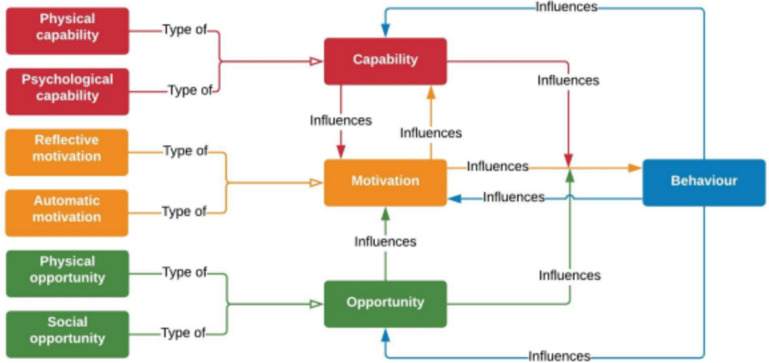
Methods: Whittemore and Knafl framework was recruited to build up this integrative review. PRISMA guidelines were followed to search about barriers of nurse-led delirium management. Articles published up to June 2024 in five databases; Web of Science, Scopus, PubMed, CINAHL and EMBASE using related keywords were involved. Mixed Methods Appraisal Tool (MMAT) was used to evaluate the quality of articles included in this review and then reported nurse-led delirium barriers were mapped according to COM-B model.
Results: Twenty-three articles out of 1,020 research articles were included in this review after carefully checked according to the exclusion and inclusion criteria. based on MMAT, 7 articles achieved 100%, 11 articles were achieved 80%, and 5 articles achieved 60%. Nurses' knowledge deficit is the most common psychological capability barriers of nurse-led delirium management, while complexity of delirium screening tools was found to be a physical capability barriers. High workload, lack of staff, lack of time, lack of documentation and lack/ shortage of guidelines were barriers mapped to physical opportunity, while communication barriers in particular patient's intubation and sedation were mapped to social opportunity barriers. Motivation was represented by addressing delirium as a major problem, self-confidence, psychological support and considering nurse's views.
Conclusions: Nurse's knowledge deficit, complexity of delirium screening tools, high workload, lack of time, lack of documentation, lack/ shortage of guideline, and impaired communication were barriers of nurse led delirium management. This study is promising in ease of application in clinical practice since delirium barriers in ICU settings were well-presented in a COM-B framework that may facilitate therapeutic strategies and related decision making.
背景:目前仍在寻求制定有效的谵妄治疗指南。由于护士处于谵妄的第一道对抗线,他们在识别障碍方面的前景对于制定综合策略和临床指南至关重要。目的:探讨重症监护病房(ICU)护士对谵妄管理存在的障碍,为ICU护士主导谵妄管理提供循证支持。方法:采用Whittemore和Knafl框架建立本综合评价。遵循PRISMA指南,探讨护士主导谵妄管理的障碍。截至2024年6月在5个数据库中发表的文章;使用相关关键词对Web of Science、Scopus、PubMed、CINAHL、EMBASE进行检索。采用混合方法评估工具(MMAT)评估纳入本综述的文章的质量,然后根据COM-B模型绘制护士主导的谵妄障碍。结果:按照排除和纳入标准仔细检查后,1020篇研究论文中有23篇被纳入本综述。基于MMAT, 7篇文章达到100%,11篇文章达到80%,5篇文章达到60%。护士知识不足是护士主导谵妄管理中最常见的心理能力障碍,而谵妄筛查工具的复杂性是生理能力障碍。高工作量、缺乏人员、缺乏时间、缺乏文件和缺乏/缺乏指南是物理机会障碍,而沟通障碍特别是患者插管和镇静被映射为社会机会障碍。动机表现为谵妄是一个主要问题,自信,心理支持和考虑护士的意见。结论:护士知识不足、谵妄筛查工具复杂、工作量大、缺乏时间、缺乏文件、缺乏指南和沟通障碍是护士主导谵妄管理的障碍。这项研究有望在临床实践中易于应用,因为ICU环境中的谵妄障碍在COM-B框架中得到了很好的呈现,这可能促进治疗策略和相关决策。
期刊介绍:
BMC Nursing is an open access, peer-reviewed journal that considers articles on all aspects of nursing research, training, education and practice.





 京公网安备 11010802042870号
京ICP备2023020795号-1
京公网安备 11010802042870号
京ICP备2023020795号-1

 分享
分享
 求助内容:
求助内容: 应助结果提醒方式:
 扫码关注我们
