{"title":"Survey measures of metacognitive monitoring are often false.","authors":"Kit S Double","doi":"10.3758/s13428-025-02621-6","DOIUrl":null,"url":null,"abstract":"<p><p>Metacognitive monitoring is an extremely important ability that predicts a wide range of outcomes. However, do people have insight into their own metacognitive monitoring capacity? This study measured participants' perceived metacognitive monitoring abilities using a novel psychometrically validated questionnaire (Study 1) and then examined how well survey responses aligned with online measures of metacognitive monitoring (resolution, discrimination, sensitivity, efficiency) taken from confidence ratings participants made while performing a perceptual decision-making task and Raven's Progressive Matrices (Study 2). We found a negative correlation between the questionnaire responses and many of the online measures of metacognitive monitoring - those who reported being better at metacognitive monitoring, in fact tended to be worse according to the online metacognitive ratings. This occurred because, in general, high self-perceptions of monitoring ability were, in fact, related to higher confidence and lower cognitive performance. These findings suggest that we may have inaccurate insights into our own metacognitive monitoring capacity and questionnaire-based measures of metacognitive abilities may be problematic as they may represent unrealistic self-perceptions.</p>","PeriodicalId":8717,"journal":{"name":"Behavior Research Methods","volume":"57 3","pages":"97"},"PeriodicalIF":3.9000,"publicationDate":"2025-02-18","publicationTypes":"Journal Article","fieldsOfStudy":null,"isOpenAccess":false,"openAccessPdf":"https://www.ncbi.nlm.nih.gov/pmc/articles/PMC11836092/pdf/","citationCount":"0","resultStr":null,"platform":"Semanticscholar","paperid":null,"PeriodicalName":"Behavior Research Methods","FirstCategoryId":"102","ListUrlMain":"https://doi.org/10.3758/s13428-025-02621-6","RegionNum":2,"RegionCategory":"心理学","ArticlePicture":[],"TitleCN":null,"AbstractTextCN":null,"PMCID":null,"EPubDate":"","PubModel":"","JCR":"Q1","JCRName":"PSYCHOLOGY, EXPERIMENTAL","Score":null,"Total":0}
引用次数: 0
Abstract
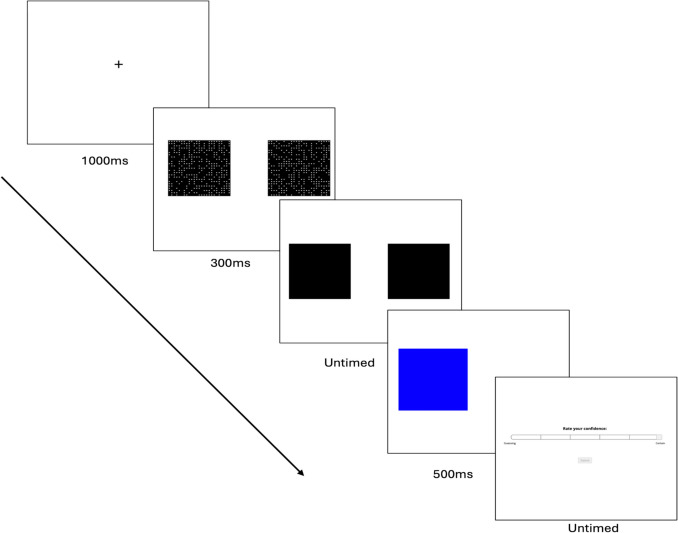
Metacognitive monitoring is an extremely important ability that predicts a wide range of outcomes. However, do people have insight into their own metacognitive monitoring capacity? This study measured participants' perceived metacognitive monitoring abilities using a novel psychometrically validated questionnaire (Study 1) and then examined how well survey responses aligned with online measures of metacognitive monitoring (resolution, discrimination, sensitivity, efficiency) taken from confidence ratings participants made while performing a perceptual decision-making task and Raven's Progressive Matrices (Study 2). We found a negative correlation between the questionnaire responses and many of the online measures of metacognitive monitoring - those who reported being better at metacognitive monitoring, in fact tended to be worse according to the online metacognitive ratings. This occurred because, in general, high self-perceptions of monitoring ability were, in fact, related to higher confidence and lower cognitive performance. These findings suggest that we may have inaccurate insights into our own metacognitive monitoring capacity and questionnaire-based measures of metacognitive abilities may be problematic as they may represent unrealistic self-perceptions.
期刊介绍:
Behavior Research Methods publishes articles concerned with the methods, techniques, and instrumentation of research in experimental psychology. The journal focuses particularly on the use of computer technology in psychological research. An annual special issue is devoted to this field.




 京公网安备 11010802042870号
京ICP备2023020795号-1
京公网安备 11010802042870号
京ICP备2023020795号-1

 分享
分享
 求助内容:
求助内容: 应助结果提醒方式:
 扫码关注我们
