Matina V Angelopoulou, Andreas Agouropoulos, Niklas Palaghias, Philippos Orfanos, Vasiliki Benetou, Christos Rahiotis, Sotiria Gizani
{"title":"Cariogenic Dietary Assessment Using a Mobile App in Children.","authors":"Matina V Angelopoulou, Andreas Agouropoulos, Niklas Palaghias, Philippos Orfanos, Vasiliki Benetou, Christos Rahiotis, Sotiria Gizani","doi":"10.3290/j.ohpd.c_1846","DOIUrl":null,"url":null,"abstract":"<p><strong>Purpose: </strong>A direct association exists between caries and high-sugar diets. The aim of this study was to test whether the cariogenicity of diet assessed and analysed through a new mobile app is associated with caries risk among children.</p><p><strong>Materials and methods: </strong>A total of 247 children, 2-15 years old, were recruited from university and hospital daycare centers and dental clinics. Diet was assessed via a 24-h recall, and caries (dmft/DMFT- ICDAS criteria) was documented through clinical examination. A mobile app was designed to analyse dietary data and calculate the diet's cariogenicity. Demographics, daily meals, meal duration and type, and toothbrushing were entered. A diagram presenting an estimate of the oral pH was produced, showing the time interval during which caries may develop, and a calculated cariogenic dietary risk was generated. Multivariate logistic regression derived odds ratios estimating associations between the cariogenic diet and caries across three age groups.</p><p><strong>Results: </strong>A cariogenic diet analysed by the app was positively associated with dfmt (r = 0.477, p 0.001) in 2- to 6-year-old children, with dmft (r = 0.376, p 0.05) and DMFT (r = 0.271, p 0.05) in 7- to 11-year-old children, and with DMFT (r = 0.383, p 0.001) in 12- to 15-year-old children. Parents' lower educational level was associated with a statistically significantly higher caries risk in younger children (p 0.05).</p><p><strong>Conclusion: </strong>Cariogenic diet evaluated with the new app was associated with increased caries, providing evidence of an accurate assessment among children. This app could assist dentists in providing dietary assessment and advice related to caries risk at the dental office in a more structured, educational, and time-saving way.</p>","PeriodicalId":19696,"journal":{"name":"Oral health & preventive dentistry","volume":"23 ","pages":"115-121"},"PeriodicalIF":1.4000,"publicationDate":"2025-02-20","publicationTypes":"Journal Article","fieldsOfStudy":null,"isOpenAccess":false,"openAccessPdf":"https://www.ncbi.nlm.nih.gov/pmc/articles/PMC11880830/pdf/","citationCount":"0","resultStr":null,"platform":"Semanticscholar","paperid":null,"PeriodicalName":"Oral health & preventive dentistry","FirstCategoryId":"3","ListUrlMain":"https://doi.org/10.3290/j.ohpd.c_1846","RegionNum":4,"RegionCategory":"医学","ArticlePicture":[],"TitleCN":null,"AbstractTextCN":null,"PMCID":null,"EPubDate":"","PubModel":"","JCR":"Q3","JCRName":"DENTISTRY, ORAL SURGERY & MEDICINE","Score":null,"Total":0}
引用次数: 0
Abstract
Purpose: A direct association exists between caries and high-sugar diets. The aim of this study was to test whether the cariogenicity of diet assessed and analysed through a new mobile app is associated with caries risk among children.
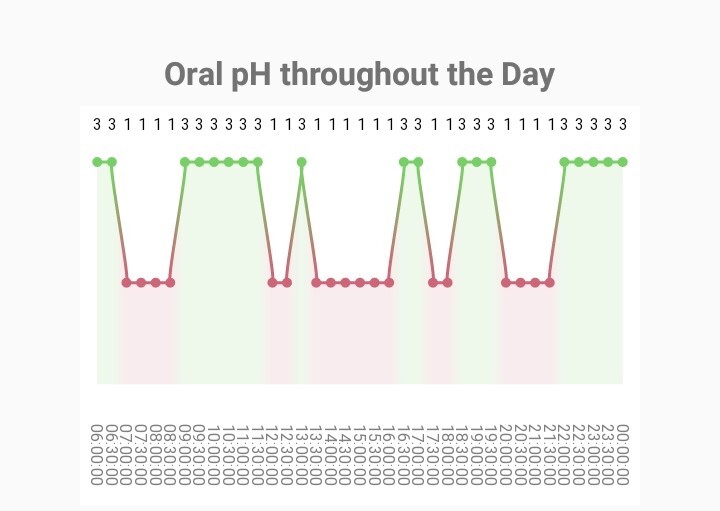
Materials and methods: A total of 247 children, 2-15 years old, were recruited from university and hospital daycare centers and dental clinics. Diet was assessed via a 24-h recall, and caries (dmft/DMFT- ICDAS criteria) was documented through clinical examination. A mobile app was designed to analyse dietary data and calculate the diet's cariogenicity. Demographics, daily meals, meal duration and type, and toothbrushing were entered. A diagram presenting an estimate of the oral pH was produced, showing the time interval during which caries may develop, and a calculated cariogenic dietary risk was generated. Multivariate logistic regression derived odds ratios estimating associations between the cariogenic diet and caries across three age groups.
Results: A cariogenic diet analysed by the app was positively associated with dfmt (r = 0.477, p 0.001) in 2- to 6-year-old children, with dmft (r = 0.376, p 0.05) and DMFT (r = 0.271, p 0.05) in 7- to 11-year-old children, and with DMFT (r = 0.383, p 0.001) in 12- to 15-year-old children. Parents' lower educational level was associated with a statistically significantly higher caries risk in younger children (p 0.05).
Conclusion: Cariogenic diet evaluated with the new app was associated with increased caries, providing evidence of an accurate assessment among children. This app could assist dentists in providing dietary assessment and advice related to caries risk at the dental office in a more structured, educational, and time-saving way.
期刊介绍:
Clinicians, general practitioners, teachers, researchers, and public health administrators will find this journal an indispensable source of essential, timely information about scientific progress in the fields of oral health and the prevention of caries, periodontal diseases, oral mucosal diseases, and dental trauma. Central topics, including oral hygiene, oral epidemiology, oral health promotion, and public health issues, are covered in peer-reviewed articles such as clinical and basic science research reports; reviews; invited focus articles, commentaries, and guest editorials; and symposium, workshop, and conference proceedings.





 京公网安备 11010802042870号
京ICP备2023020795号-1
京公网安备 11010802042870号
京ICP备2023020795号-1

 分享
分享
 求助内容:
求助内容: 应助结果提醒方式:
 扫码关注我们
