Stereotactic Arrhythmia Radioablation for Refractory Ventricular Tachycardia: A Narrative Review and Exploratory Pooled Analysis of Clinical Outcomes and Toxicity.
Keyur D Shah, Chih-Wei Chang, Sibo Tian, Pretesh Patel, Richard Qiu, Justin Roper, Jun Zhou, Zhen Tian, Xiaofeng Yang
{"title":"Stereotactic Arrhythmia Radioablation for Refractory Ventricular Tachycardia: A Narrative Review and Exploratory Pooled Analysis of Clinical Outcomes and Toxicity.","authors":"Keyur D Shah, Chih-Wei Chang, Sibo Tian, Pretesh Patel, Richard Qiu, Justin Roper, Jun Zhou, Zhen Tian, Xiaofeng Yang","doi":"","DOIUrl":null,"url":null,"abstract":"<p><strong>Purpose: </strong>Stereotactic arrhythmia radioablation (STAR) is a non-invasive salvage therapy for refractory ventricular tachycardia (VT), especially in patients ineligible for catheter ablation. This narrative review and pooled analysis evaluates the safety, efficacy, and technical characteristics of STAR, integrating preclinical studies, case reports, case series, and clinical trials.</p><p><strong>Methods and materials: </strong>A comprehensive review identified 86 studies published between 2015 and 2025, including 12 preclinical studies, 49 case reports, 18 case series, and 7 clinical trials. Study-level data were extracted for pooled analysis of 6- and 12-month mortality, VT burden reduction, and grade 3+ acute toxicities. Subgroup analyses were performed by delivery modality, age, left ventricular ejection fraction (LVEF), and cardiomyopathy type.</p><p><strong>Results: </strong>Pooled mortality was 16% (95% CI: 11-20%) at 6 months and 33% (95% CI: 27-38%) at 12 months. VT burden reduction at 6 months averaged 75% (95% CI: 73-77%) but showed substantial heterogeneity (I<sup>2</sup> = 98.8%). Grade 3+ acute toxicities occurred in 7% (95% CI: 4-10%), with heart failure being most common. Subgroup analyses suggested better outcomes in younger patients, those with NICM, and those with higher LVEF.</p><p><strong>Conclusions: </strong>STAR is a promising salvage therapy with favorable acute safety and efficacy. Outcome heterogeneity and inconsistent reporting highlight the need for standardized definitions, dosimetric protocols, and longer-term follow-up. Prospective trials and real-world registries are critical for refining STAR's role in VT management.</p>","PeriodicalId":93888,"journal":{"name":"ArXiv","volume":" ","pages":""},"PeriodicalIF":0.0000,"publicationDate":"2025-05-14","publicationTypes":"Journal Article","fieldsOfStudy":null,"isOpenAccess":false,"openAccessPdf":"https://www.ncbi.nlm.nih.gov/pmc/articles/PMC11838787/pdf/","citationCount":"0","resultStr":null,"platform":"Semanticscholar","paperid":null,"PeriodicalName":"ArXiv","FirstCategoryId":"1085","ListUrlMain":"","RegionNum":0,"RegionCategory":null,"ArticlePicture":[],"TitleCN":null,"AbstractTextCN":null,"PMCID":null,"EPubDate":"","PubModel":"","JCR":"","JCRName":"","Score":null,"Total":0}
引用次数: 0
Abstract
Purpose: Stereotactic arrhythmia radioablation (STAR) is a non-invasive salvage therapy for refractory ventricular tachycardia (VT), especially in patients ineligible for catheter ablation. This narrative review and pooled analysis evaluates the safety, efficacy, and technical characteristics of STAR, integrating preclinical studies, case reports, case series, and clinical trials.
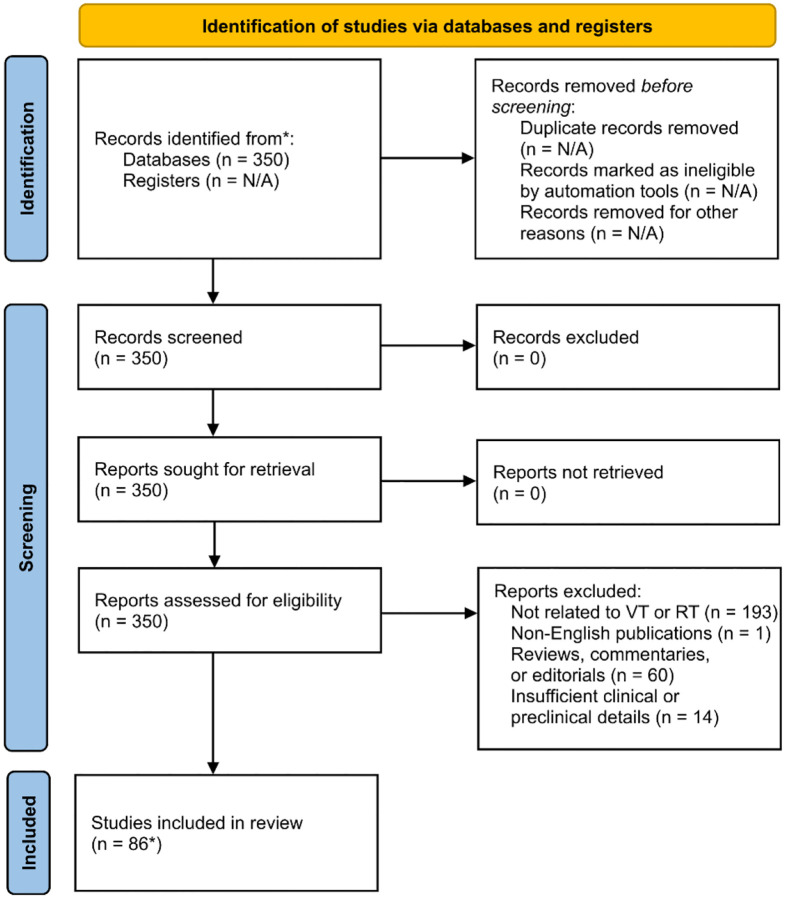
Methods and materials: A comprehensive review identified 86 studies published between 2015 and 2025, including 12 preclinical studies, 49 case reports, 18 case series, and 7 clinical trials. Study-level data were extracted for pooled analysis of 6- and 12-month mortality, VT burden reduction, and grade 3+ acute toxicities. Subgroup analyses were performed by delivery modality, age, left ventricular ejection fraction (LVEF), and cardiomyopathy type.
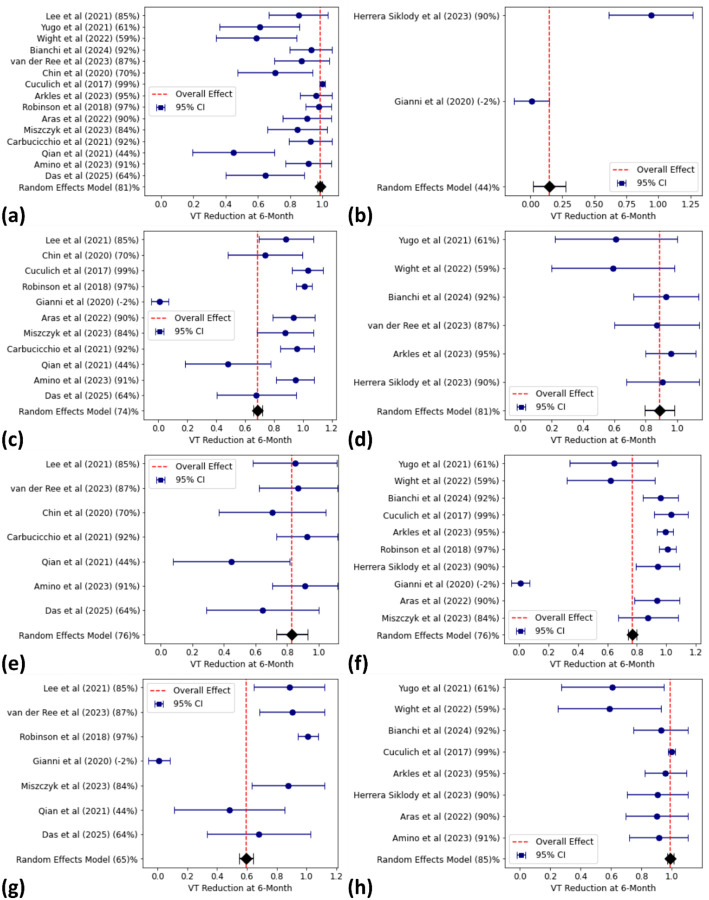
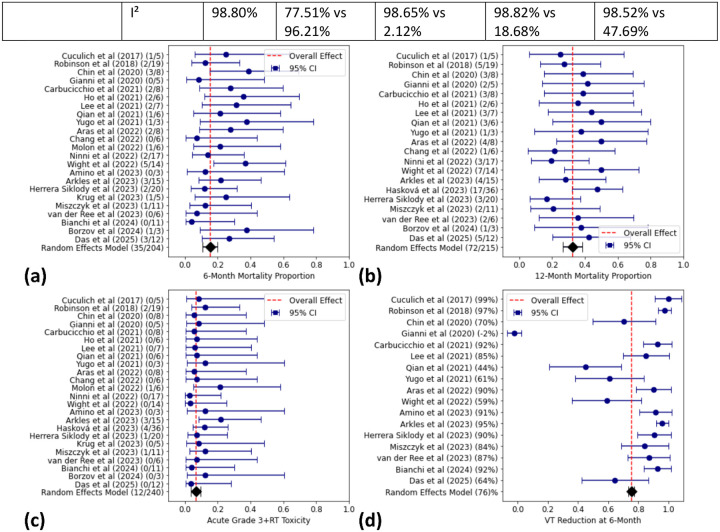
Results: Pooled mortality was 16% (95% CI: 11-20%) at 6 months and 33% (95% CI: 27-38%) at 12 months. VT burden reduction at 6 months averaged 75% (95% CI: 73-77%) but showed substantial heterogeneity (I2 = 98.8%). Grade 3+ acute toxicities occurred in 7% (95% CI: 4-10%), with heart failure being most common. Subgroup analyses suggested better outcomes in younger patients, those with NICM, and those with higher LVEF.
Conclusions: STAR is a promising salvage therapy with favorable acute safety and efficacy. Outcome heterogeneity and inconsistent reporting highlight the need for standardized definitions, dosimetric protocols, and longer-term follow-up. Prospective trials and real-world registries are critical for refining STAR's role in VT management.
 分享
分享



 京公网安备 11010802042870号
京ICP备2023020795号-1
京公网安备 11010802042870号
京ICP备2023020795号-1


 求助内容:
求助内容: 应助结果提醒方式:
 扫码关注我们
