{"title":"Comparative Efficiency Analysis of OECD Health Systems: FDH vs. Machine Learning Approaches with Efficiency Analysis Trees (EAT and RFEAT).","authors":"Yejin Joo","doi":"10.1186/s12962-025-00607-x","DOIUrl":null,"url":null,"abstract":"<p><strong>Background: </strong>As health expenditure continues to rise due to income growth, technological advancements, and an aging population, it has become increasingly important to accurately measure and improve the efficiency of health systems. This is because financial resources are limited, and the allocation of resources can significantly influence the quality of health systems and health outcomes.</p><p><strong>Methods: </strong>This study applies machine learning techniques-Efficiency Analysis Trees (EAT) and Random Forest for Efficiency Analysis Trees (RFEAT)-to evaluate the efficiency of health systems in 36 OECD countries, comparing the results with those from the traditional free disposal hull (FDH) method.</p><p><strong>Results: </strong>Analysis shows high discrimination power in the order of RFEAT, EAT, and FDH. The correlation in efficiency rankings shows more than 80% similarity between RFEAT and EAT, while both show less than 80% similarity with FDH. According to RFEAT estimates, the countries with the highest efficiency are South Korea, Switzerland, and Costa Rica, whereas the United States, Lithuania, and Latvia are identified as the least efficient. The group-level analysis reveals that Asian countries, on average, perform more efficiently followed by Oceania, Europe, and the Americas. The groups with higher out-of-pocket healthcare expenditures per capita tend to show slightly better efficiency and the group with the smallest elderly population proportion exhibits the highest average health system efficiency.</p><p><strong>Conclusion: </strong>Traditional methods like FDH are prone to inefficiency underestimation, especially in small samples with multiple variables. This study demonstrates the potential of machine learning approaches like EAT and RFEAT to provide more reliable efficiency estimates. These methods can help policymakers make better resource allocation decisions by mitigating inefficiency underestimation and offering greater discrimination power.</p>","PeriodicalId":47054,"journal":{"name":"Cost Effectiveness and Resource Allocation","volume":"23 1","pages":"4"},"PeriodicalIF":2.5000,"publicationDate":"2025-02-22","publicationTypes":"Journal Article","fieldsOfStudy":null,"isOpenAccess":false,"openAccessPdf":"https://www.ncbi.nlm.nih.gov/pmc/articles/PMC11847381/pdf/","citationCount":"0","resultStr":null,"platform":"Semanticscholar","paperid":null,"PeriodicalName":"Cost Effectiveness and Resource Allocation","FirstCategoryId":"3","ListUrlMain":"https://doi.org/10.1186/s12962-025-00607-x","RegionNum":4,"RegionCategory":"医学","ArticlePicture":[],"TitleCN":null,"AbstractTextCN":null,"PMCID":null,"EPubDate":"","PubModel":"","JCR":"Q3","JCRName":"HEALTH POLICY & SERVICES","Score":null,"Total":0}
引用次数: 0
Abstract
Background: As health expenditure continues to rise due to income growth, technological advancements, and an aging population, it has become increasingly important to accurately measure and improve the efficiency of health systems. This is because financial resources are limited, and the allocation of resources can significantly influence the quality of health systems and health outcomes.
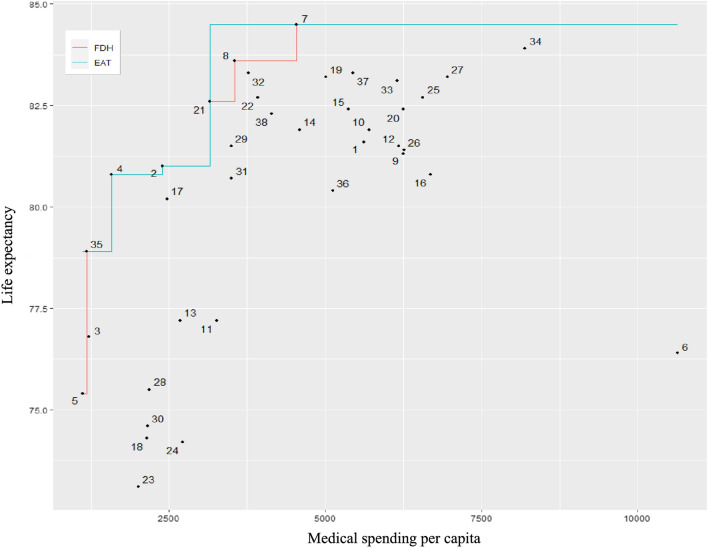
Methods: This study applies machine learning techniques-Efficiency Analysis Trees (EAT) and Random Forest for Efficiency Analysis Trees (RFEAT)-to evaluate the efficiency of health systems in 36 OECD countries, comparing the results with those from the traditional free disposal hull (FDH) method.
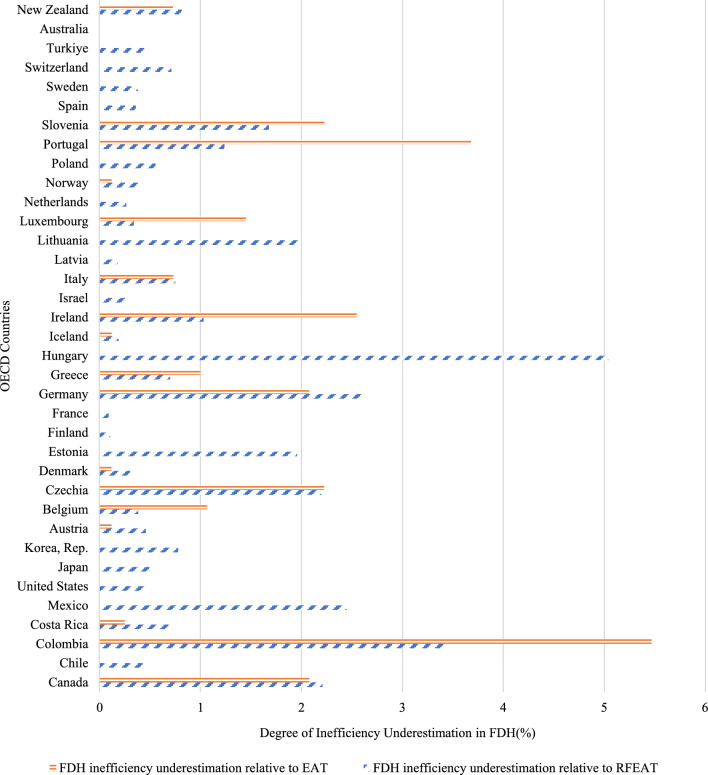
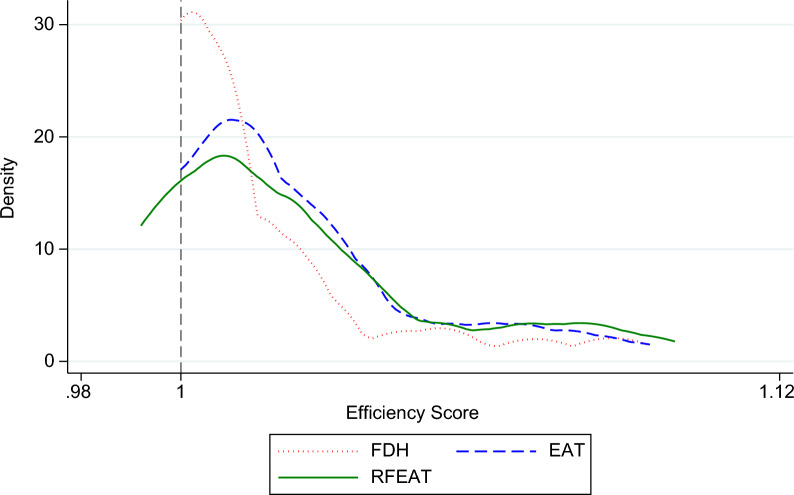
Results: Analysis shows high discrimination power in the order of RFEAT, EAT, and FDH. The correlation in efficiency rankings shows more than 80% similarity between RFEAT and EAT, while both show less than 80% similarity with FDH. According to RFEAT estimates, the countries with the highest efficiency are South Korea, Switzerland, and Costa Rica, whereas the United States, Lithuania, and Latvia are identified as the least efficient. The group-level analysis reveals that Asian countries, on average, perform more efficiently followed by Oceania, Europe, and the Americas. The groups with higher out-of-pocket healthcare expenditures per capita tend to show slightly better efficiency and the group with the smallest elderly population proportion exhibits the highest average health system efficiency.
Conclusion: Traditional methods like FDH are prone to inefficiency underestimation, especially in small samples with multiple variables. This study demonstrates the potential of machine learning approaches like EAT and RFEAT to provide more reliable efficiency estimates. These methods can help policymakers make better resource allocation decisions by mitigating inefficiency underestimation and offering greater discrimination power.
期刊介绍:
Cost Effectiveness and Resource Allocation is an Open Access, peer-reviewed, online journal that considers manuscripts on all aspects of cost-effectiveness analysis, including conceptual or methodological work, economic evaluations, and policy analysis related to resource allocation at a national or international level. Cost Effectiveness and Resource Allocation is aimed at health economists, health services researchers, and policy-makers with an interest in enhancing the flow and transfer of knowledge relating to efficiency in the health sector. Manuscripts are encouraged from researchers based in low- and middle-income countries, with a view to increasing the international economic evidence base for health.



 京公网安备 11010802042870号
京ICP备2023020795号-1
京公网安备 11010802042870号
京ICP备2023020795号-1

 分享
分享
 求助内容:
求助内容: 应助结果提醒方式:
 扫码关注我们
