S R Mothukuri, Y Beyene, M Gültas, J Burgueño, S Griebel
{"title":"Optimization of sparse phenotyping strategy in multi-environmental trials in maize.","authors":"S R Mothukuri, Y Beyene, M Gültas, J Burgueño, S Griebel","doi":"10.1007/s00122-025-04825-y","DOIUrl":null,"url":null,"abstract":"<p><strong>Key message: </strong>The relatedness between the genotypes of the training and the testing set using sparse phenotyping experiments helps optimize the line allocation by utilizing the relationship measurements to reduce cost without compromising the genetic gain. The phenotyping needs to be optimized and aims to achieve desired precision at low costs because selection decisions are mainly based on multi-environmental trials. Optimization of sparse phenotyping is possible in plant breeding by applying relationship measurements and genomic prediction. Our research utilized genomic data and relationship measurements between the training (full testing genotypes) and testing sets (sparse testing genotypes) to optimize the allocation of genotypes to subsets in sparse testing. Different sparse phenotyping designs were mimicked based on the percentage (%) of lines in the full set, the number of partially tested lines, the number of tested environments, and balanced and unbalanced methods for allocating the lines among the environments. The eight relationship measurements were utilized to calculate the relatedness between full and sparse set genotypes. The results demonstrate that balanced and allocating 50% of lines to the full set designs have shown a higher Pearson correlation in terms of accuracy measurements than assigning the 30% of lines to the full set and balanced sparse methods. By reducing untested environments per sparse set, results enhance the accuracy of measurements. The relationship measurements exhibit a low significant Pearson correlation ranging from 0.20 to 0.31 using the accuracy measurements in sparse phenotyping experiments. The positive Pearson correlation shows that the maximization of the accuracy measurements can be helpful to the optimization of the line allocation on sparse phenotyping designs.</p>","PeriodicalId":22955,"journal":{"name":"Theoretical and Applied Genetics","volume":"138 3","pages":"62"},"PeriodicalIF":4.2000,"publicationDate":"2025-02-28","publicationTypes":"Journal Article","fieldsOfStudy":null,"isOpenAccess":false,"openAccessPdf":"https://www.ncbi.nlm.nih.gov/pmc/articles/PMC11868319/pdf/","citationCount":"0","resultStr":null,"platform":"Semanticscholar","paperid":null,"PeriodicalName":"Theoretical and Applied Genetics","FirstCategoryId":"97","ListUrlMain":"https://doi.org/10.1007/s00122-025-04825-y","RegionNum":1,"RegionCategory":"农林科学","ArticlePicture":[],"TitleCN":null,"AbstractTextCN":null,"PMCID":null,"EPubDate":"","PubModel":"","JCR":"Q1","JCRName":"AGRONOMY","Score":null,"Total":0}
引用次数: 0
Abstract
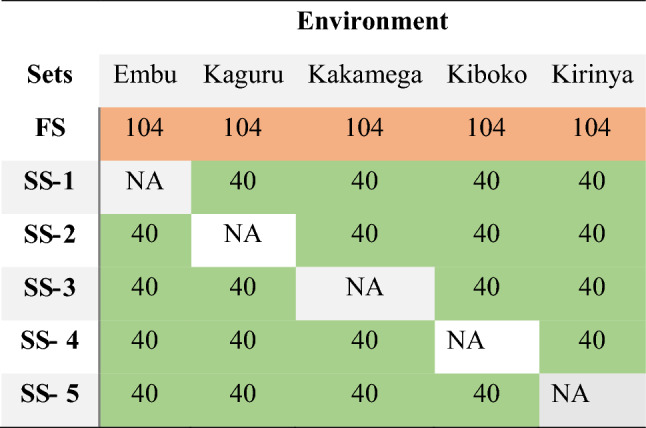
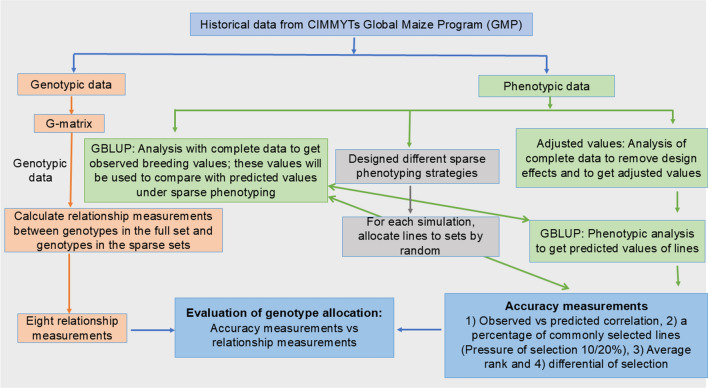
Key message: The relatedness between the genotypes of the training and the testing set using sparse phenotyping experiments helps optimize the line allocation by utilizing the relationship measurements to reduce cost without compromising the genetic gain. The phenotyping needs to be optimized and aims to achieve desired precision at low costs because selection decisions are mainly based on multi-environmental trials. Optimization of sparse phenotyping is possible in plant breeding by applying relationship measurements and genomic prediction. Our research utilized genomic data and relationship measurements between the training (full testing genotypes) and testing sets (sparse testing genotypes) to optimize the allocation of genotypes to subsets in sparse testing. Different sparse phenotyping designs were mimicked based on the percentage (%) of lines in the full set, the number of partially tested lines, the number of tested environments, and balanced and unbalanced methods for allocating the lines among the environments. The eight relationship measurements were utilized to calculate the relatedness between full and sparse set genotypes. The results demonstrate that balanced and allocating 50% of lines to the full set designs have shown a higher Pearson correlation in terms of accuracy measurements than assigning the 30% of lines to the full set and balanced sparse methods. By reducing untested environments per sparse set, results enhance the accuracy of measurements. The relationship measurements exhibit a low significant Pearson correlation ranging from 0.20 to 0.31 using the accuracy measurements in sparse phenotyping experiments. The positive Pearson correlation shows that the maximization of the accuracy measurements can be helpful to the optimization of the line allocation on sparse phenotyping designs.
期刊介绍:
Theoretical and Applied Genetics publishes original research and review articles in all key areas of modern plant genetics, plant genomics and plant biotechnology. All work needs to have a clear genetic component and significant impact on plant breeding. Theoretical considerations are only accepted in combination with new experimental data and/or if they indicate a relevant application in plant genetics or breeding. Emphasizing the practical, the journal focuses on research into leading crop plants and articles presenting innovative approaches.




 京公网安备 11010802042870号
京ICP备2023020795号-1
京公网安备 11010802042870号
京ICP备2023020795号-1

 分享
分享
 求助内容:
求助内容: 应助结果提醒方式:
 扫码关注我们
