Zhibin Luo, Huimin Ou, Christopher S McSweeney, Zhiliang Tan, Jinzhen Jiao
{"title":"Enhancing nutrient efficiency through optimizing protein levels in lambs: Involvement of gastrointestinal microbiota.","authors":"Zhibin Luo, Huimin Ou, Christopher S McSweeney, Zhiliang Tan, Jinzhen Jiao","doi":"10.1016/j.aninu.2024.09.006","DOIUrl":null,"url":null,"abstract":"<p><p>Improving the nutrient utilization efficiency of ruminants is of utmost significance for both economic and environmental benefits. Optimizing dietary protein levels represents a key nutritional strategy to enhance ruminant growth performance and reduce nitrogen emissions. In a 63-day experiment, 24 healthy Hulunbuir lambs (initial weight 17.1 ± 2.0 kg, 2.5 months old) were subjected to three treatments: a low-protein diet (LP; crude protein of 78.4 g/kg dry matter [DM]), a medium-protein diet (MP; crude protein of 112.0 g/kg DM), and a high-protein diet (HP; crude protein of 145.6 g/kg DM), with 8 lambs in each treatment (4 males and 4 females). Lambs in the MP treatment presented greater daily weight gain and feed conversion ratio than those in the HP treatment (<i>P</i> < 0.05, quadratically). Compared with the LP treatment, the MP treatment resulted in greater crude protein digestibility (<i>P</i> < 0.001, quadratically) and acid detergent fiber digestibility (<i>P</i> = 0.022, quadratically). In the serum, the urea nitrogen level increased quadratically with increasing dietary protein levels (<i>P</i> < 0.001), while the LP treatment exerted the highest concentrations of glutamate, glycine, alanine, and histidine (<i>P</i> < 0.05, quadratically). The ammonia nitrogen concentrations in the rumen and colon increased quadratically with increase in dietary protein levels (<i>P</i> < 0.05). The HP treatment increased the molar concentrations of isobutyrate and isovalerate in the rumen and colon (<i>P</i> < 0.05, quadratically). In contrast, the LP treatment decreased the molar proportion of acetate (<i>P</i> = 0.007, quadratically) and increased the molar proportion of butyrate (<i>P</i> < 0.001, quadratically) in the colon. The microbial diversity and structure were significantly altered by dietary protein level intervention across all gastrointestinal regions. The rumen of the MP treatment was enriched with fiber-degrading bacteria <i>Fibrobacter</i>_<i>succeinogenes</i> and starch-degrading bacteria <i>Selenomonas_ruminantium</i>. The colon in the LP treatment harbored microbial biomarkers including <i>Escherichia</i> spp. and <i>Lactobacillus amylovorus</i>, and the colon in the MP treatment was characterized by the enrichment of <i>Solibacillus_cecembensis</i>. These findings suggest that the MP diet with a crude protein content of 112.0 g/kg DM improved the growth performance and nutrient efficiency of lambs, which was achieved via the involvement of the gastrointestinal microbiota.</p>","PeriodicalId":8184,"journal":{"name":"Animal Nutrition","volume":"20 ","pages":"332-341"},"PeriodicalIF":7.5000,"publicationDate":"2024-11-29","publicationTypes":"Journal Article","fieldsOfStudy":null,"isOpenAccess":false,"openAccessPdf":"https://www.ncbi.nlm.nih.gov/pmc/articles/PMC11872659/pdf/","citationCount":"0","resultStr":null,"platform":"Semanticscholar","paperid":null,"PeriodicalName":"Animal Nutrition","FirstCategoryId":"97","ListUrlMain":"https://doi.org/10.1016/j.aninu.2024.09.006","RegionNum":1,"RegionCategory":"农林科学","ArticlePicture":[],"TitleCN":null,"AbstractTextCN":null,"PMCID":null,"EPubDate":"2025/3/1 0:00:00","PubModel":"eCollection","JCR":"Q1","JCRName":"AGRICULTURE, DAIRY & ANIMAL SCIENCE","Score":null,"Total":0}
引用次数: 0
Abstract
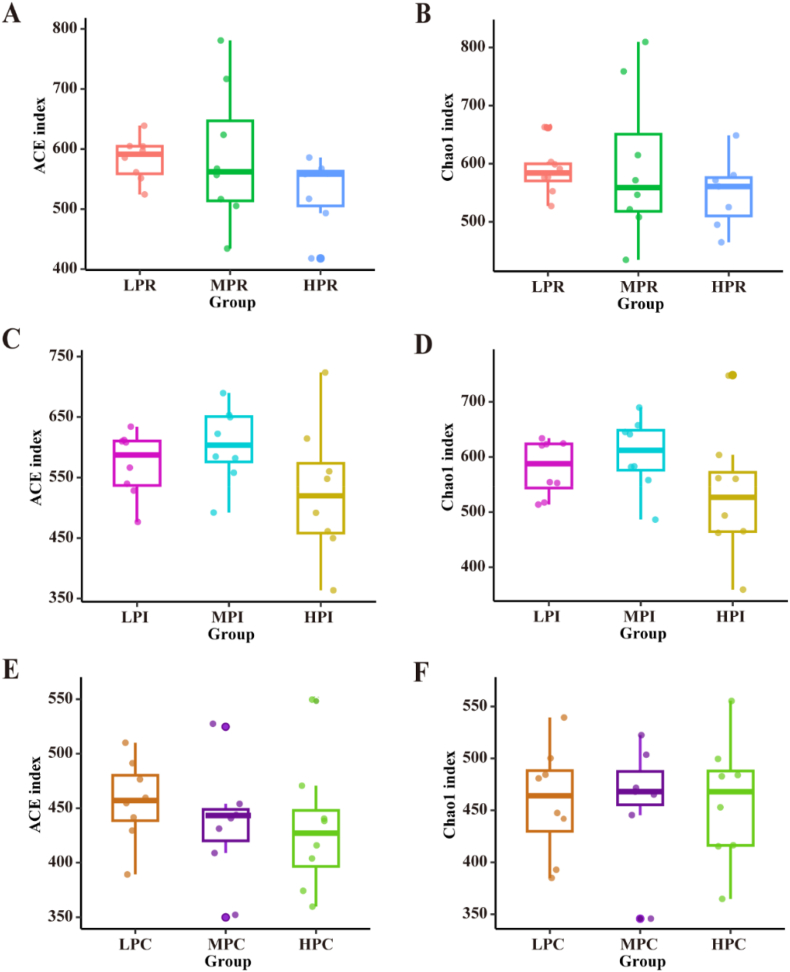
Improving the nutrient utilization efficiency of ruminants is of utmost significance for both economic and environmental benefits. Optimizing dietary protein levels represents a key nutritional strategy to enhance ruminant growth performance and reduce nitrogen emissions. In a 63-day experiment, 24 healthy Hulunbuir lambs (initial weight 17.1 ± 2.0 kg, 2.5 months old) were subjected to three treatments: a low-protein diet (LP; crude protein of 78.4 g/kg dry matter [DM]), a medium-protein diet (MP; crude protein of 112.0 g/kg DM), and a high-protein diet (HP; crude protein of 145.6 g/kg DM), with 8 lambs in each treatment (4 males and 4 females). Lambs in the MP treatment presented greater daily weight gain and feed conversion ratio than those in the HP treatment (P < 0.05, quadratically). Compared with the LP treatment, the MP treatment resulted in greater crude protein digestibility (P < 0.001, quadratically) and acid detergent fiber digestibility (P = 0.022, quadratically). In the serum, the urea nitrogen level increased quadratically with increasing dietary protein levels (P < 0.001), while the LP treatment exerted the highest concentrations of glutamate, glycine, alanine, and histidine (P < 0.05, quadratically). The ammonia nitrogen concentrations in the rumen and colon increased quadratically with increase in dietary protein levels (P < 0.05). The HP treatment increased the molar concentrations of isobutyrate and isovalerate in the rumen and colon (P < 0.05, quadratically). In contrast, the LP treatment decreased the molar proportion of acetate (P = 0.007, quadratically) and increased the molar proportion of butyrate (P < 0.001, quadratically) in the colon. The microbial diversity and structure were significantly altered by dietary protein level intervention across all gastrointestinal regions. The rumen of the MP treatment was enriched with fiber-degrading bacteria Fibrobacter_succeinogenes and starch-degrading bacteria Selenomonas_ruminantium. The colon in the LP treatment harbored microbial biomarkers including Escherichia spp. and Lactobacillus amylovorus, and the colon in the MP treatment was characterized by the enrichment of Solibacillus_cecembensis. These findings suggest that the MP diet with a crude protein content of 112.0 g/kg DM improved the growth performance and nutrient efficiency of lambs, which was achieved via the involvement of the gastrointestinal microbiota.
提高反刍动物的养分利用效率对经济效益和环境效益都具有重要意义。优化饲粮蛋白质水平是提高反刍动物生长性能和减少氮排放的关键营养策略。在为期63 d的试验中,选取24只健康的呼伦贝尔羔羊(初始体重17.1±2.0 kg, 2.5月龄)进行3种处理:低蛋白饲粮(LP;粗蛋白质为78.4 g/kg干物质[DM]),中等蛋白质日粮(MP;粗蛋白质为112.0 g/kg DM),高蛋白日粮(HP;粗蛋白质145.6 g/kg DM),每处理8只羔羊(公母各4只)。MP组羔羊的日增重和饲料系数高于HP组(P P P = 0.022,二次曲线)。血清尿素氮水平随饲粮蛋白质水平的升高呈二次曲线升高(P P P P P P = 0.007),丁酸盐(P纤维菌-琥珀酸原菌和淀粉降解菌硒单胞菌-反刍菌)的摩尔比例升高。LP处理的结肠中含有包括埃希氏菌和淀粉样乳杆菌在内的微生物生物标志物,而MP处理的结肠中则富集了梭状芽孢杆菌。综上所述,饲粮粗蛋白质含量为112.0 g/kg DM可提高羔羊的生长性能和营养效率,这是通过参与胃肠道微生物群实现的。
Animal NutritionAgricultural and Biological Sciences-Animal Science and Zoology
CiteScore
7.40
自引率
3.20%
发文量
172
审稿时长
12 weeks
期刊介绍:
Animal Nutrition encompasses the full gamut of animal nutritional sciences and reviews including, but not limited to, fundamental aspects of animal nutrition such as nutritional requirements, metabolic studies, body composition, energetics, immunology, neuroscience, microbiology, genetics and molecular and cell biology related to nutrition, and more applied aspects of animal nutrition, such as raw material evaluation, feed additives, nutritive value of novel ingredients and feed safety.






 京公网安备 11010802042870号
京ICP备2023020795号-1
京公网安备 11010802042870号
京ICP备2023020795号-1

 分享
分享
 求助内容:
求助内容: 应助结果提醒方式:
 扫码关注我们
