Ahmed M. Rashwan, Hagar M. Mohamed, Samir A. A. El-Gendy, Hanan H. Abd-Elhafeez, Ahmed A. El-Mansi, Mamdouh B. Eldesoqui, Amal F. Dawood, Mohamed A. M. Alsafy
{"title":"Novel Insights Into Telocyte Presence and Distribution in the Cornea of the Laughing Dove (Spilopelia senegalensis) Using Immunofluorescence Analysis","authors":"Ahmed M. Rashwan, Hagar M. Mohamed, Samir A. A. El-Gendy, Hanan H. Abd-Elhafeez, Ahmed A. El-Mansi, Mamdouh B. Eldesoqui, Amal F. Dawood, Mohamed A. M. Alsafy","doi":"10.1002/jemt.24845","DOIUrl":null,"url":null,"abstract":"<div>\n \n <p>The eye of the laughing dove (<i>Spilopelia senegalensis</i>) is uniquely adapted to thrive in arid environments, withstanding airborne particles and harsh conditions, demonstrating its remarkable structural and functional resilience. This study aimed to explore the cellular composition of the laughing dove's cornea, focusing on telocytes—a cell type previously unreported in avian corneas. This work represents the first demonstration of telocytes in the cornea of any bird species. We used hematoxylin and eosin (H&E) staining to comprehensively visualize the corneal layers, while silver staining, methylene blue, toluidine blue staining, and immunofluorescence with telocyte-specific markers (CD34, PDGFRα, and vimentin) were utilized to identify telocytes and confirm their distribution. The cornea of the laughing dove was shown to consist of five unique layers: the epithelium, Bowman's layer, stroma, Descemet's membrane, and endothelium. Telocytes were detected using silver, methylene blue, and toluidine blue stains as spindle-shaped cells with branched extensions known as telopodes. Double immunofluorescence for PDGFRα and CD34 confirmed the existence of telocytes across all corneal layers. In the epithelium, intraepithelial telocytes were sparsely distributed, possibly contributing to epithelial maintenance and cellular signaling. In Bowman's layer, telocytes were identified, likely supporting structural integrity and intercellular interactions. The stroma exhibited the highest abundance of telocytes, highlighting their critical role in extracellular matrix remodeling and cellular connectivity. In Descemet's membrane, telocytes likely contribute to the structural stability of this basement membrane, while in the endothelium, they appear to play roles in endothelial repair, fluid regulation, and signaling processes. Double immunofluorescence of vimentin and CD34 revealed distinct localization patterns. While CD34 identified telocytes in all corneal layers, vimentin expression was confined to the stroma, predominantly in the superficial region. Vimentin was specifically localized to telopodes, while CD34 was more evenly distributed, with strong expression in both the central bodies of telocytes and telopodes. The partial co-expression of CD34 and vimentin suggests functional specialization within telocytes, with vimentin likely supporting telopode structure and long-range signaling. Our findings underscore the critical role of telocytes in corneal structure and function, particularly their contributions to the laughing dove's adaptation to harsh environmental conditions. This study not only identifies telocytes in the avian cornea for the first time but also highlights their presence in all corneal layers, suggesting their broader functional roles in maintaining corneal homeostasis and resilience.</p>\n </div>","PeriodicalId":18684,"journal":{"name":"Microscopy Research and Technique","volume":"88 7","pages":"2009-2024"},"PeriodicalIF":2.1000,"publicationDate":"2025-03-03","publicationTypes":"Journal Article","fieldsOfStudy":null,"isOpenAccess":false,"openAccessPdf":"","citationCount":"0","resultStr":null,"platform":"Semanticscholar","paperid":null,"PeriodicalName":"Microscopy Research and Technique","FirstCategoryId":"5","ListUrlMain":"https://analyticalsciencejournals.onlinelibrary.wiley.com/doi/10.1002/jemt.24845","RegionNum":3,"RegionCategory":"工程技术","ArticlePicture":[],"TitleCN":null,"AbstractTextCN":null,"PMCID":null,"EPubDate":"","PubModel":"","JCR":"Q2","JCRName":"ANATOMY & MORPHOLOGY","Score":null,"Total":0}
引用次数: 0
Abstract
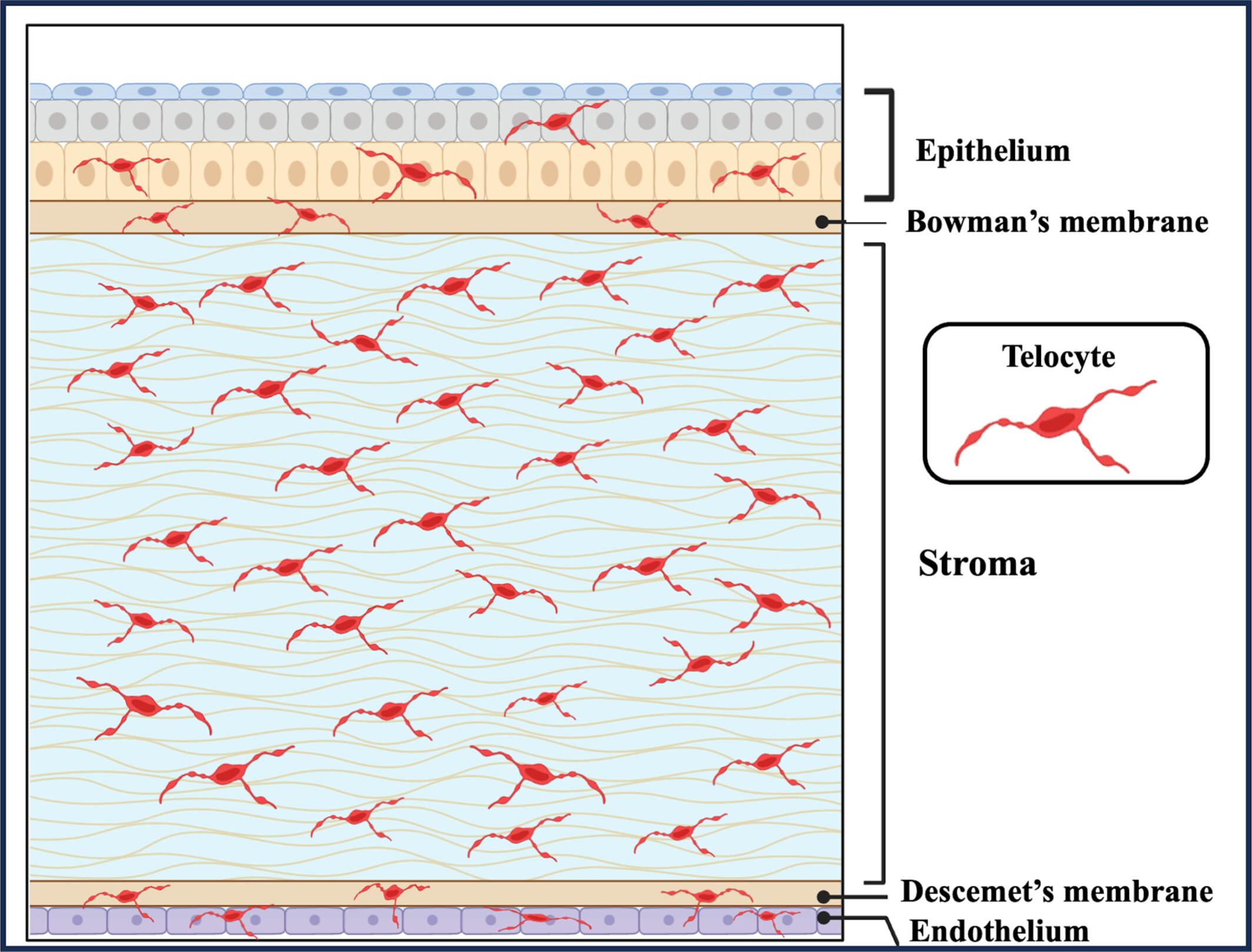
The eye of the laughing dove (Spilopelia senegalensis) is uniquely adapted to thrive in arid environments, withstanding airborne particles and harsh conditions, demonstrating its remarkable structural and functional resilience. This study aimed to explore the cellular composition of the laughing dove's cornea, focusing on telocytes—a cell type previously unreported in avian corneas. This work represents the first demonstration of telocytes in the cornea of any bird species. We used hematoxylin and eosin (H&E) staining to comprehensively visualize the corneal layers, while silver staining, methylene blue, toluidine blue staining, and immunofluorescence with telocyte-specific markers (CD34, PDGFRα, and vimentin) were utilized to identify telocytes and confirm their distribution. The cornea of the laughing dove was shown to consist of five unique layers: the epithelium, Bowman's layer, stroma, Descemet's membrane, and endothelium. Telocytes were detected using silver, methylene blue, and toluidine blue stains as spindle-shaped cells with branched extensions known as telopodes. Double immunofluorescence for PDGFRα and CD34 confirmed the existence of telocytes across all corneal layers. In the epithelium, intraepithelial telocytes were sparsely distributed, possibly contributing to epithelial maintenance and cellular signaling. In Bowman's layer, telocytes were identified, likely supporting structural integrity and intercellular interactions. The stroma exhibited the highest abundance of telocytes, highlighting their critical role in extracellular matrix remodeling and cellular connectivity. In Descemet's membrane, telocytes likely contribute to the structural stability of this basement membrane, while in the endothelium, they appear to play roles in endothelial repair, fluid regulation, and signaling processes. Double immunofluorescence of vimentin and CD34 revealed distinct localization patterns. While CD34 identified telocytes in all corneal layers, vimentin expression was confined to the stroma, predominantly in the superficial region. Vimentin was specifically localized to telopodes, while CD34 was more evenly distributed, with strong expression in both the central bodies of telocytes and telopodes. The partial co-expression of CD34 and vimentin suggests functional specialization within telocytes, with vimentin likely supporting telopode structure and long-range signaling. Our findings underscore the critical role of telocytes in corneal structure and function, particularly their contributions to the laughing dove's adaptation to harsh environmental conditions. This study not only identifies telocytes in the avian cornea for the first time but also highlights their presence in all corneal layers, suggesting their broader functional roles in maintaining corneal homeostasis and resilience.
期刊介绍:
Microscopy Research and Technique (MRT) publishes articles on all aspects of advanced microscopy original architecture and methodologies with applications in the biological, clinical, chemical, and materials sciences. Original basic and applied research as well as technical papers dealing with the various subsets of microscopy are encouraged. MRT is the right form for those developing new microscopy methods or using the microscope to answer key questions in basic and applied research.






 京公网安备 11010802042870号
京ICP备2023020795号-1
京公网安备 11010802042870号
京ICP备2023020795号-1

 分享
分享
 求助内容:
求助内容: 应助结果提醒方式:
 扫码关注我们
