Daniel K Y Zheng, Zhihan Sun, Jeremy R Chang, Frank F Huang, Yilin Liu, Siying Yu, Jinlong Wu, Zimeng Wang, Arnold Y L Wong, Xueqiang Wang
{"title":"Poor Sleep Quality Worsens Static and Dynamic Balance Control in Individuals With Chronic Low Back Pain: A Cross-Sectional Study.","authors":"Daniel K Y Zheng, Zhihan Sun, Jeremy R Chang, Frank F Huang, Yilin Liu, Siying Yu, Jinlong Wu, Zimeng Wang, Arnold Y L Wong, Xueqiang Wang","doi":"10.1155/prm/5224748","DOIUrl":null,"url":null,"abstract":"<p><p><b>Objective:</b> To investigate the influence of sleep quality and associated factors on balance control in individuals with chronic low back pain (CLBP). <b>Methods:</b> 85 participants (mean age 33.2 ± 12.5 years) with CLBP were recruited. Physical and emotional well-beings were evaluated using a battery of questionnaires. Sleep quality over the last month was assessed using the Pittsburgh Sleep Quality Index (PSQI). Participants were dichotomized into the good sleep quality (GSQ) and poor sleep quality (PSQ) groups if their PSQI scores were ≤ 5 and > 5, respectively. Balance control was measured using the one-leg stance with eyes closed and Y-balance test. <b>Results:</b> The GSQ group included 37 participants, while the PSQ group comprised 48 participants. After controlling for confounds (including gender, age, disability, anxiety, depression, and fear avoidance beliefs), participants with PSQ displayed significantly poorer performance in the one-leg stance with eyes closed and lower normalized posteromedial, posterolateral, and composite scores of the Y-balance test compared with participants with GSQ. Additionally, sleep quality accounted for 16.9%-24.9% of the variance in balance control, while age explained an additional 5.2%-13.2% of the variance. Additionally, higher levels of physical disability and anxiety were associated with poorer balance control. <b>Conclusions:</b> Individuals with concurrent CLBP and PSQ exhibit significantly worse balance control than those with CLBP alone. Future studies should investigate whether improving sleep quality, physical disability, and anxiety can enhance balance in individuals with CLBP.</p>","PeriodicalId":19913,"journal":{"name":"Pain Research & Management","volume":"2025 ","pages":"5224748"},"PeriodicalIF":3.0000,"publicationDate":"2025-02-24","publicationTypes":"Journal Article","fieldsOfStudy":null,"isOpenAccess":false,"openAccessPdf":"https://www.ncbi.nlm.nih.gov/pmc/articles/PMC11876524/pdf/","citationCount":"0","resultStr":null,"platform":"Semanticscholar","paperid":null,"PeriodicalName":"Pain Research & Management","FirstCategoryId":"3","ListUrlMain":"https://doi.org/10.1155/prm/5224748","RegionNum":3,"RegionCategory":"医学","ArticlePicture":[],"TitleCN":null,"AbstractTextCN":null,"PMCID":null,"EPubDate":"2025/1/1 0:00:00","PubModel":"eCollection","JCR":"Q2","JCRName":"CLINICAL NEUROLOGY","Score":null,"Total":0}
引用次数: 0
Abstract
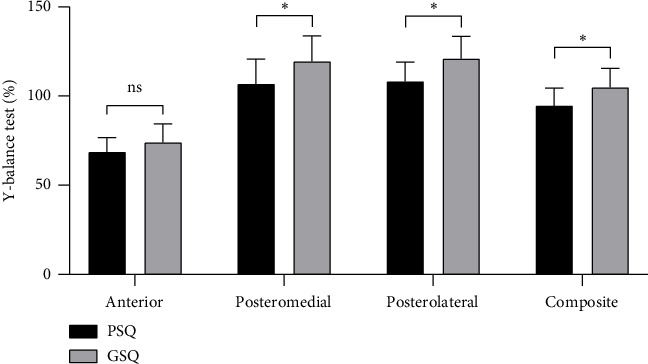
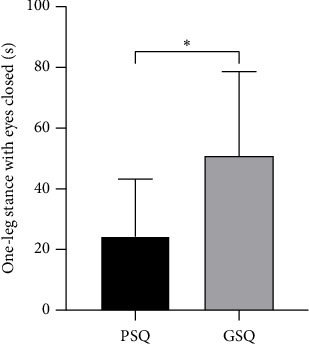
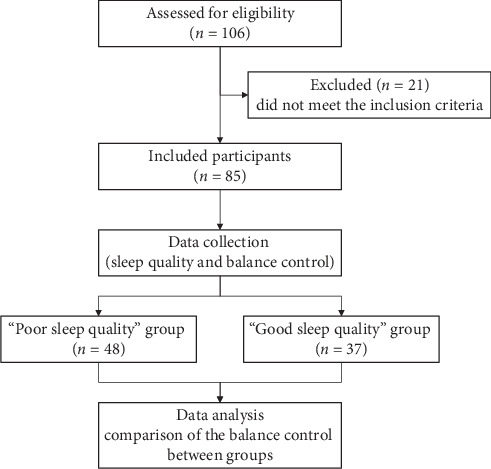
Objective: To investigate the influence of sleep quality and associated factors on balance control in individuals with chronic low back pain (CLBP). Methods: 85 participants (mean age 33.2 ± 12.5 years) with CLBP were recruited. Physical and emotional well-beings were evaluated using a battery of questionnaires. Sleep quality over the last month was assessed using the Pittsburgh Sleep Quality Index (PSQI). Participants were dichotomized into the good sleep quality (GSQ) and poor sleep quality (PSQ) groups if their PSQI scores were ≤ 5 and > 5, respectively. Balance control was measured using the one-leg stance with eyes closed and Y-balance test. Results: The GSQ group included 37 participants, while the PSQ group comprised 48 participants. After controlling for confounds (including gender, age, disability, anxiety, depression, and fear avoidance beliefs), participants with PSQ displayed significantly poorer performance in the one-leg stance with eyes closed and lower normalized posteromedial, posterolateral, and composite scores of the Y-balance test compared with participants with GSQ. Additionally, sleep quality accounted for 16.9%-24.9% of the variance in balance control, while age explained an additional 5.2%-13.2% of the variance. Additionally, higher levels of physical disability and anxiety were associated with poorer balance control. Conclusions: Individuals with concurrent CLBP and PSQ exhibit significantly worse balance control than those with CLBP alone. Future studies should investigate whether improving sleep quality, physical disability, and anxiety can enhance balance in individuals with CLBP.
期刊介绍:
Pain Research and Management is a peer-reviewed, Open Access journal that publishes original research articles, review articles, and clinical studies in all areas of pain management.
The most recent Impact Factor for Pain Research and Management is 1.685 according to the 2015 Journal Citation Reports released by Thomson Reuters in 2016.



 京公网安备 11010802042870号
京ICP备2023020795号-1
京公网安备 11010802042870号
京ICP备2023020795号-1

 分享
分享
 求助内容:
求助内容: 应助结果提醒方式:
 扫码关注我们
