{"title":"Mammalian Species-Specific Resistance to Mammary Cancer.","authors":"Itamar Barash","doi":"10.1007/s10911-025-09578-4","DOIUrl":null,"url":null,"abstract":"<p><p>Tumorigenesis in mammals is driven by inherited genetic variants, environmental factors and random errors during normal DNA replication that lead to cancer-causing mutations. These factors initiate uncontrolled cellular proliferation and disrupt the regulation of critical checkpoints. A few mammalian species possess unique protective mechanisms that enable them to resist widespread cancer development and achieve longevity. Tissue-specific tumor protection adds another layer of complexity to this diversity. Breast cancer is a leading cause of human mortality, particularly among females. Driven by the need for new strategies in treatment and prevention, this opinion article explores and supports the idea that herbivores are more resistant to mammary cancer than carnivores and omnivores. This diversity has occurred despite the remarkably similar basic mammary biology. Herbivores' meatless diet cannot explain the differences in cancer resistance, which have accompanied species segregation since the Jurassic era. To investigate the causes of this diversity, the characteristics of tumorigenesis in the human breast-and to a lesser extent in other carnivores-have been compared with data from retrospective analyses of bovine mammary tumor development across various locations over the past century. Well-established genomic, cellular, and systemic triggers of breast cancer exhibit different, or less pronounced tissue-specific activity in the bovine mammary gland, accompanied by novel bovine-specific protective mechanisms. Together, these factors contribute to the near absence of breast cancer in bovines and offer a basis for developing future anticancer strategies.</p>","PeriodicalId":16413,"journal":{"name":"Journal of Mammary Gland Biology and Neoplasia","volume":"30 1","pages":"3"},"PeriodicalIF":3.6000,"publicationDate":"2025-03-06","publicationTypes":"Journal Article","fieldsOfStudy":null,"isOpenAccess":false,"openAccessPdf":"https://www.ncbi.nlm.nih.gov/pmc/articles/PMC11885404/pdf/","citationCount":"0","resultStr":null,"platform":"Semanticscholar","paperid":null,"PeriodicalName":"Journal of Mammary Gland Biology and Neoplasia","FirstCategoryId":"3","ListUrlMain":"https://doi.org/10.1007/s10911-025-09578-4","RegionNum":4,"RegionCategory":"医学","ArticlePicture":[],"TitleCN":null,"AbstractTextCN":null,"PMCID":null,"EPubDate":"","PubModel":"","JCR":"Q2","JCRName":"ENDOCRINOLOGY & METABOLISM","Score":null,"Total":0}
引用次数: 0
Abstract
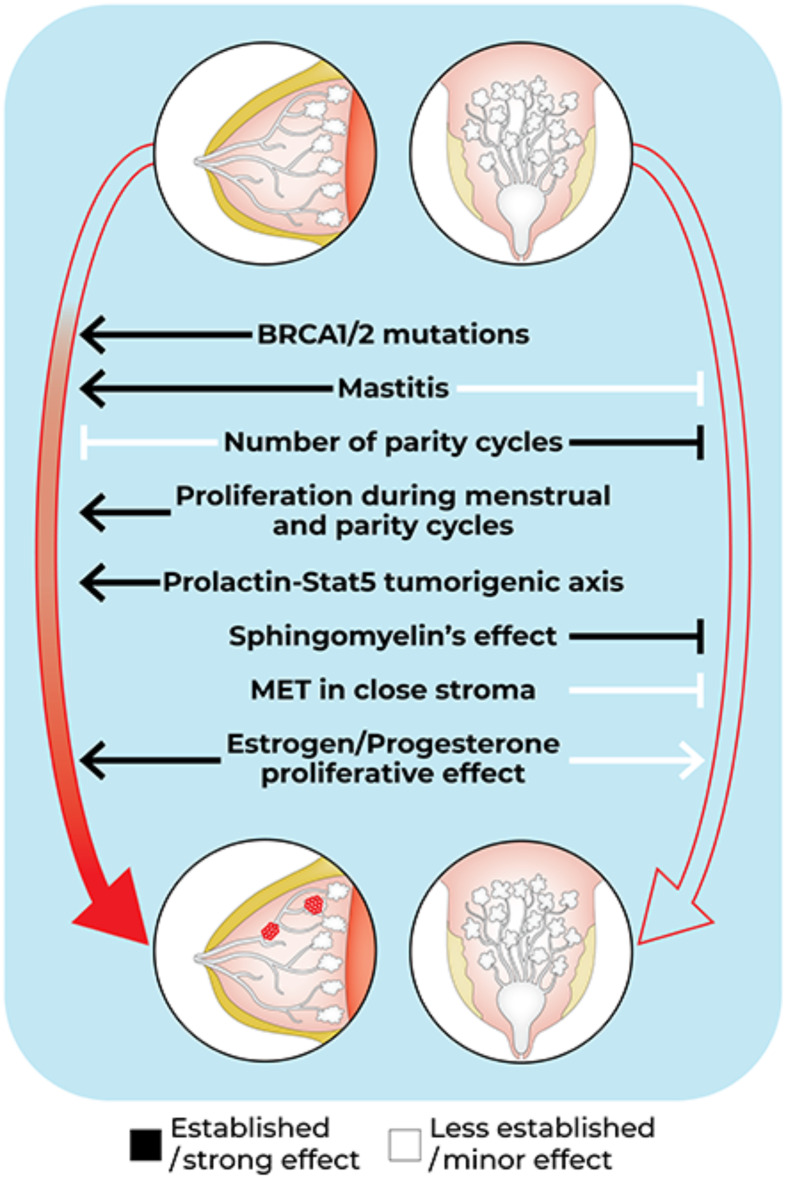
Tumorigenesis in mammals is driven by inherited genetic variants, environmental factors and random errors during normal DNA replication that lead to cancer-causing mutations. These factors initiate uncontrolled cellular proliferation and disrupt the regulation of critical checkpoints. A few mammalian species possess unique protective mechanisms that enable them to resist widespread cancer development and achieve longevity. Tissue-specific tumor protection adds another layer of complexity to this diversity. Breast cancer is a leading cause of human mortality, particularly among females. Driven by the need for new strategies in treatment and prevention, this opinion article explores and supports the idea that herbivores are more resistant to mammary cancer than carnivores and omnivores. This diversity has occurred despite the remarkably similar basic mammary biology. Herbivores' meatless diet cannot explain the differences in cancer resistance, which have accompanied species segregation since the Jurassic era. To investigate the causes of this diversity, the characteristics of tumorigenesis in the human breast-and to a lesser extent in other carnivores-have been compared with data from retrospective analyses of bovine mammary tumor development across various locations over the past century. Well-established genomic, cellular, and systemic triggers of breast cancer exhibit different, or less pronounced tissue-specific activity in the bovine mammary gland, accompanied by novel bovine-specific protective mechanisms. Together, these factors contribute to the near absence of breast cancer in bovines and offer a basis for developing future anticancer strategies.
期刊介绍:
Journal of Mammary Gland Biology and Neoplasia is the leading Journal in the field of mammary gland biology that provides researchers within and outside the field of mammary gland biology with an integrated source of information pertaining to the development, function, and pathology of the mammary gland and its function.
Commencing in 2015, the Journal will begin receiving and publishing a combination of reviews and original, peer-reviewed research. The Journal covers all topics related to the field of mammary gland biology, including mammary development, breast cancer biology, lactation, and milk composition and quality. The environmental, endocrine, nutritional, and molecular factors regulating these processes is covered, including from a comparative biology perspective.




 京公网安备 11010802042870号
京ICP备2023020795号-1
京公网安备 11010802042870号
京ICP备2023020795号-1

 分享
分享
 求助内容:
求助内容: 应助结果提醒方式:
 扫码关注我们
