Shuang Li, Xuan Tian, Xueyan Feng, Bonaventure Ip, Hing Lung Ip, Jill Abrigo, Lina Zheng, Yuying Liu, Yu Liu, Ziqi Li, Tingjun Liang, Karen K Y Ma, Florence S Y Fan, Sze Ho Ma, Hui Fang, Bo Song, Yuming Xu, Howan Leung, Yannie O Y Soo, Vincent C T Mok, Ka Sing Wong, Xinyi Leng, Thomas W H Leung
{"title":"Stroke Mechanisms in Intracranial Atherosclerotic Disease: A Modified Classification System and Clinical Implications.","authors":"Shuang Li, Xuan Tian, Xueyan Feng, Bonaventure Ip, Hing Lung Ip, Jill Abrigo, Lina Zheng, Yuying Liu, Yu Liu, Ziqi Li, Tingjun Liang, Karen K Y Ma, Florence S Y Fan, Sze Ho Ma, Hui Fang, Bo Song, Yuming Xu, Howan Leung, Yannie O Y Soo, Vincent C T Mok, Ka Sing Wong, Xinyi Leng, Thomas W H Leung","doi":"10.1007/s12975-025-01338-0","DOIUrl":null,"url":null,"abstract":"<p><strong>Background: </strong>In patients with symptomatic intracranial atherosclerotic stenosis (sICAS), recent evidence has suggested an association between artery-to-artery embolism (AAE) and cortical borderzone (CBZ) infarcts.</p><p><strong>Methods: </strong>We recruited patients with 50-99% anterior-circulation sICAS in this cohort. Stroke mechanisms were categorized as isolated parent artery atherosclerosis occluding penetrating artery (PAO), isolated AAE, isolated hypoperfusion, and mixed mechanisms, using two classification systems. In Classification I, the probable stroke mechanisms of internal borderzone and CBZ infarcts were both hypoperfusion, which were respectively hypoperfusion and AAE in Classification II. Other classification criteria were the same. We investigated and compared the predictive values of the two systems in predicting 90-day and 1-year recurrent ischemic stroke in the same territory (SIT).</p><p><strong>Results: </strong>Among 145 patients (median age 62 years), 101 (69.7%) were males. We found significant difference in the proportions of baseline stroke mechanisms between these two systems (p < 0.001). Eleven (7.6%) and 19 (13.1%) patients respectively had 90-day or 1-year recurrent SIT. Classification II better predicted the risk of 90-day recurrent SIT than Classification I, when patients were divided into 4 groups according to baseline stroke mechanisms (p = 0.029), or by the presence of hypoperfusion (p < 0.001). The two classification systems had comparable predictive values for 1-year recurrent SIT.</p><p><strong>Conclusions: </strong>In medically treated sICAS patients, considering AAE rather than hypoperfusion as the stroke mechanism for CBZ infarcts could better predict early recurrent SITs.</p>","PeriodicalId":23237,"journal":{"name":"Translational Stroke Research","volume":" ","pages":"1655-1665"},"PeriodicalIF":4.3000,"publicationDate":"2025-10-01","publicationTypes":"Journal Article","fieldsOfStudy":null,"isOpenAccess":false,"openAccessPdf":"https://www.ncbi.nlm.nih.gov/pmc/articles/PMC12391173/pdf/","citationCount":"0","resultStr":null,"platform":"Semanticscholar","paperid":null,"PeriodicalName":"Translational Stroke Research","FirstCategoryId":"3","ListUrlMain":"https://doi.org/10.1007/s12975-025-01338-0","RegionNum":2,"RegionCategory":"医学","ArticlePicture":[],"TitleCN":null,"AbstractTextCN":null,"PMCID":null,"EPubDate":"2025/3/6 0:00:00","PubModel":"Epub","JCR":"Q1","JCRName":"CLINICAL NEUROLOGY","Score":null,"Total":0}
引用次数: 0
Abstract
Background: In patients with symptomatic intracranial atherosclerotic stenosis (sICAS), recent evidence has suggested an association between artery-to-artery embolism (AAE) and cortical borderzone (CBZ) infarcts.
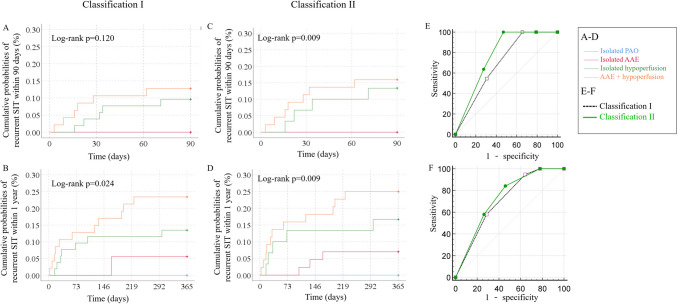
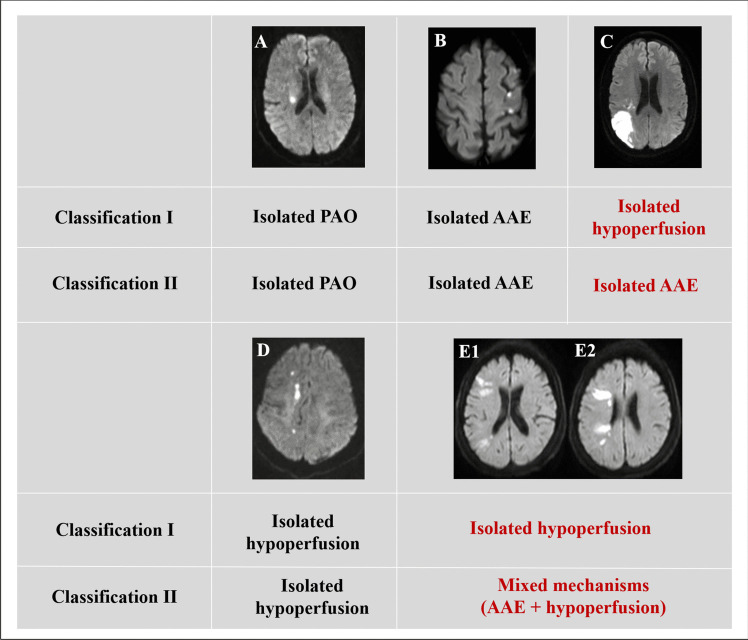
Methods: We recruited patients with 50-99% anterior-circulation sICAS in this cohort. Stroke mechanisms were categorized as isolated parent artery atherosclerosis occluding penetrating artery (PAO), isolated AAE, isolated hypoperfusion, and mixed mechanisms, using two classification systems. In Classification I, the probable stroke mechanisms of internal borderzone and CBZ infarcts were both hypoperfusion, which were respectively hypoperfusion and AAE in Classification II. Other classification criteria were the same. We investigated and compared the predictive values of the two systems in predicting 90-day and 1-year recurrent ischemic stroke in the same territory (SIT).
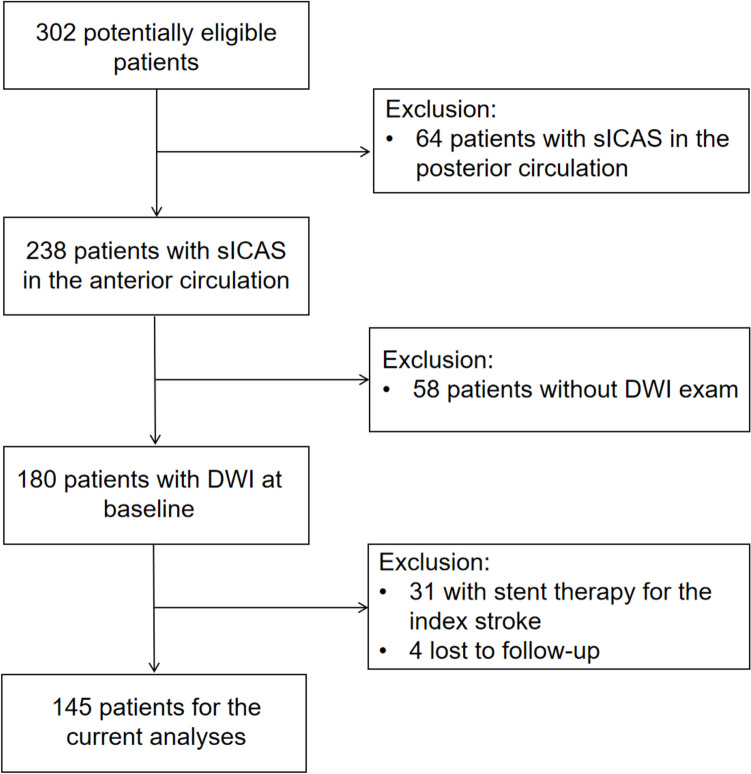
Results: Among 145 patients (median age 62 years), 101 (69.7%) were males. We found significant difference in the proportions of baseline stroke mechanisms between these two systems (p < 0.001). Eleven (7.6%) and 19 (13.1%) patients respectively had 90-day or 1-year recurrent SIT. Classification II better predicted the risk of 90-day recurrent SIT than Classification I, when patients were divided into 4 groups according to baseline stroke mechanisms (p = 0.029), or by the presence of hypoperfusion (p < 0.001). The two classification systems had comparable predictive values for 1-year recurrent SIT.
Conclusions: In medically treated sICAS patients, considering AAE rather than hypoperfusion as the stroke mechanism for CBZ infarcts could better predict early recurrent SITs.
期刊介绍:
Translational Stroke Research covers basic, translational, and clinical studies. The Journal emphasizes novel approaches to help both to understand clinical phenomenon through basic science tools, and to translate basic science discoveries into the development of new strategies for the prevention, assessment, treatment, and enhancement of central nervous system repair after stroke and other forms of neurotrauma.
Translational Stroke Research focuses on translational research and is relevant to both basic scientists and physicians, including but not restricted to neuroscientists, vascular biologists, neurologists, neuroimagers, and neurosurgeons.



 京公网安备 11010802042870号
京ICP备2023020795号-1
京公网安备 11010802042870号
京ICP备2023020795号-1

 分享
分享
 求助内容:
求助内容: 应助结果提醒方式:
 扫码关注我们
