{"title":"Exploring comorbidity networks in mild traumatic brain injury subjects through graph theory: a traumatic brain injury model systems study.","authors":"Kaustav Mehta, Shyam Kumar Sudhakar","doi":"10.1186/s12883-025-04102-x","DOIUrl":null,"url":null,"abstract":"<p><strong>Background: </strong>Traumatic brain injuries (TBIs) are characterized by myriad comorbidities that affect the functioning of the affected individuals. The comorbidities that TBI subjects experience span a wide range, ranging from psychiatric diseases to those that affect the various systems of the body. This is compounded by the fact that the problems that TBI subjects face could span over an extended period post-primary injury. Further, no drug exists to prevent the spread of secondary injuries after a primary impact.</p><p><strong>Methods: </strong>In this study, we employed graph theory to understand the patterns of comorbidities after mild TBIs. Disease comorbidity networks were constructed for old and young subjects with mild TBIs and a novel clustering algorithm was applied to understand the comorbidity patterns.</p><p><strong>Results: </strong>Upon application of network analysis and the clustering algorithm, we discovered interesting associations between comorbidities in young and old subjects with the condition. Specifically, bipolar disorder was seen as related to cardiovascular comorbidities, a pattern that was observed only in the young subjects. Similar associations between obsessive-compulsive disorder and rheumatoid arthritis were observed in young subjects. Psychiatric comorbidities exhibited differential associations with non-psychiatric comorbidities depending on the age of the cohort.</p><p><strong>Conclusion: </strong>The study results could have implications for effective surveillance and the management of comorbidities post mild TBIs.</p>","PeriodicalId":9170,"journal":{"name":"BMC Neurology","volume":"25 1","pages":"94"},"PeriodicalIF":2.2000,"publicationDate":"2025-03-07","publicationTypes":"Journal Article","fieldsOfStudy":null,"isOpenAccess":false,"openAccessPdf":"https://www.ncbi.nlm.nih.gov/pmc/articles/PMC11887189/pdf/","citationCount":"0","resultStr":null,"platform":"Semanticscholar","paperid":null,"PeriodicalName":"BMC Neurology","FirstCategoryId":"3","ListUrlMain":"https://doi.org/10.1186/s12883-025-04102-x","RegionNum":3,"RegionCategory":"医学","ArticlePicture":[],"TitleCN":null,"AbstractTextCN":null,"PMCID":null,"EPubDate":"","PubModel":"","JCR":"Q3","JCRName":"CLINICAL NEUROLOGY","Score":null,"Total":0}
引用次数: 0
Abstract
Background: Traumatic brain injuries (TBIs) are characterized by myriad comorbidities that affect the functioning of the affected individuals. The comorbidities that TBI subjects experience span a wide range, ranging from psychiatric diseases to those that affect the various systems of the body. This is compounded by the fact that the problems that TBI subjects face could span over an extended period post-primary injury. Further, no drug exists to prevent the spread of secondary injuries after a primary impact.
Methods: In this study, we employed graph theory to understand the patterns of comorbidities after mild TBIs. Disease comorbidity networks were constructed for old and young subjects with mild TBIs and a novel clustering algorithm was applied to understand the comorbidity patterns.
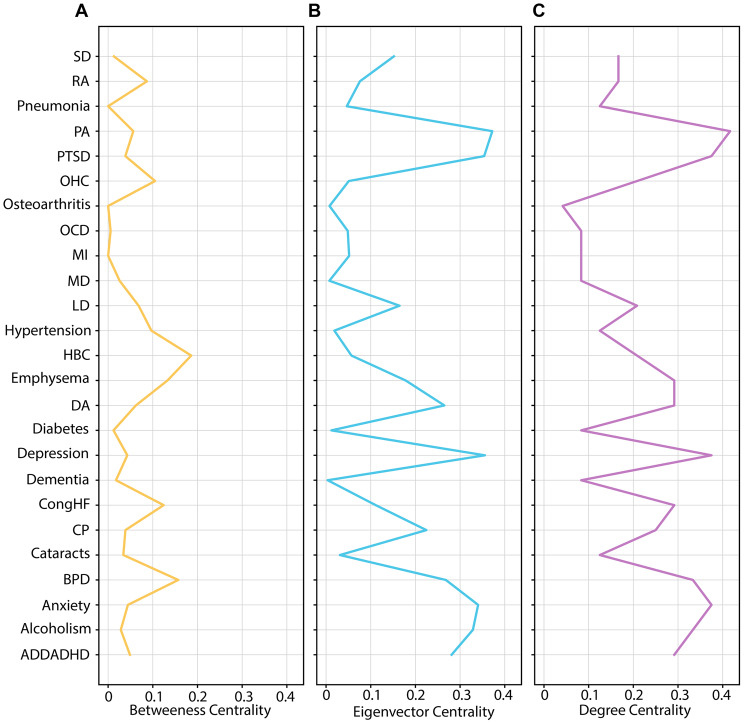
Results: Upon application of network analysis and the clustering algorithm, we discovered interesting associations between comorbidities in young and old subjects with the condition. Specifically, bipolar disorder was seen as related to cardiovascular comorbidities, a pattern that was observed only in the young subjects. Similar associations between obsessive-compulsive disorder and rheumatoid arthritis were observed in young subjects. Psychiatric comorbidities exhibited differential associations with non-psychiatric comorbidities depending on the age of the cohort.
Conclusion: The study results could have implications for effective surveillance and the management of comorbidities post mild TBIs.
期刊介绍:
BMC Neurology is an open access, peer-reviewed journal that considers articles on all aspects of the prevention, diagnosis and management of neurological disorders, as well as related molecular genetics, pathophysiology, and epidemiology.





 京公网安备 11010802042870号
京ICP备2023020795号-1
京公网安备 11010802042870号
京ICP备2023020795号-1

 分享
分享
 求助内容:
求助内容: 应助结果提醒方式:
 扫码关注我们
