{"title":"Case Report: Hybrid closed-loop insulin pump can significantly improve awareness of hypoglycemia.","authors":"Eliška Zadáková, Eva Horová","doi":"10.3389/fcdhc.2025.1536038","DOIUrl":null,"url":null,"abstract":"<p><p>Impaired awareness of hypoglycemia remains an issue even in the era of modern technologies, as patients with type 1 diabetes (T1DM) face stricter requirements for glycemic targets. The evaluation of hypoglycemia awareness can be accomplished using questionnaires (Clarke and Gold scores) in combination with clinical appearance and sensor data. A 45-year-old man with T1DM was referred to our clinic in July 2019 due to impaired hypoglycemia awareness and repeated severe hypoglycemic episodes resulting in unconsciousness. At that time, he was driving both a car and a motorcycle. Despite good compliance, increased target values and implementation of continuous glucose monitoring (CGM) with alarms, prolonged hypoglycemias were not eliminated. Therefore, the patient was referred for pancreatic islet transplantation, but he decided not to undergo. In May 2021, his driving license was suspended, which eventually led him to accept treatment with a hybrid closed-loop insulin pump (AID). Shortly after initiation, he achieved satisfactory glycemic control, reduced time spent in hypoglycemia, and had no severe hypoglycemic episodes. According to the questionnaires, the hypoglycemia awareness has improved and his driving license was reinstated. This case study highlights the critical importance of identifying impaired awareness of hypoglycemia, its potential social impacts, and the opportunities for using new technologies to reverse this complication.</p>","PeriodicalId":73075,"journal":{"name":"Frontiers in clinical diabetes and healthcare","volume":"6 ","pages":"1536038"},"PeriodicalIF":2.2000,"publicationDate":"2025-02-21","publicationTypes":"Journal Article","fieldsOfStudy":null,"isOpenAccess":false,"openAccessPdf":"https://www.ncbi.nlm.nih.gov/pmc/articles/PMC11886589/pdf/","citationCount":"0","resultStr":null,"platform":"Semanticscholar","paperid":null,"PeriodicalName":"Frontiers in clinical diabetes and healthcare","FirstCategoryId":"1085","ListUrlMain":"https://doi.org/10.3389/fcdhc.2025.1536038","RegionNum":0,"RegionCategory":null,"ArticlePicture":[],"TitleCN":null,"AbstractTextCN":null,"PMCID":null,"EPubDate":"2025/1/1 0:00:00","PubModel":"eCollection","JCR":"","JCRName":"","Score":null,"Total":0}
引用次数: 0
Abstract
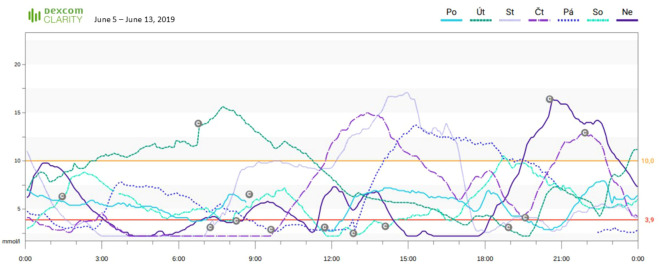
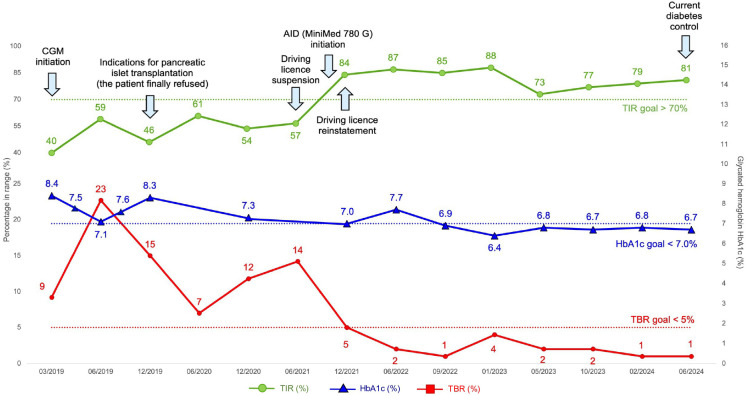
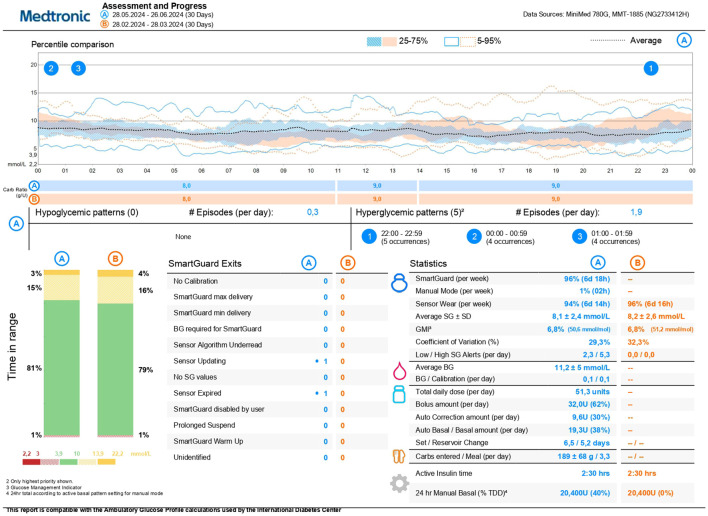
Impaired awareness of hypoglycemia remains an issue even in the era of modern technologies, as patients with type 1 diabetes (T1DM) face stricter requirements for glycemic targets. The evaluation of hypoglycemia awareness can be accomplished using questionnaires (Clarke and Gold scores) in combination with clinical appearance and sensor data. A 45-year-old man with T1DM was referred to our clinic in July 2019 due to impaired hypoglycemia awareness and repeated severe hypoglycemic episodes resulting in unconsciousness. At that time, he was driving both a car and a motorcycle. Despite good compliance, increased target values and implementation of continuous glucose monitoring (CGM) with alarms, prolonged hypoglycemias were not eliminated. Therefore, the patient was referred for pancreatic islet transplantation, but he decided not to undergo. In May 2021, his driving license was suspended, which eventually led him to accept treatment with a hybrid closed-loop insulin pump (AID). Shortly after initiation, he achieved satisfactory glycemic control, reduced time spent in hypoglycemia, and had no severe hypoglycemic episodes. According to the questionnaires, the hypoglycemia awareness has improved and his driving license was reinstated. This case study highlights the critical importance of identifying impaired awareness of hypoglycemia, its potential social impacts, and the opportunities for using new technologies to reverse this complication.




 京公网安备 11010802042870号
京ICP备2023020795号-1
京公网安备 11010802042870号
京ICP备2023020795号-1

 分享
分享

 求助内容:
求助内容: 应助结果提醒方式:
 扫码关注我们
