Michelle Thomas, Peter Rose, Lisa Coneyworth, John Harvey, James Goulding, Juliet Stone, Matt Padley, Patrick O'Reilly, Simon Welham
{"title":"Food insecurity amongst universal credit claimants: the benefits and nutrition study (BEANS), a cross-sectional online study.","authors":"Michelle Thomas, Peter Rose, Lisa Coneyworth, John Harvey, James Goulding, Juliet Stone, Matt Padley, Patrick O'Reilly, Simon Welham","doi":"10.1007/s00394-025-03596-y","DOIUrl":null,"url":null,"abstract":"<p><strong>Purpose: </strong>Increasing food insecurity (FIS) in the UK presents a major challenge to public health. Universal Credit (UC) claimants are disproportionately impacted by FIS but research on socio-demographic factors and consequent nutritional security is limited.</p><p><strong>Methods: </strong>A cross-sectional online survey (September 2021 - April 2022) assessed FIS in UC claimants (males and females, n = 328) (USDA 10 question module), dietary intake (females, n = 43; 3-4 × 24-hour dietary recalls) and coping strategies. Binary logistic regression tested sociodemographic variables influencing the odds of food insecurity. Diets ofUC were compared with national diet and nutrition survey (NDNS) participants and thematic analysis conducted for drivers and impacts of FIS.</p><p><strong>Results: </strong>FIS was experienced by 84.8% of UC respondents (73.8% very low food security). Equivalised income <£200 week<sup>-1</sup> increased odds of FIS by 7.3 (3.4-15.3) times compared with households receiving >£300 week<sup>-1</sup>. Being unemployed (P = 0.004), travelling > 15 min to obtain food (P = 0.016), shopping less than twice per week (P = 0.001) and receiving < 47.7% of the minimum income standard (MIS) all increased risk of FIS. Diet quality of working age females was lower (45.9%) compared to those in the NDNS (49.6-55.8%; P < 0.05) characterised by limited protein sources, minimal fruit consumption and reliance on bread. Intakes of vitamin A, iron, selenium, potassium, iodine and magnesium were consistently below most NDNS cohorts. Participants felt impotent to make substantive changes to their diets due to poverty.</p><p><strong>Conclusion: </strong>During this study, dependence on UC almost guaranteed recipients would be food insecure, consuming insufficient micronutrients to support health. MIS may provide a useful benchmark to prevent food poverty.</p>","PeriodicalId":12030,"journal":{"name":"European Journal of Nutrition","volume":"64 3","pages":"115"},"PeriodicalIF":4.3000,"publicationDate":"2025-03-10","publicationTypes":"Journal Article","fieldsOfStudy":null,"isOpenAccess":false,"openAccessPdf":"https://www.ncbi.nlm.nih.gov/pmc/articles/PMC11893655/pdf/","citationCount":"0","resultStr":null,"platform":"Semanticscholar","paperid":null,"PeriodicalName":"European Journal of Nutrition","FirstCategoryId":"3","ListUrlMain":"https://doi.org/10.1007/s00394-025-03596-y","RegionNum":2,"RegionCategory":"医学","ArticlePicture":[],"TitleCN":null,"AbstractTextCN":null,"PMCID":null,"EPubDate":"","PubModel":"","JCR":"Q2","JCRName":"NUTRITION & DIETETICS","Score":null,"Total":0}
引用次数: 0
Abstract
Purpose: Increasing food insecurity (FIS) in the UK presents a major challenge to public health. Universal Credit (UC) claimants are disproportionately impacted by FIS but research on socio-demographic factors and consequent nutritional security is limited.
Methods: A cross-sectional online survey (September 2021 - April 2022) assessed FIS in UC claimants (males and females, n = 328) (USDA 10 question module), dietary intake (females, n = 43; 3-4 × 24-hour dietary recalls) and coping strategies. Binary logistic regression tested sociodemographic variables influencing the odds of food insecurity. Diets ofUC were compared with national diet and nutrition survey (NDNS) participants and thematic analysis conducted for drivers and impacts of FIS.
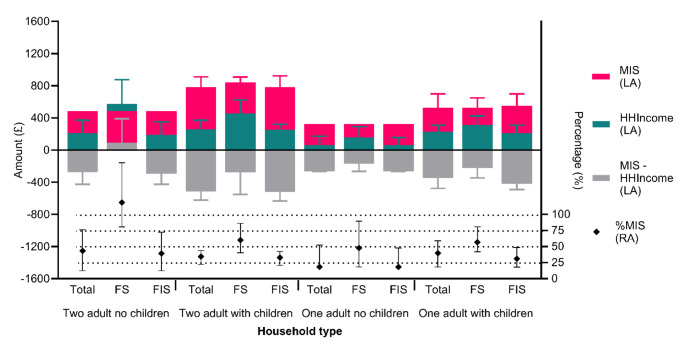
Results: FIS was experienced by 84.8% of UC respondents (73.8% very low food security). Equivalised income <£200 week-1 increased odds of FIS by 7.3 (3.4-15.3) times compared with households receiving >£300 week-1. Being unemployed (P = 0.004), travelling > 15 min to obtain food (P = 0.016), shopping less than twice per week (P = 0.001) and receiving < 47.7% of the minimum income standard (MIS) all increased risk of FIS. Diet quality of working age females was lower (45.9%) compared to those in the NDNS (49.6-55.8%; P < 0.05) characterised by limited protein sources, minimal fruit consumption and reliance on bread. Intakes of vitamin A, iron, selenium, potassium, iodine and magnesium were consistently below most NDNS cohorts. Participants felt impotent to make substantive changes to their diets due to poverty.
Conclusion: During this study, dependence on UC almost guaranteed recipients would be food insecure, consuming insufficient micronutrients to support health. MIS may provide a useful benchmark to prevent food poverty.
期刊介绍:
The European Journal of Nutrition publishes original papers, reviews, and short communications in the nutritional sciences. The manuscripts submitted to the European Journal of Nutrition should have their major focus on the impact of nutrients and non-nutrients on
immunology and inflammation,
gene expression,
metabolism,
chronic diseases, or
carcinogenesis,
or a major focus on
epidemiology, including intervention studies with healthy subjects and with patients,
biofunctionality of food and food components, or
the impact of diet on the environment.





 京公网安备 11010802042870号
京ICP备2023020795号-1
京公网安备 11010802042870号
京ICP备2023020795号-1

 分享
分享
 求助内容:
求助内容: 应助结果提醒方式:
 扫码关注我们
