Wan Sarifah Ainin Wan Jusoh, S Maria Awaluddin, Norhafizah Sahril, Norlaila Hamid, Norliza Shamsudin, Norain Abd Wahab, Mohd Shaiful Azlan Kassim, Noor Ani Ahmad
{"title":"Unmet family planning needs in Malaysia: prevalence, associated factors, and implications for targeted interventions.","authors":"Wan Sarifah Ainin Wan Jusoh, S Maria Awaluddin, Norhafizah Sahril, Norlaila Hamid, Norliza Shamsudin, Norain Abd Wahab, Mohd Shaiful Azlan Kassim, Noor Ani Ahmad","doi":"10.1186/s40834-025-00347-6","DOIUrl":null,"url":null,"abstract":"<p><strong>Background: </strong>Family planning is a fundamental strategy to enhance the well-being of women, their partners, and children however, disparities among certain groups of women of reproductive age (WR) persist. This study aims to estimate the prevalence of unmet family planning needs among WR in Malaysia and its associated factors.</p><p><strong>Methods: </strong>Data from the 2022 national health survey were utilized. Face-to-face interviews were conducted using a standard questionnaire on contraceptive use among the eligible WR who provided written consent. Unmet needs refer to fecund WR who are not using any contraceptive method but wish to either limit childbearing (cease having children) or space pregnancies (delay their next birth).</p><p><strong>Results: </strong>Out of 1,987 eligible WR, 1,877 respondents were interviewed, resulting in an 86.6% response rate. This study focused on 1,236 WR who were currently married or in a union and fecund. The prevalence of unmet family planning needs was 26.7% (95% CI: 22.6, 31.3) with 20.7% (95% CI: 17.1, 24.8) attributed to unmet needs for limiting and 6.0% (95% CI: 3.9, 9.3) for spacing. Unmet family planning needs were associated with WR who resided in Peninsular Malaysia (adjusted Odds Ratio (aOR) = 2.42, 95% CI: 1.36, 4.30), those employed in the private sector (aOR = 2.07, 95% CI: 1.16, 3.66), and those aged 35 years and above (aOR = 1.70, 95% CI: 1.08, 2.66).</p><p><strong>Conclusions: </strong>Unmet family planning needs are prevalent in Malaysia and associated with specific WR groups. An in-depth study should follow these findings to identify barriers in accessing family planning services, which are currently available.</p>","PeriodicalId":93956,"journal":{"name":"Contraception and reproductive medicine","volume":"10 1","pages":"18"},"PeriodicalIF":1.9000,"publicationDate":"2025-03-11","publicationTypes":"Journal Article","fieldsOfStudy":null,"isOpenAccess":false,"openAccessPdf":"https://www.ncbi.nlm.nih.gov/pmc/articles/PMC11895251/pdf/","citationCount":"0","resultStr":null,"platform":"Semanticscholar","paperid":null,"PeriodicalName":"Contraception and reproductive medicine","FirstCategoryId":"1085","ListUrlMain":"https://doi.org/10.1186/s40834-025-00347-6","RegionNum":0,"RegionCategory":null,"ArticlePicture":[],"TitleCN":null,"AbstractTextCN":null,"PMCID":null,"EPubDate":"","PubModel":"","JCR":"Q2","JCRName":"OBSTETRICS & GYNECOLOGY","Score":null,"Total":0}
引用次数: 0
Abstract
Background: Family planning is a fundamental strategy to enhance the well-being of women, their partners, and children however, disparities among certain groups of women of reproductive age (WR) persist. This study aims to estimate the prevalence of unmet family planning needs among WR in Malaysia and its associated factors.
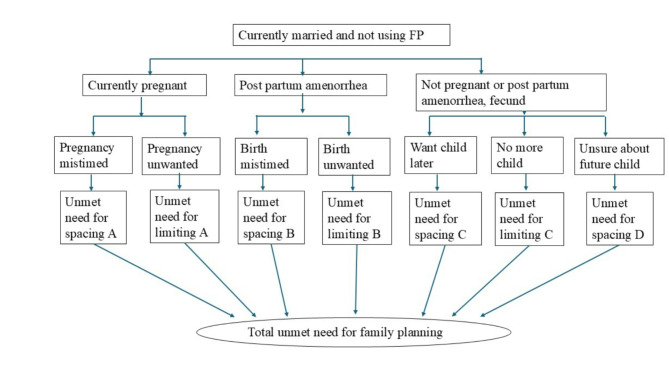
Methods: Data from the 2022 national health survey were utilized. Face-to-face interviews were conducted using a standard questionnaire on contraceptive use among the eligible WR who provided written consent. Unmet needs refer to fecund WR who are not using any contraceptive method but wish to either limit childbearing (cease having children) or space pregnancies (delay their next birth).
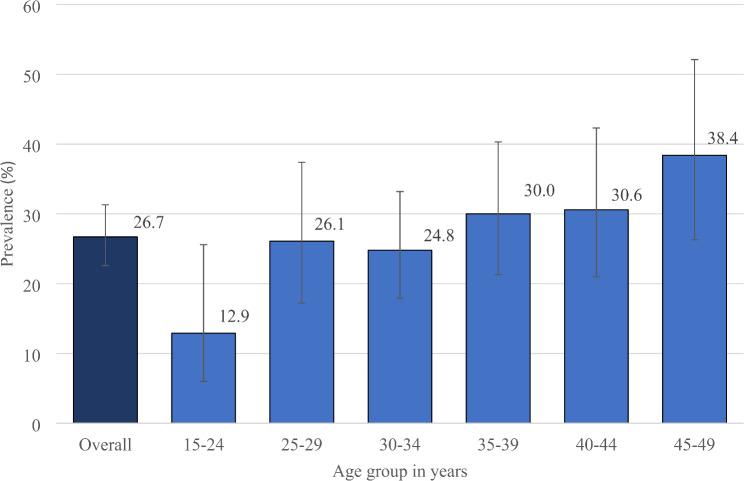
Results: Out of 1,987 eligible WR, 1,877 respondents were interviewed, resulting in an 86.6% response rate. This study focused on 1,236 WR who were currently married or in a union and fecund. The prevalence of unmet family planning needs was 26.7% (95% CI: 22.6, 31.3) with 20.7% (95% CI: 17.1, 24.8) attributed to unmet needs for limiting and 6.0% (95% CI: 3.9, 9.3) for spacing. Unmet family planning needs were associated with WR who resided in Peninsular Malaysia (adjusted Odds Ratio (aOR) = 2.42, 95% CI: 1.36, 4.30), those employed in the private sector (aOR = 2.07, 95% CI: 1.16, 3.66), and those aged 35 years and above (aOR = 1.70, 95% CI: 1.08, 2.66).
Conclusions: Unmet family planning needs are prevalent in Malaysia and associated with specific WR groups. An in-depth study should follow these findings to identify barriers in accessing family planning services, which are currently available.



 京公网安备 11010802042870号
京ICP备2023020795号-1
京公网安备 11010802042870号
京ICP备2023020795号-1

 分享
分享

 求助内容:
求助内容: 应助结果提醒方式:
 扫码关注我们
