Zhecheng Zhou, Jinhang Wei, Mingzhe Liu, Linlin Zhuo, Xiangzheng Fu, Quan Zou
{"title":"AnomalGRN: deciphering single-cell gene regulation network with graph anomaly detection.","authors":"Zhecheng Zhou, Jinhang Wei, Mingzhe Liu, Linlin Zhuo, Xiangzheng Fu, Quan Zou","doi":"10.1186/s12915-025-02177-z","DOIUrl":null,"url":null,"abstract":"<p><strong>Background: </strong>Single-cell RNA sequencing (scRNA-seq) is now essential for cellular-level gene expression studies and deciphering complex gene regulatory mechanisms. Deep learning methods, when combined with scRNA-seq technology, transform gene regulation research into graph link prediction tasks. However, these methods struggle to mitigate the impact of noisy data in gene regulatory networks (GRNs) and address the significant imbalance between positive and negative links.</p><p><strong>Results: </strong>Consequently, we introduce the AnomalGRN model, focusing on heterogeneity and sparsification to elucidate complex regulatory mechanisms within GRNs. Initially, we consider gene pairs as nodes to construct new networks, thereby converting gene regulation prediction into a node prediction task. Considering the imbalance between positive and negative links in GRNs, we further adapt this issue into a graph anomaly detection (GAD) task, marking the first application of anomaly detection to GRN analysis. Introducing the cosine metric rule enables the AnomalGRN model to differentiate between homogeneity and heterogeneity among nodes in the reconstructed GRNs. The adoption of graph structure sparsification technology reduces noisy data impact and optimizes node representation.</p><p><strong>Conclusions: </strong></p>","PeriodicalId":9339,"journal":{"name":"BMC Biology","volume":"23 1","pages":"73"},"PeriodicalIF":4.5000,"publicationDate":"2025-03-11","publicationTypes":"Journal Article","fieldsOfStudy":null,"isOpenAccess":false,"openAccessPdf":"https://www.ncbi.nlm.nih.gov/pmc/articles/PMC11900578/pdf/","citationCount":"0","resultStr":null,"platform":"Semanticscholar","paperid":null,"PeriodicalName":"BMC Biology","FirstCategoryId":"99","ListUrlMain":"https://doi.org/10.1186/s12915-025-02177-z","RegionNum":1,"RegionCategory":"生物学","ArticlePicture":[],"TitleCN":null,"AbstractTextCN":null,"PMCID":null,"EPubDate":"","PubModel":"","JCR":"Q1","JCRName":"BIOLOGY","Score":null,"Total":0}
引用次数: 0
Abstract
Background: Single-cell RNA sequencing (scRNA-seq) is now essential for cellular-level gene expression studies and deciphering complex gene regulatory mechanisms. Deep learning methods, when combined with scRNA-seq technology, transform gene regulation research into graph link prediction tasks. However, these methods struggle to mitigate the impact of noisy data in gene regulatory networks (GRNs) and address the significant imbalance between positive and negative links.
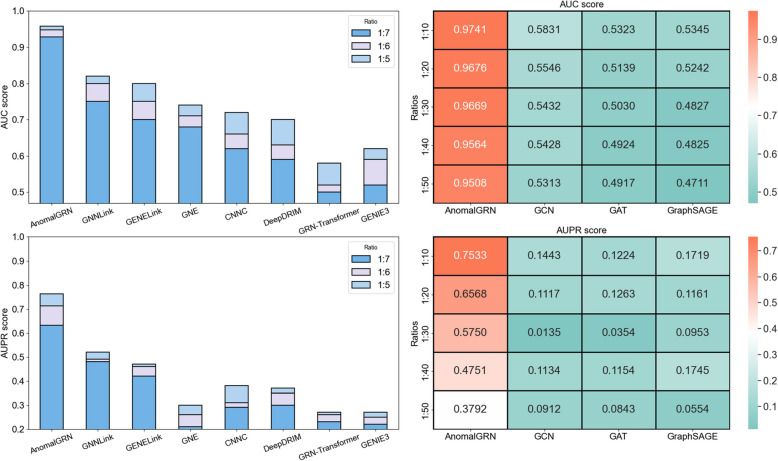
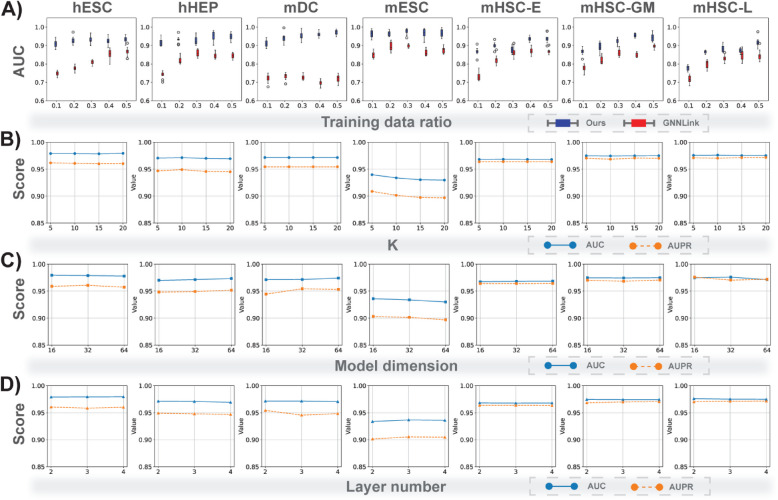
Results: Consequently, we introduce the AnomalGRN model, focusing on heterogeneity and sparsification to elucidate complex regulatory mechanisms within GRNs. Initially, we consider gene pairs as nodes to construct new networks, thereby converting gene regulation prediction into a node prediction task. Considering the imbalance between positive and negative links in GRNs, we further adapt this issue into a graph anomaly detection (GAD) task, marking the first application of anomaly detection to GRN analysis. Introducing the cosine metric rule enables the AnomalGRN model to differentiate between homogeneity and heterogeneity among nodes in the reconstructed GRNs. The adoption of graph structure sparsification technology reduces noisy data impact and optimizes node representation.
期刊介绍:
BMC Biology is a broad scope journal covering all areas of biology. Our content includes research articles, new methods and tools. BMC Biology also publishes reviews, Q&A, and commentaries.




 京公网安备 11010802042870号
京ICP备2023020795号-1
京公网安备 11010802042870号
京ICP备2023020795号-1

 分享
分享
 求助内容:
求助内容: 应助结果提醒方式:
 扫码关注我们
