{"title":"Loss and damage in large-diameter sensory neurons in the db/db diabetic mouse.","authors":"Reham M Filfilan, Mohammed A Nassar","doi":"10.1177/17448069251328521","DOIUrl":null,"url":null,"abstract":"<p><p>Diabetic peripheral neuropathy (DPN) is the most common complication of diabetes. Half of DPN patients experience sensory deficits including loss of sensation and pain. Loss of sensation increases the risk of unnoticed foot injuries which combined with poor circulation and healing lead to amputation. Type 2 diabetes accounts for 50% of foot amputation highlighting the significant impact sensory loss can have on patients' quality of life. However, the cellular basis underlying sensory loss in DPN remains unclear. We characterized diabetes-induced neuronal loss and damage in dorsal root ganglia (DRG) in the db/db mouse model of type 2 diabetes. Morphometric characterization was carried out on two neuronal populations in lumbar DRGs of 32-week diabetic (db/db) mice. These are the N200-positive neurons, a marker for low and high-threshold mechanosensitive sensory and proprioceptive neurons, and peripherin (PRPH)-positive neurons, a marker for pain sensing neurons. In diabetic mice, N200-positive neurons were reduced by 30%. Furthermore, diabetes increased the percentage of N200-positive neurons with cytoplasmic vacuoles, a sign of damage and stress, by 2.44 fold. In addition, the average number of vacuoles was 1.6 fold higher in diabetic mice. Therapies aimed at reducing this loss could help patients better protect their limbs from injuries and thus reduce amputations.</p>","PeriodicalId":19010,"journal":{"name":"Molecular Pain","volume":" ","pages":"17448069251328521"},"PeriodicalIF":2.8000,"publicationDate":"2025-01-01","publicationTypes":"Journal Article","fieldsOfStudy":null,"isOpenAccess":false,"openAccessPdf":"https://www.ncbi.nlm.nih.gov/pmc/articles/PMC12038194/pdf/","citationCount":"0","resultStr":null,"platform":"Semanticscholar","paperid":null,"PeriodicalName":"Molecular Pain","FirstCategoryId":"3","ListUrlMain":"https://doi.org/10.1177/17448069251328521","RegionNum":3,"RegionCategory":"医学","ArticlePicture":[],"TitleCN":null,"AbstractTextCN":null,"PMCID":null,"EPubDate":"2025/3/11 0:00:00","PubModel":"Epub","JCR":"Q2","JCRName":"NEUROSCIENCES","Score":null,"Total":0}
引用次数: 0
Abstract
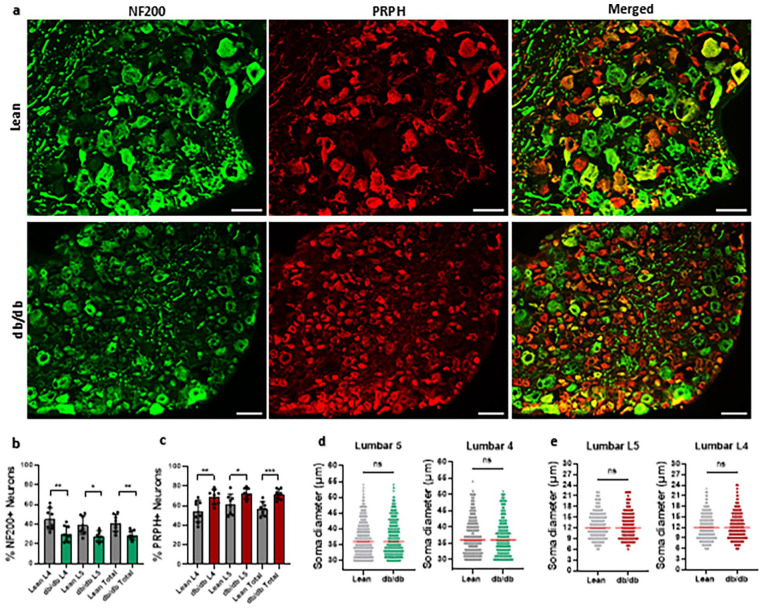
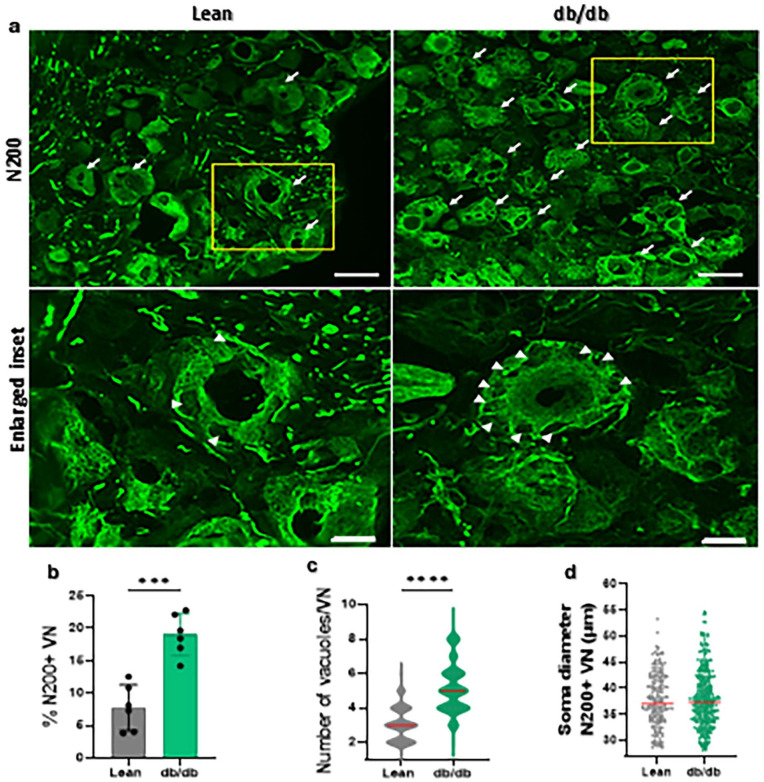
Diabetic peripheral neuropathy (DPN) is the most common complication of diabetes. Half of DPN patients experience sensory deficits including loss of sensation and pain. Loss of sensation increases the risk of unnoticed foot injuries which combined with poor circulation and healing lead to amputation. Type 2 diabetes accounts for 50% of foot amputation highlighting the significant impact sensory loss can have on patients' quality of life. However, the cellular basis underlying sensory loss in DPN remains unclear. We characterized diabetes-induced neuronal loss and damage in dorsal root ganglia (DRG) in the db/db mouse model of type 2 diabetes. Morphometric characterization was carried out on two neuronal populations in lumbar DRGs of 32-week diabetic (db/db) mice. These are the N200-positive neurons, a marker for low and high-threshold mechanosensitive sensory and proprioceptive neurons, and peripherin (PRPH)-positive neurons, a marker for pain sensing neurons. In diabetic mice, N200-positive neurons were reduced by 30%. Furthermore, diabetes increased the percentage of N200-positive neurons with cytoplasmic vacuoles, a sign of damage and stress, by 2.44 fold. In addition, the average number of vacuoles was 1.6 fold higher in diabetic mice. Therapies aimed at reducing this loss could help patients better protect their limbs from injuries and thus reduce amputations.
期刊介绍:
Molecular Pain is a peer-reviewed, open access journal that considers manuscripts in pain research at the cellular, subcellular and molecular levels. Molecular Pain provides a forum for molecular pain scientists to communicate their research findings in a targeted manner to others in this important and growing field.




 京公网安备 11010802042870号
京ICP备2023020795号-1
京公网安备 11010802042870号
京ICP备2023020795号-1

 分享
分享
 求助内容:
求助内容: 应助结果提醒方式:
 扫码关注我们
