Huayan Zhang, Xuecheng Zhang, He Yuan, Yi Liu, Xinyuan Jiang, Mengyao Wang, Qiqi Zhang, Ju Xie, Lubin Ni
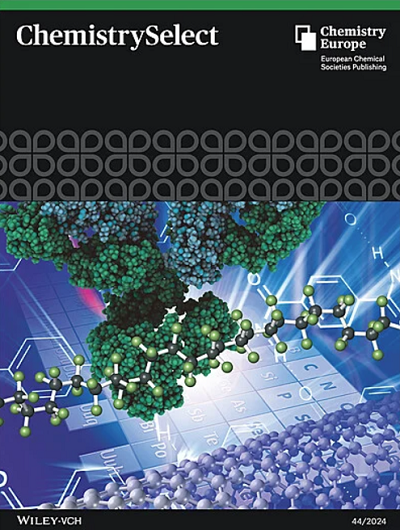
{"title":"Supramolecules Applied to Energy Storage Devices: Study on the Mechanism of Cucurbituril Inhibition of the Polysulfide Shuttle Effect","authors":"Huayan Zhang, Xuecheng Zhang, He Yuan, Yi Liu, Xinyuan Jiang, Mengyao Wang, Qiqi Zhang, Ju Xie, Lubin Ni","doi":"10.1002/slct.202405238","DOIUrl":null,"url":null,"abstract":"<p>Lithium-sulfur (Li-S) batteries are considered promising candidates for next-generation high-energy-density storage devices; however, their commercialization remains hindered by several challenges. Supramolecular macrocyclic compounds, owing to their unique structures and properties, hold significant potential for improving Li-S battery performance. In this study, the inclusion mechanism of lithium polysulfides (LiPSs) by cucurbiturils (CB[n], n = 6,7) was systematically investigated. Density functional theory (DFT) calculations were employed to analyze the recognition capabilities of CB[6] and CB[7] for polysulfides. The results indicate that both CB[6] and CB[7] effectively encapsulate polysulfides through non-covalent interactions. Specifically, CB[6] exhibits a stronger affinity for medium-chain sulfur species, with the most pronounced encapsulation observed for Li<sub>2</sub>S<sub>4</sub>. In contrast, CB[7] demonstrates superior encapsulation efficiency for longer-chain sulfur species, with the most stable inclusion occurring for Li<sub>2</sub>S<sub>6</sub>. Furthermore, molecular dynamics (MD) simulations based on DFT calculations revealed that Li<sub>2</sub>S<sub>4</sub>@CB[6] and Li<sub>2</sub>S<sub>6</sub>@CB[7] exhibit high stability in battery electrolytes. These findings suggest that CB[6] and CB[7], as supramolecular materials, can effectively inhibit the dissolution and migration of polysulfides in Li-S batteries, mitigating the “shuttle effect” and significantly enhancing battery cycle life and charge-discharge efficiency. This research provides valuable insights into the optimization of materials for Li-S battery applications.</p>","PeriodicalId":146,"journal":{"name":"ChemistrySelect","volume":"10 11","pages":""},"PeriodicalIF":2.0000,"publicationDate":"2025-03-18","publicationTypes":"Journal Article","fieldsOfStudy":null,"isOpenAccess":false,"openAccessPdf":"","citationCount":"0","resultStr":null,"platform":"Semanticscholar","paperid":null,"PeriodicalName":"ChemistrySelect","FirstCategoryId":"92","ListUrlMain":"https://chemistry-europe.onlinelibrary.wiley.com/doi/10.1002/slct.202405238","RegionNum":4,"RegionCategory":"化学","ArticlePicture":[],"TitleCN":null,"AbstractTextCN":null,"PMCID":null,"EPubDate":"","PubModel":"","JCR":"Q3","JCRName":"CHEMISTRY, MULTIDISCIPLINARY","Score":null,"Total":0}
引用次数: 0
Abstract
Lithium-sulfur (Li-S) batteries are considered promising candidates for next-generation high-energy-density storage devices; however, their commercialization remains hindered by several challenges. Supramolecular macrocyclic compounds, owing to their unique structures and properties, hold significant potential for improving Li-S battery performance. In this study, the inclusion mechanism of lithium polysulfides (LiPSs) by cucurbiturils (CB[n], n = 6,7) was systematically investigated. Density functional theory (DFT) calculations were employed to analyze the recognition capabilities of CB[6] and CB[7] for polysulfides. The results indicate that both CB[6] and CB[7] effectively encapsulate polysulfides through non-covalent interactions. Specifically, CB[6] exhibits a stronger affinity for medium-chain sulfur species, with the most pronounced encapsulation observed for Li2S4. In contrast, CB[7] demonstrates superior encapsulation efficiency for longer-chain sulfur species, with the most stable inclusion occurring for Li2S6. Furthermore, molecular dynamics (MD) simulations based on DFT calculations revealed that Li2S4@CB[6] and Li2S6@CB[7] exhibit high stability in battery electrolytes. These findings suggest that CB[6] and CB[7], as supramolecular materials, can effectively inhibit the dissolution and migration of polysulfides in Li-S batteries, mitigating the “shuttle effect” and significantly enhancing battery cycle life and charge-discharge efficiency. This research provides valuable insights into the optimization of materials for Li-S battery applications.
锂硫(Li-S)电池被认为是下一代高能量密度存储设备的有希望的候选者;然而,它们的商业化仍然受到一些挑战的阻碍。超分子大环化合物由于其独特的结构和性质,在改善锂硫电池性能方面具有重要的潜力。本研究系统研究了葫芦腈(CB[n], n = 6,7)对多硫化锂(LiPSs)的包合机理。采用密度泛函理论(DFT)计算分析了CB[6]和CB[7]对多硫化物的识别能力。结果表明,CB[6]和CB[7]均能通过非共价相互作用有效包封多硫化物。具体来说,CB[6]对中链硫具有更强的亲和性,对Li2S4具有最明显的包封性。相比之下,CB[7]对长链硫的包封效率更高,对Li2S6的包封最稳定。此外,基于DFT计算的分子动力学(MD)模拟表明,Li2S4@CB[6]和Li2S6@CB[7]在电池电解质中具有很高的稳定性。上述结果表明,CB[6]和CB[7]作为超分子材料,可以有效抑制Li-S电池中多硫化物的溶解和迁移,减轻“穿梭效应”,显著提高电池循环寿命和充放电效率。这项研究为锂硫电池应用材料的优化提供了有价值的见解。
期刊介绍:
ChemistrySelect is the latest journal from ChemPubSoc Europe and Wiley-VCH. It offers researchers a quality society-owned journal in which to publish their work in all areas of chemistry. Manuscripts are evaluated by active researchers to ensure they add meaningfully to the scientific literature, and those accepted are processed quickly to ensure rapid online publication.





 京公网安备 11010802042870号
京ICP备2023020795号-1
京公网安备 11010802042870号
京ICP备2023020795号-1

 分享
分享
 求助内容:
求助内容: 应助结果提醒方式:
 扫码关注我们
