Evaluating the impact of movement representation techniques on recovery outcomes in post-orthopaedic surgery individuals: a systematic review and meta-analysis.
{"title":"Evaluating the impact of movement representation techniques on recovery outcomes in post-orthopaedic surgery individuals: a systematic review and meta-analysis.","authors":"Xin Yu, Hu-Jun Wang, Xian-Feng Guo, Qian Pei, Xiao-Quan Wang, Wen-Qian Zhi, Jie Hao, Jing-Xuan Wang, Qiang Huang","doi":"10.1186/s12891-025-08496-0","DOIUrl":null,"url":null,"abstract":"<p><strong>Background: </strong>Although movement representation techniques has originally been used in neurological rehabilitation, growing researches suggests that it may also introduce advantageous effects to individuals with orthopaedic injuries. This systematic review and meta-analysis aimed to investigate the effects of these techniques on pain, range of motion, muscle strength, functional performance and fear of movement in individuals after orthopaedic surgeries.</p><p><strong>Method: </strong>Five electronic databases were searched until April 2024. Two reviewers independently conducted study selection and data extraction. Randomized controlled studies containing individuals after limb surgeries were identified. The quality of enrolled studies and the overall certainty of evidence was assessed by scales, respectively. Egger's test and funnel plot were used to assess publication bias. Subgroup analysis was also conducted to explore the source of heterogeneity.</p><p><strong>Results: </strong>Twenty-one randomized controlled trials involving 659 postsurgical participants were identified. The meta-analysis suggested moderate-quality evidence of a positive effect on pain intensity (SMD=-0.85; 95% CI -1.26, -0.43; p < 0.001). A low quality of evidence pointed toward a positive effect on functional scales (SMD=-0.84, 95% CI -1.27, -0.41, p < 0.001) and range of motion (SMD = 0.8, 95% CI 0.24, 1.35, p = 0.005). The very low quality of evidence suggested a significant effect on the functional test results (SMD=-0.8, 95% CI -1.01, -0.58, p < 0.001). The results remained nonsignificant for muscle strength and fear of movement. Intervention quantity, Disability of Arm, Shoulder, and Hand (DASH) score and intervention content were the sources of heterogeneity for pain intensity, functional scale score and range of motion, respectively.</p><p><strong>Conclusion: </strong>Compared with conventional rehabilitation, movement representation techniques increase pain relief, functional performance and range of motion. Our results support the use of mental practice techniques in individuals after orthopaedic surgeries, with moderate to very low-quality evidence.</p><p><strong>Review registration: </strong>This trial was registered on PROSPERO on 10 August, 2024 (CRD42024583380).</p>","PeriodicalId":9189,"journal":{"name":"BMC Musculoskeletal Disorders","volume":"26 1","pages":"271"},"PeriodicalIF":2.4000,"publicationDate":"2025-03-18","publicationTypes":"Journal Article","fieldsOfStudy":null,"isOpenAccess":false,"openAccessPdf":"https://www.ncbi.nlm.nih.gov/pmc/articles/PMC11916950/pdf/","citationCount":"0","resultStr":null,"platform":"Semanticscholar","paperid":null,"PeriodicalName":"BMC Musculoskeletal Disorders","FirstCategoryId":"3","ListUrlMain":"https://doi.org/10.1186/s12891-025-08496-0","RegionNum":3,"RegionCategory":"医学","ArticlePicture":[],"TitleCN":null,"AbstractTextCN":null,"PMCID":null,"EPubDate":"","PubModel":"","JCR":"Q2","JCRName":"ORTHOPEDICS","Score":null,"Total":0}
引用次数: 0
Abstract
Background: Although movement representation techniques has originally been used in neurological rehabilitation, growing researches suggests that it may also introduce advantageous effects to individuals with orthopaedic injuries. This systematic review and meta-analysis aimed to investigate the effects of these techniques on pain, range of motion, muscle strength, functional performance and fear of movement in individuals after orthopaedic surgeries.
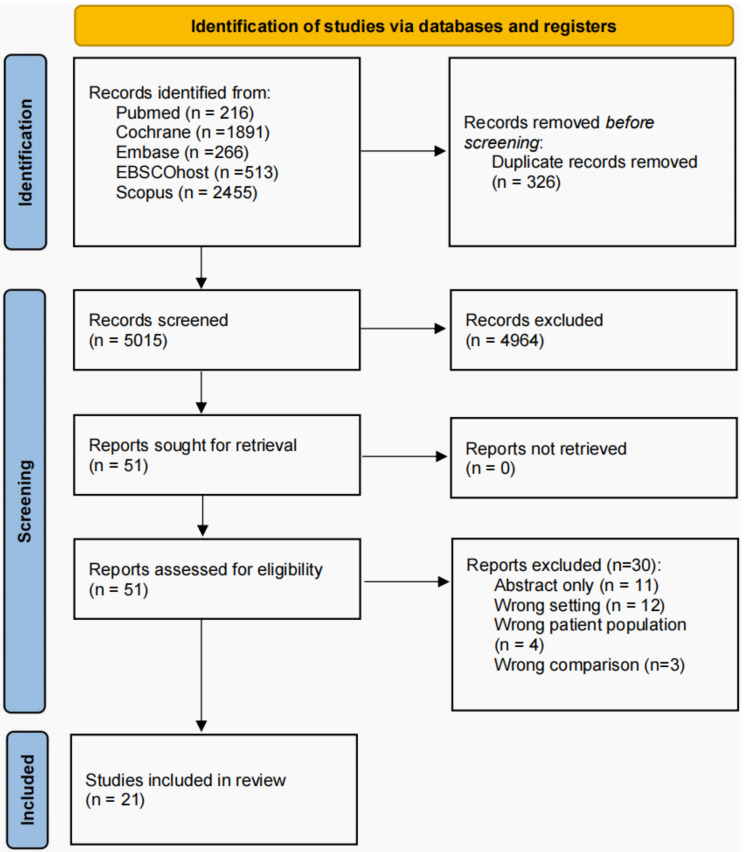
Method: Five electronic databases were searched until April 2024. Two reviewers independently conducted study selection and data extraction. Randomized controlled studies containing individuals after limb surgeries were identified. The quality of enrolled studies and the overall certainty of evidence was assessed by scales, respectively. Egger's test and funnel plot were used to assess publication bias. Subgroup analysis was also conducted to explore the source of heterogeneity.
Results: Twenty-one randomized controlled trials involving 659 postsurgical participants were identified. The meta-analysis suggested moderate-quality evidence of a positive effect on pain intensity (SMD=-0.85; 95% CI -1.26, -0.43; p < 0.001). A low quality of evidence pointed toward a positive effect on functional scales (SMD=-0.84, 95% CI -1.27, -0.41, p < 0.001) and range of motion (SMD = 0.8, 95% CI 0.24, 1.35, p = 0.005). The very low quality of evidence suggested a significant effect on the functional test results (SMD=-0.8, 95% CI -1.01, -0.58, p < 0.001). The results remained nonsignificant for muscle strength and fear of movement. Intervention quantity, Disability of Arm, Shoulder, and Hand (DASH) score and intervention content were the sources of heterogeneity for pain intensity, functional scale score and range of motion, respectively.
Conclusion: Compared with conventional rehabilitation, movement representation techniques increase pain relief, functional performance and range of motion. Our results support the use of mental practice techniques in individuals after orthopaedic surgeries, with moderate to very low-quality evidence.
Review registration: This trial was registered on PROSPERO on 10 August, 2024 (CRD42024583380).
背景:虽然运动表征技术最初被用于神经康复,但越来越多的研究表明,它也可能为骨科损伤患者带来有利的影响。本系统综述和荟萃分析旨在调查这些技术对矫形外科手术后个体疼痛、活动范围、肌肉力量、功能表现和运动恐惧的影响。方法:检索至2024年4月的5个电子数据库。两名审稿人独立进行研究选择和数据提取。确定了包含肢体手术后个体的随机对照研究。入选研究的质量和证据的总体确定性分别通过量表进行评估。采用Egger检验和漏斗图评估发表偏倚。还进行了亚组分析,以探讨异质性的来源。结果:共纳入21项随机对照试验,涉及659名术后参与者。荟萃分析显示中等质量的证据表明对疼痛强度有积极作用(SMD=-0.85;95% ci -1.26, -0.43;结论:与常规康复治疗相比,运动表征技术可提高疼痛缓解、功能表现和活动范围。我们的研究结果支持在个体骨科手术后使用心理练习技术,证据质量中等到非常低。审查注册:该试验于2024年8月10日在PROSPERO注册(CRD42024583380)。
期刊介绍:
BMC Musculoskeletal Disorders is an open access, peer-reviewed journal that considers articles on all aspects of the prevention, diagnosis and management of musculoskeletal disorders, as well as related molecular genetics, pathophysiology, and epidemiology.
The scope of the Journal covers research into rheumatic diseases where the primary focus relates specifically to a component(s) of the musculoskeletal system.





 京公网安备 11010802042870号
京ICP备2023020795号-1
京公网安备 11010802042870号
京ICP备2023020795号-1

 分享
分享
 求助内容:
求助内容: 应助结果提醒方式:
 扫码关注我们
