Exploring the association between adolescent psychotic-like experiences and components of social performance using a multi-level virtual reality paradigm.
Grace Kiernan, Pauline Kohl, Ekincan Tas, Frederic Berg, Mario Wolf, Phuong-Mi Nguyen, Lucia Valmaggia, Mar Rus-Calafell
{"title":"Exploring the association between adolescent psychotic-like experiences and components of social performance using a multi-level virtual reality paradigm.","authors":"Grace Kiernan, Pauline Kohl, Ekincan Tas, Frederic Berg, Mario Wolf, Phuong-Mi Nguyen, Lucia Valmaggia, Mar Rus-Calafell","doi":"10.1007/s00127-025-02871-x","DOIUrl":null,"url":null,"abstract":"<p><strong>Background: </strong>Despite evidence linking psychotic-like experiences (PLEs) and social functioning deficits in youth at the risk of transitioning to psychosis, this association remains poorly understood. To address this, we explored the association between components of social performance and PLEs in adolescents aged 13-18 using a novel virtual reality (VR) paradigm for real-time assessment.</p><p><strong>Methods: </strong>Adolescents (N = 146) aged 13-18 were recruited as part of a larger cohort study conducted by the same research group (YVORI_PRO) and invited to participate via the following criteria: those reporting highly indicative positive PLEs (HIP, N = 88) and those reporting no or less indicative PLEs (no-HIP, N = 58). Self-report, behavioural and physiological components of social performance were collected using a portable VR headset and a medical wristband. Participants entered a virtual recreational area with three levels of social ambiguity and were encouraged to interact with avatars. MANOVA was performed to check for overall group differences and repeated measures ANOVAs were conducted to examine the effects of group and level of ambiguity, as well as their interaction, on daily social performance.</p><p><strong>Results: </strong>During virtual social interactions, adolescents with HIP reported higher levels of anxiety, fear of negative evaluation (FNE) and avoidance than the no-HIP group. No significant difference between groups was found for self-confidence. With increasing social ambiguity in VR, anxiety, FNE and avoidance increased in both groups, while self-confidence decreased. No significant group differences were found in behavioural or physiological components of social performance. Interpersonal distance and pulse rate increased significantly with increasing level of ambiguity, but pulse rate variability and skin conductance did not.</p><p><strong>Conclusion: </strong>The results suggest that adolescents with HIP may present specific difficulties related to social performance, which may carry additional psychosis risk. The new VR social scenario appears to be an acceptable, safe and effective tool to measure social performance in adolescents experiencing PLEs.</p>","PeriodicalId":49510,"journal":{"name":"Social Psychiatry and Psychiatric Epidemiology","volume":" ","pages":"2023-2034"},"PeriodicalIF":3.5000,"publicationDate":"2025-08-01","publicationTypes":"Journal Article","fieldsOfStudy":null,"isOpenAccess":false,"openAccessPdf":"https://www.ncbi.nlm.nih.gov/pmc/articles/PMC12325382/pdf/","citationCount":"0","resultStr":null,"platform":"Semanticscholar","paperid":null,"PeriodicalName":"Social Psychiatry and Psychiatric Epidemiology","FirstCategoryId":"3","ListUrlMain":"https://doi.org/10.1007/s00127-025-02871-x","RegionNum":2,"RegionCategory":"医学","ArticlePicture":[],"TitleCN":null,"AbstractTextCN":null,"PMCID":null,"EPubDate":"2025/3/17 0:00:00","PubModel":"Epub","JCR":"Q1","JCRName":"PSYCHIATRY","Score":null,"Total":0}
引用次数: 0
Abstract
Background: Despite evidence linking psychotic-like experiences (PLEs) and social functioning deficits in youth at the risk of transitioning to psychosis, this association remains poorly understood. To address this, we explored the association between components of social performance and PLEs in adolescents aged 13-18 using a novel virtual reality (VR) paradigm for real-time assessment.
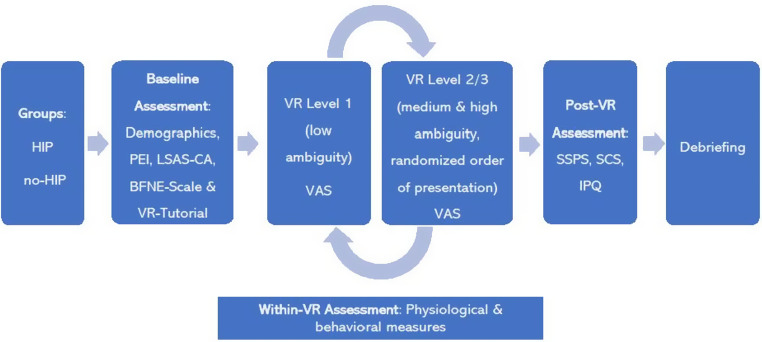
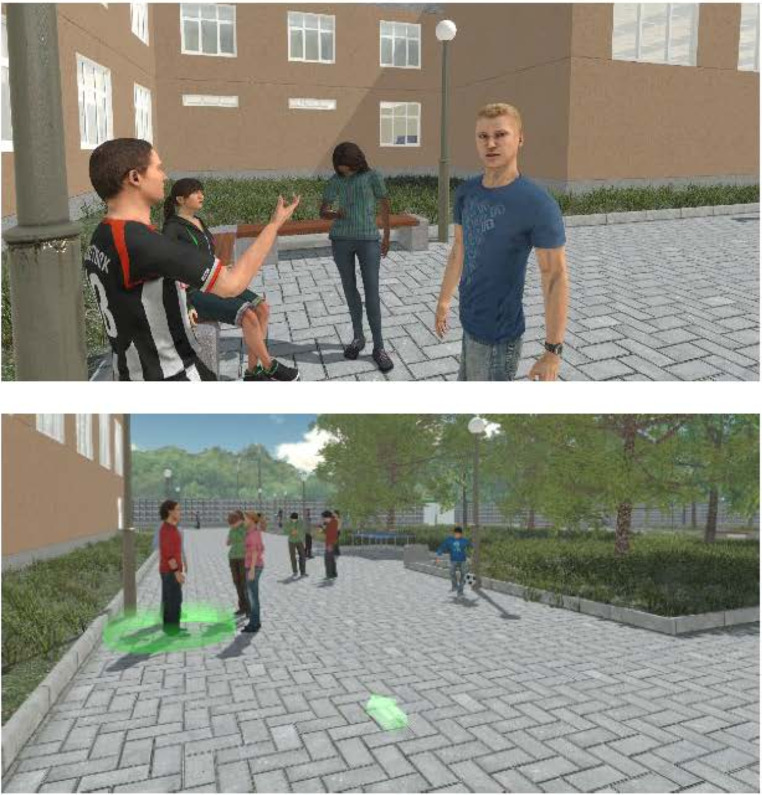
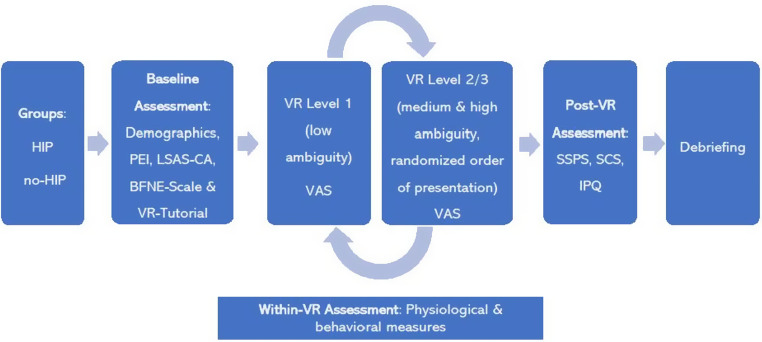
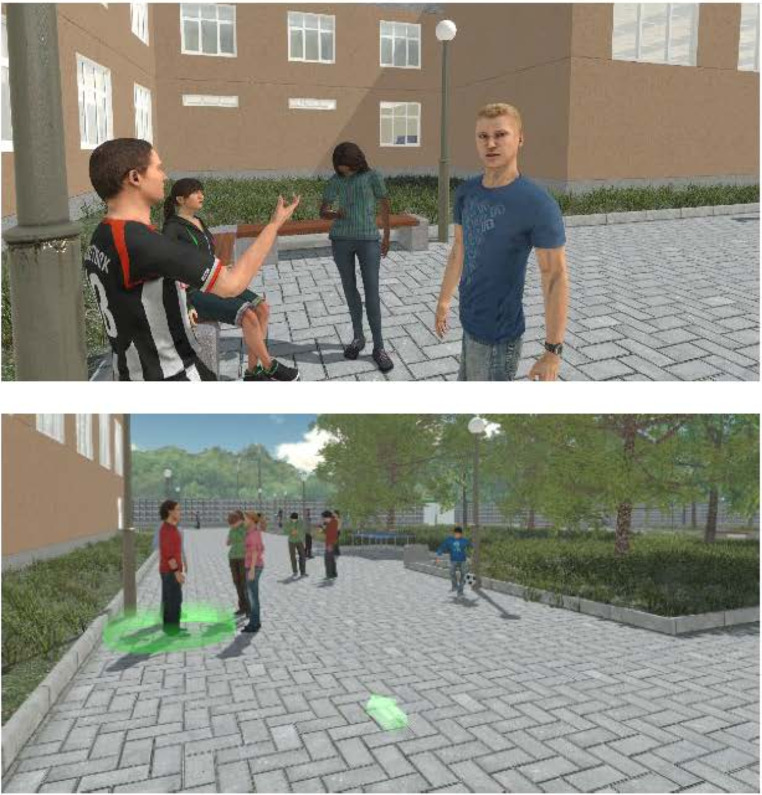
Methods: Adolescents (N = 146) aged 13-18 were recruited as part of a larger cohort study conducted by the same research group (YVORI_PRO) and invited to participate via the following criteria: those reporting highly indicative positive PLEs (HIP, N = 88) and those reporting no or less indicative PLEs (no-HIP, N = 58). Self-report, behavioural and physiological components of social performance were collected using a portable VR headset and a medical wristband. Participants entered a virtual recreational area with three levels of social ambiguity and were encouraged to interact with avatars. MANOVA was performed to check for overall group differences and repeated measures ANOVAs were conducted to examine the effects of group and level of ambiguity, as well as their interaction, on daily social performance.
Results: During virtual social interactions, adolescents with HIP reported higher levels of anxiety, fear of negative evaluation (FNE) and avoidance than the no-HIP group. No significant difference between groups was found for self-confidence. With increasing social ambiguity in VR, anxiety, FNE and avoidance increased in both groups, while self-confidence decreased. No significant group differences were found in behavioural or physiological components of social performance. Interpersonal distance and pulse rate increased significantly with increasing level of ambiguity, but pulse rate variability and skin conductance did not.
Conclusion: The results suggest that adolescents with HIP may present specific difficulties related to social performance, which may carry additional psychosis risk. The new VR social scenario appears to be an acceptable, safe and effective tool to measure social performance in adolescents experiencing PLEs.
期刊介绍:
Social Psychiatry and Psychiatric Epidemiology is intended to provide a medium for the prompt publication of scientific contributions concerned with all aspects of the epidemiology of psychiatric disorders - social, biological and genetic.
In addition, the journal has a particular focus on the effects of social conditions upon behaviour and the relationship between psychiatric disorders and the social environment. Contributions may be of a clinical nature provided they relate to social issues, or they may deal with specialised investigations in the fields of social psychology, sociology, anthropology, epidemiology, health service research, health economies or public mental health. We will publish papers on cross-cultural and trans-cultural themes. We do not publish case studies or small case series. While we will publish studies of reliability and validity of new instruments of interest to our readership, we will not publish articles reporting on the performance of established instruments in translation.
Both original work and review articles may be submitted.




 京公网安备 11010802042870号
京ICP备2023020795号-1
京公网安备 11010802042870号
京ICP备2023020795号-1

 分享
分享
 求助内容:
求助内容: 应助结果提醒方式:
 扫码关注我们
