Joga R Chaganti, Tanush K Talekar, Bruce James Brew
{"title":"Asymmetrical glymphatic dysfunction in patients with long Covid associated neurocognitive impairment- correlation with BBB disruption.","authors":"Joga R Chaganti, Tanush K Talekar, Bruce James Brew","doi":"10.1186/s12883-025-04133-4","DOIUrl":null,"url":null,"abstract":"<p><strong>Background and purpose: </strong>The glymphatic system, a waste clearance pathway, has been implicated in several neurological conditions associated with neuroinflammation. COVID-19 associated neurocognitive impairment, part of the post-acute sequelae of SARS-CoV-2 infection (PASC), is strongly associated with neuroinflammation and disrupted blood-brain barrier (BBB). Several studies have implicated a synergistic interaction between the glymphatic system dysfunction and BBB disruption. In this proof-of-concept study, we investigated the role of the MRI metric diffusion along the perivascular spaces DTI (DTI-ALPS) in patients with PASC and correlated this with the BBB capillary permeability metric- K trans derived from Dynamic contrast enhanced (DCE) perfusion.</p><p><strong>Materials and methods: </strong>14 subjects with PASC who had persisting symptoms of anosmia, ageusia, fatigue, and cognitive impairment (CI) and ten healthy age and sex matched controls were recruited. All PASC subjects underwent routine and advanced MR brain imaging at two time points, (3 months +/- 2 weeks) after initial infection - referred as Time Point 1 (TP-1) - and 10 repeated the MRI scan 12 months (+/- 2 weeks) later - referred as Time Point 2 (TP-2), while the controls had MR imaging done only at TP-1. All had mild neurocognitive impairment. In the final analysis we included those who had DTI study at both time points (n-10). MR imaging included DCE perfusion and DTI in addition to anatomical imaging.</p><p><strong>Statistical analysis: </strong>Given the small size of the sample and nonnormality of data in the descriptive analyses, nonparametric analyses were used for group comparisons. A two-sample Wilcoxon rank sum test was used to show the differences in DTI-ALPS between the patients and controls in the predefined regions of interest. Spearman's correlation coefficient (rho) was used to assess the correlation between DTI-ALPS index with K trans.</p><p><strong>Results: </strong>There was significant reduction in the DTI-ALPS index between the patients and controls in the left hemisphere (z = 2.04, p < 0.04). However, there was no significant change over time in the index. There was a strong inverse correlation between the central white matter K trans and DTI-ALPS index (rho = 0.66, p < 0.03).</p><p><strong>Conclusion: </strong>Our study indicates that disordered para vascular drainage, a marker for glymphatic system and BBB damage may contribute to neurocognitive impairment (NCI) among patients with PASC. The DTI-ALPS index, which does not require contrast injection, has the potential to serve as a non-invasive biomarker.</p>","PeriodicalId":9170,"journal":{"name":"BMC Neurology","volume":"25 1","pages":"112"},"PeriodicalIF":2.2000,"publicationDate":"2025-03-19","publicationTypes":"Journal Article","fieldsOfStudy":null,"isOpenAccess":false,"openAccessPdf":"https://www.ncbi.nlm.nih.gov/pmc/articles/PMC11921593/pdf/","citationCount":"0","resultStr":null,"platform":"Semanticscholar","paperid":null,"PeriodicalName":"BMC Neurology","FirstCategoryId":"3","ListUrlMain":"https://doi.org/10.1186/s12883-025-04133-4","RegionNum":3,"RegionCategory":"医学","ArticlePicture":[],"TitleCN":null,"AbstractTextCN":null,"PMCID":null,"EPubDate":"","PubModel":"","JCR":"Q3","JCRName":"CLINICAL NEUROLOGY","Score":null,"Total":0}
引用次数: 0
Abstract
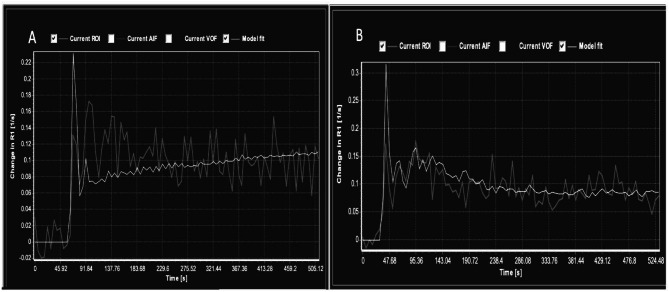
Background and purpose: The glymphatic system, a waste clearance pathway, has been implicated in several neurological conditions associated with neuroinflammation. COVID-19 associated neurocognitive impairment, part of the post-acute sequelae of SARS-CoV-2 infection (PASC), is strongly associated with neuroinflammation and disrupted blood-brain barrier (BBB). Several studies have implicated a synergistic interaction between the glymphatic system dysfunction and BBB disruption. In this proof-of-concept study, we investigated the role of the MRI metric diffusion along the perivascular spaces DTI (DTI-ALPS) in patients with PASC and correlated this with the BBB capillary permeability metric- K trans derived from Dynamic contrast enhanced (DCE) perfusion.
Materials and methods: 14 subjects with PASC who had persisting symptoms of anosmia, ageusia, fatigue, and cognitive impairment (CI) and ten healthy age and sex matched controls were recruited. All PASC subjects underwent routine and advanced MR brain imaging at two time points, (3 months +/- 2 weeks) after initial infection - referred as Time Point 1 (TP-1) - and 10 repeated the MRI scan 12 months (+/- 2 weeks) later - referred as Time Point 2 (TP-2), while the controls had MR imaging done only at TP-1. All had mild neurocognitive impairment. In the final analysis we included those who had DTI study at both time points (n-10). MR imaging included DCE perfusion and DTI in addition to anatomical imaging.
Statistical analysis: Given the small size of the sample and nonnormality of data in the descriptive analyses, nonparametric analyses were used for group comparisons. A two-sample Wilcoxon rank sum test was used to show the differences in DTI-ALPS between the patients and controls in the predefined regions of interest. Spearman's correlation coefficient (rho) was used to assess the correlation between DTI-ALPS index with K trans.
Results: There was significant reduction in the DTI-ALPS index between the patients and controls in the left hemisphere (z = 2.04, p < 0.04). However, there was no significant change over time in the index. There was a strong inverse correlation between the central white matter K trans and DTI-ALPS index (rho = 0.66, p < 0.03).
Conclusion: Our study indicates that disordered para vascular drainage, a marker for glymphatic system and BBB damage may contribute to neurocognitive impairment (NCI) among patients with PASC. The DTI-ALPS index, which does not require contrast injection, has the potential to serve as a non-invasive biomarker.
期刊介绍:
BMC Neurology is an open access, peer-reviewed journal that considers articles on all aspects of the prevention, diagnosis and management of neurological disorders, as well as related molecular genetics, pathophysiology, and epidemiology.





 京公网安备 11010802042870号
京ICP备2023020795号-1
京公网安备 11010802042870号
京ICP备2023020795号-1

 分享
分享
 求助内容:
求助内容: 应助结果提醒方式:
 扫码关注我们
