The Effect of Perioperative Fluid Therapy on Postoperative Renal Functions in Patients Receiving Liver Transplantation from Living Donors: A Retrospective Observational Study.
{"title":"The Effect of Perioperative Fluid Therapy on Postoperative Renal Functions in Patients Receiving Liver Transplantation from Living Donors: A Retrospective Observational Study.","authors":"Nurcan Kızılcık","doi":"10.5005/jp-journals-10071-24907","DOIUrl":null,"url":null,"abstract":"<p><strong>Background: </strong>Perioperative fluid management (PFM) is critical in liver transplantation, especially regarding its impact on postoperative renal function. Acute kidney injury (AKI) is a common complication in liver transplant recipients, often influenced by the type and volume of fluids administered during the perioperative period. This study investigates the effects of different fluid management strategies on renal outcomes following liver transplantation from living donors.</p><p><strong>Patients and methods: </strong>This retrospective observational study included 91 liver transplant recipients who were categorized into three groups based on their PFM strategy: restrictive (<i>n</i> = 1), moderate (<i>n</i> = 34), and liberal (<i>n</i> = 56). Data were collected from patient medical records, focusing on fluid types, peak serum creatinine levels, urine output, and length of hospital stay. Statistical analyses, including ANOVA and logistic regression, were conducted to assess renal outcomes among the groups.</p><p><strong>Results: </strong>The moderate fluid management group demonstrated the best renal outcomes, with the lowest peak serum creatinine (1.02 ± 0.25 mg/dL) and shorter ICU stays (2.47 ± 0.62 days) compared to the liberal fluid strategy group (1.40 ± 0.92 mg/dL and 2.88 ± 0.83 days, respectively). Moreover, liberal fluid strategies were associated with fluid overload and increased peak serum creatinine levels. Intraoperative fluid administration showed a greater protective effect on renal function compared to postoperative fluid administration.</p><p><strong>Conclusions: </strong>Moderate PFM, particularly with careful intraoperative fluid administration, is optimal for minimizing the risk of AKI and improving renal outcomes in liver transplant patients. These findings emphasize the importance of individualized fluid therapy in reducing renal complications after liver transplantation.</p><p><strong>How to cite this article: </strong>Kızılcık N. The Effect of Perioperative Fluid Therapy on Postoperative Renal Functions in Patients Receiving Liver Transplantation from Living Donors: A Retrospective Observational Study. Indian J Crit Care Med 2025;29(3):251-261.</p>","PeriodicalId":47664,"journal":{"name":"Indian Journal of Critical Care Medicine","volume":"29 3","pages":"251-261"},"PeriodicalIF":1.5000,"publicationDate":"2025-03-01","publicationTypes":"Journal Article","fieldsOfStudy":null,"isOpenAccess":false,"openAccessPdf":"https://www.ncbi.nlm.nih.gov/pmc/articles/PMC11915400/pdf/","citationCount":"0","resultStr":null,"platform":"Semanticscholar","paperid":null,"PeriodicalName":"Indian Journal of Critical Care Medicine","FirstCategoryId":"1085","ListUrlMain":"https://doi.org/10.5005/jp-journals-10071-24907","RegionNum":0,"RegionCategory":null,"ArticlePicture":[],"TitleCN":null,"AbstractTextCN":null,"PMCID":null,"EPubDate":"2025/2/28 0:00:00","PubModel":"Epub","JCR":"Q3","JCRName":"CRITICAL CARE MEDICINE","Score":null,"Total":0}
引用次数: 0
Abstract
Background: Perioperative fluid management (PFM) is critical in liver transplantation, especially regarding its impact on postoperative renal function. Acute kidney injury (AKI) is a common complication in liver transplant recipients, often influenced by the type and volume of fluids administered during the perioperative period. This study investigates the effects of different fluid management strategies on renal outcomes following liver transplantation from living donors.
Patients and methods: This retrospective observational study included 91 liver transplant recipients who were categorized into three groups based on their PFM strategy: restrictive (n = 1), moderate (n = 34), and liberal (n = 56). Data were collected from patient medical records, focusing on fluid types, peak serum creatinine levels, urine output, and length of hospital stay. Statistical analyses, including ANOVA and logistic regression, were conducted to assess renal outcomes among the groups.
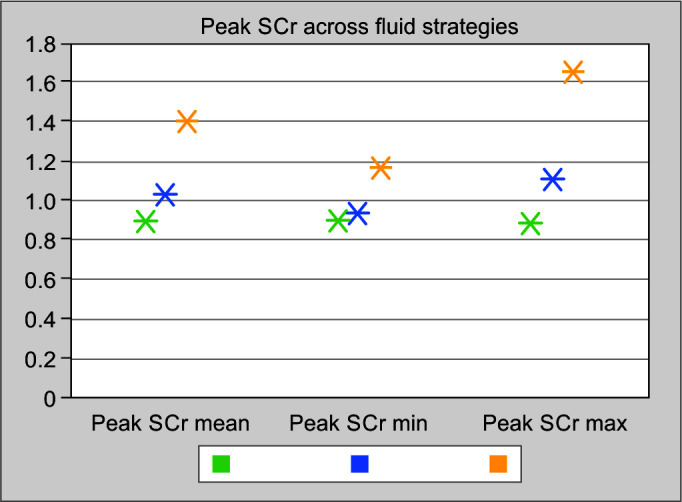
Results: The moderate fluid management group demonstrated the best renal outcomes, with the lowest peak serum creatinine (1.02 ± 0.25 mg/dL) and shorter ICU stays (2.47 ± 0.62 days) compared to the liberal fluid strategy group (1.40 ± 0.92 mg/dL and 2.88 ± 0.83 days, respectively). Moreover, liberal fluid strategies were associated with fluid overload and increased peak serum creatinine levels. Intraoperative fluid administration showed a greater protective effect on renal function compared to postoperative fluid administration.
Conclusions: Moderate PFM, particularly with careful intraoperative fluid administration, is optimal for minimizing the risk of AKI and improving renal outcomes in liver transplant patients. These findings emphasize the importance of individualized fluid therapy in reducing renal complications after liver transplantation.
How to cite this article: Kızılcık N. The Effect of Perioperative Fluid Therapy on Postoperative Renal Functions in Patients Receiving Liver Transplantation from Living Donors: A Retrospective Observational Study. Indian J Crit Care Med 2025;29(3):251-261.
期刊介绍:
Indian Journal of Critical Care Medicine (ISSN 0972-5229) is specialty periodical published under the auspices of Indian Society of Critical Care Medicine. Journal encourages research, education and dissemination of knowledge in the fields of critical and emergency medicine.





 京公网安备 11010802042870号
京ICP备2023020795号-1
京公网安备 11010802042870号
京ICP备2023020795号-1

 分享
分享
 求助内容:
求助内容: 应助结果提醒方式:
 扫码关注我们
