Lotte A Bock, Sanne Vaassen, Walther N K A van Mook, Cindy Y G Noben
{"title":"Understanding healthcare efficiency-an AI-supported narrative review of diverse terminologies used.","authors":"Lotte A Bock, Sanne Vaassen, Walther N K A van Mook, Cindy Y G Noben","doi":"10.1186/s12909-025-06983-5","DOIUrl":null,"url":null,"abstract":"<p><strong>Background: </strong>Physicians have become more responsible for pursuing healthcare efficiency. However, contemporary literature uses multiple terminologies to describe healthcare efficiency. To identify which term is best suitable for medical education to equip physicians to contribute to healthcare efficiency delivery in clinical practice, we performed a narrative review to elucidate these terms' meanings, commonalities, and differences.</p><p><strong>Methods: </strong>The PubMed-database was searched for articles published in 2019-2024 describing healthcare efficiency terminology. Eligible articles conceptually described and applied relevant terminologies for physicians, while empirical studies and practice-specific articles were excluded. The screening was supported by an open-source artificial intelligence tool (ASReview), which prioritizes articles through machine learning. Two reviewers independently screened the resulting articles, resolving disagreements by consensus. Final eligibility was determined through predefined inclusion criteria.</p><p><strong>Results: </strong>Out of 3,655 articles identified, 26 met the inclusion criteria. Key terminologies: cost-effectiveness, high-value care, low-value care, and value-based healthcare, were identified, and explored into more depth. 'Value' is central in all terms, but our findings reveal that the perspectives herein differ on what constitutes value. Within cost-effectiveness, resource allocation to the population's needs drives decision-making-maximizing value at population-level. Within value-based healthcare, patient-centricity guides decision-making-maximizing value at individual patient-level. High-value and low-value care are somewhat ambiguous, depending solely on cost-effectiveness results or patient preferences to determine whether care is considered as low or high value.</p><p><strong>Conclusions: </strong>Cost-effectiveness may be too rigid for patient-physician interactions, while value-based healthcare might not ensure sustainable care. As physicians are both stewards of finite societal resources and advocates of individual patients, integrating cost-effectiveness (resource allocation for population needs) and value-based healthcare (individualized care plans) seems necessary. Both terms emphasize delivering high-value care and avoiding low-value care. We suggest that medical education: (1) train (future) physicians to apply healthcare efficiency principles through case-based discussion, (2) use the cost-effectiveness plane to evaluate treatments, (3) deepen knowledge of diagnostic and treatment procedures' costs within evidence-based guidelines, and (4) enhance communication skills supporting a healthcare efficiency-driven open shared decision-making with patients.</p>","PeriodicalId":51234,"journal":{"name":"BMC Medical Education","volume":"25 1","pages":"408"},"PeriodicalIF":3.2000,"publicationDate":"2025-03-20","publicationTypes":"Journal Article","fieldsOfStudy":null,"isOpenAccess":false,"openAccessPdf":"https://www.ncbi.nlm.nih.gov/pmc/articles/PMC11924740/pdf/","citationCount":"0","resultStr":null,"platform":"Semanticscholar","paperid":null,"PeriodicalName":"BMC Medical Education","FirstCategoryId":"3","ListUrlMain":"https://doi.org/10.1186/s12909-025-06983-5","RegionNum":2,"RegionCategory":"医学","ArticlePicture":[],"TitleCN":null,"AbstractTextCN":null,"PMCID":null,"EPubDate":"","PubModel":"","JCR":"Q1","JCRName":"EDUCATION & EDUCATIONAL RESEARCH","Score":null,"Total":0}
引用次数: 0
Abstract
Background: Physicians have become more responsible for pursuing healthcare efficiency. However, contemporary literature uses multiple terminologies to describe healthcare efficiency. To identify which term is best suitable for medical education to equip physicians to contribute to healthcare efficiency delivery in clinical practice, we performed a narrative review to elucidate these terms' meanings, commonalities, and differences.
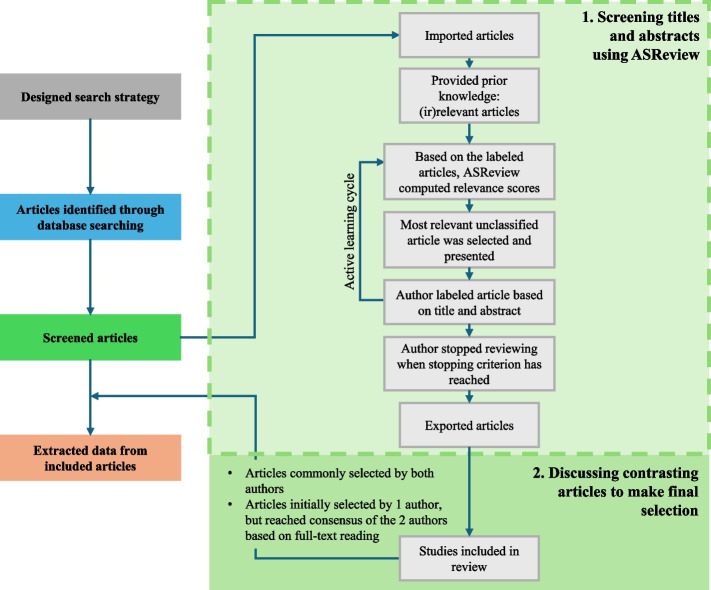
Methods: The PubMed-database was searched for articles published in 2019-2024 describing healthcare efficiency terminology. Eligible articles conceptually described and applied relevant terminologies for physicians, while empirical studies and practice-specific articles were excluded. The screening was supported by an open-source artificial intelligence tool (ASReview), which prioritizes articles through machine learning. Two reviewers independently screened the resulting articles, resolving disagreements by consensus. Final eligibility was determined through predefined inclusion criteria.
Results: Out of 3,655 articles identified, 26 met the inclusion criteria. Key terminologies: cost-effectiveness, high-value care, low-value care, and value-based healthcare, were identified, and explored into more depth. 'Value' is central in all terms, but our findings reveal that the perspectives herein differ on what constitutes value. Within cost-effectiveness, resource allocation to the population's needs drives decision-making-maximizing value at population-level. Within value-based healthcare, patient-centricity guides decision-making-maximizing value at individual patient-level. High-value and low-value care are somewhat ambiguous, depending solely on cost-effectiveness results or patient preferences to determine whether care is considered as low or high value.
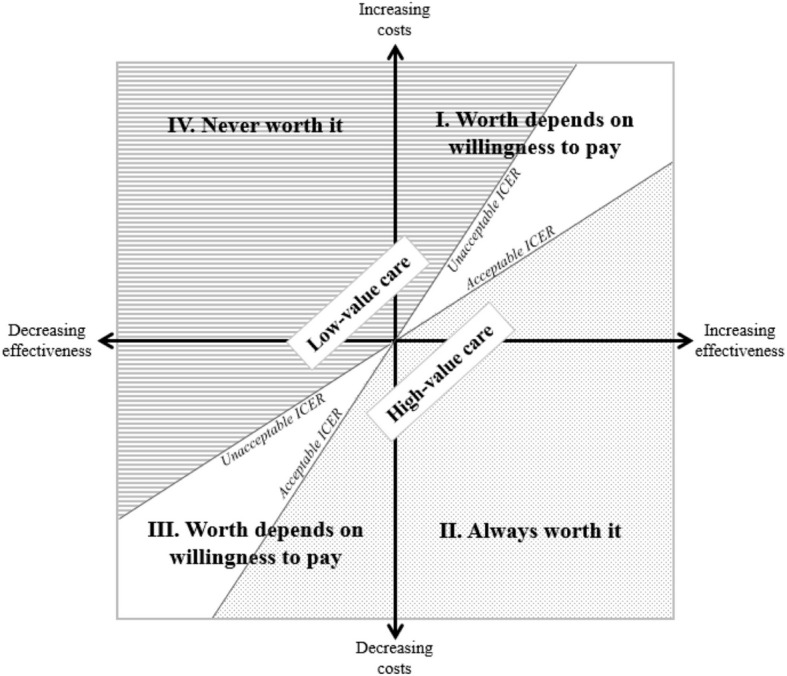
Conclusions: Cost-effectiveness may be too rigid for patient-physician interactions, while value-based healthcare might not ensure sustainable care. As physicians are both stewards of finite societal resources and advocates of individual patients, integrating cost-effectiveness (resource allocation for population needs) and value-based healthcare (individualized care plans) seems necessary. Both terms emphasize delivering high-value care and avoiding low-value care. We suggest that medical education: (1) train (future) physicians to apply healthcare efficiency principles through case-based discussion, (2) use the cost-effectiveness plane to evaluate treatments, (3) deepen knowledge of diagnostic and treatment procedures' costs within evidence-based guidelines, and (4) enhance communication skills supporting a healthcare efficiency-driven open shared decision-making with patients.
期刊介绍:
BMC Medical Education is an open access journal publishing original peer-reviewed research articles in relation to the training of healthcare professionals, including undergraduate, postgraduate, and continuing education. The journal has a special focus on curriculum development, evaluations of performance, assessment of training needs and evidence-based medicine.





 京公网安备 11010802042870号
京ICP备2023020795号-1
京公网安备 11010802042870号
京ICP备2023020795号-1

 分享
分享
 求助内容:
求助内容: 应助结果提醒方式:
 扫码关注我们
