Youngae Jung, Seung Mi Lee, Jinhaeng Lee, Yeonjin Kim, Woojoo Lee, Ja Nam Koo, Ig Hwan Oh, Kue Hyun Kang, Byoung Jae Kim, Sun Min Kim, Jeesun Lee, Ji Hoi Kim, Yejin Bae, Sang Youn Kim, Gyoung Min Kim, Sae Kyung Joo, Dong Hyeon Lee, Joon Ho Moon, Bo Kyung Koo, Sue Shin, Errol R Norwitz, Geum-Sook Hwang, Joong Shin Park, Won Kim
{"title":"Metabolomic profiling reveals early biomarkers of gestational diabetes mellitus and associated hepatic steatosis.","authors":"Youngae Jung, Seung Mi Lee, Jinhaeng Lee, Yeonjin Kim, Woojoo Lee, Ja Nam Koo, Ig Hwan Oh, Kue Hyun Kang, Byoung Jae Kim, Sun Min Kim, Jeesun Lee, Ji Hoi Kim, Yejin Bae, Sang Youn Kim, Gyoung Min Kim, Sae Kyung Joo, Dong Hyeon Lee, Joon Ho Moon, Bo Kyung Koo, Sue Shin, Errol R Norwitz, Geum-Sook Hwang, Joong Shin Park, Won Kim","doi":"10.1186/s12933-025-02645-4","DOIUrl":null,"url":null,"abstract":"<p><strong>Background: </strong>This study aims to identify early metabolomic biomarkers of gestational diabetes mellitus (GDM) and evaluate their association with hepatic steatosis.</p><p><strong>Methods: </strong>We compared maternal serum metabolomic profiles between women who developed GDM (n = 118) and matched controls (n = 118) during the first (10-14 gestational weeks) and second (24-28 gestational weeks) trimesters using ultra-performance liquid chromatography coupled with mass spectrometry. Mediation analysis was performed to evaluate the mediating role of metabolic dysfunction-associated steatotic liver disease (MASLD) in the relationship between metabolites and subsequent development of GDM. A refined prediction model was developed to predict GDM using established clinical factors and selected metabolites.</p><p><strong>Results: </strong>Significant alterations in circulating metabolites, including amino acids, bile acids, and phospholipids, were observed in the GDM group compared to controls during early pregnancy. Mediation analysis revealed that several metabolites, including glycocholic acid (proportion mediated (PM) = 31.9%), butanoyl carnitine (PM = 25.7%), and uric acid (PM = 22.4%), had significant indirect effects on GDM incidence mediated by hepatic steatosis. The refined prediction model composed of clinical factors and selected metabolites in the first trimester demonstrated higher performance in predicting GDM development than the established prediction model composed solely of clinical factors (AUC, 0.85 vs. 0.63, p < 0.001).</p><p><strong>Conclusions: </strong>Women who developed GDM exhibited altered metabolomic profiles from early pregnancy, which showed a significant correlation with GDM, with MASLD as a mediator. Selected metabolomic biomarkers may serve as predictive markers and potential targets for early risk assessment and intervention in GDM.</p><p><strong>Research insights: </strong>WHAT IS CURRENTLY KNOWN ABOUT THIS TOPIC?: Gestational diabetes mellitus (GDM) is a common pregnancy complication with significant health risks. Early identification of women at high risk for GDM is crucial for timely intervention and improved outcomes. WHAT IS THE KEY RESEARCH QUESTION?: What alterations in circulating metabolites during early pregnancy are associated with subsequent GDM development? Does metabolic dysfunction-associated steatotic liver disease (MASLD) mediate the association between specific metabolites and GDM risk? WHAT IS NEW?: Significant alterations in bile acids, amino acids, phosphatidylethanolamines, and phosphatidylinositols were observed in early pregnancy sera of women who later developed GDM. MASLD significantly mediated the effects of several metabolites on GDM risk, with mediation proportions ranging from 9.7 to 31.9%. A refined prediction model composed of clinical factors and metabolites significantly improved the performance in predicting GDM development. HOW MIGHT THIS STUDY INFLUENCE CLINICAL PRACTICE?: These results provide new insights into early metabolic alterations associated with GDM development and highlight the potential mediating role of MASLD. This comprehensive metabolomic approach may contribute to the development of improved risk prediction models and targeted interventions for GDM prevention.</p>","PeriodicalId":9374,"journal":{"name":"Cardiovascular Diabetology","volume":"24 1","pages":"125"},"PeriodicalIF":10.6000,"publicationDate":"2025-03-20","publicationTypes":"Journal Article","fieldsOfStudy":null,"isOpenAccess":false,"openAccessPdf":"https://www.ncbi.nlm.nih.gov/pmc/articles/PMC11927189/pdf/","citationCount":"0","resultStr":null,"platform":"Semanticscholar","paperid":null,"PeriodicalName":"Cardiovascular Diabetology","FirstCategoryId":"3","ListUrlMain":"https://doi.org/10.1186/s12933-025-02645-4","RegionNum":1,"RegionCategory":"医学","ArticlePicture":[],"TitleCN":null,"AbstractTextCN":null,"PMCID":null,"EPubDate":"","PubModel":"","JCR":"Q1","JCRName":"CARDIAC & CARDIOVASCULAR SYSTEMS","Score":null,"Total":0}
引用次数: 0
Abstract
Background: This study aims to identify early metabolomic biomarkers of gestational diabetes mellitus (GDM) and evaluate their association with hepatic steatosis.
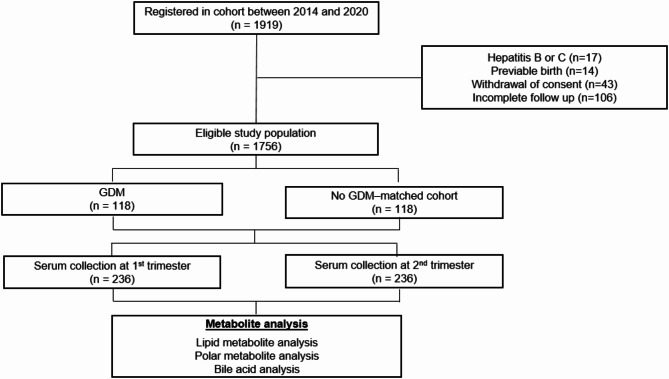
Methods: We compared maternal serum metabolomic profiles between women who developed GDM (n = 118) and matched controls (n = 118) during the first (10-14 gestational weeks) and second (24-28 gestational weeks) trimesters using ultra-performance liquid chromatography coupled with mass spectrometry. Mediation analysis was performed to evaluate the mediating role of metabolic dysfunction-associated steatotic liver disease (MASLD) in the relationship between metabolites and subsequent development of GDM. A refined prediction model was developed to predict GDM using established clinical factors and selected metabolites.
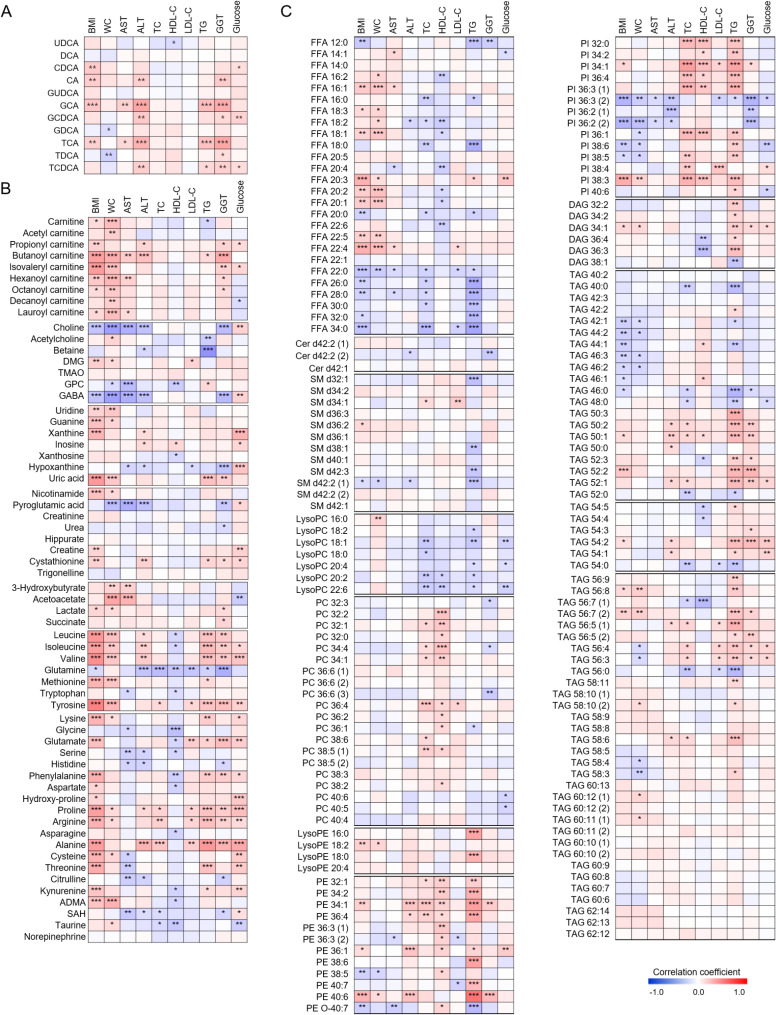
Results: Significant alterations in circulating metabolites, including amino acids, bile acids, and phospholipids, were observed in the GDM group compared to controls during early pregnancy. Mediation analysis revealed that several metabolites, including glycocholic acid (proportion mediated (PM) = 31.9%), butanoyl carnitine (PM = 25.7%), and uric acid (PM = 22.4%), had significant indirect effects on GDM incidence mediated by hepatic steatosis. The refined prediction model composed of clinical factors and selected metabolites in the first trimester demonstrated higher performance in predicting GDM development than the established prediction model composed solely of clinical factors (AUC, 0.85 vs. 0.63, p < 0.001).
Conclusions: Women who developed GDM exhibited altered metabolomic profiles from early pregnancy, which showed a significant correlation with GDM, with MASLD as a mediator. Selected metabolomic biomarkers may serve as predictive markers and potential targets for early risk assessment and intervention in GDM.
Research insights: WHAT IS CURRENTLY KNOWN ABOUT THIS TOPIC?: Gestational diabetes mellitus (GDM) is a common pregnancy complication with significant health risks. Early identification of women at high risk for GDM is crucial for timely intervention and improved outcomes. WHAT IS THE KEY RESEARCH QUESTION?: What alterations in circulating metabolites during early pregnancy are associated with subsequent GDM development? Does metabolic dysfunction-associated steatotic liver disease (MASLD) mediate the association between specific metabolites and GDM risk? WHAT IS NEW?: Significant alterations in bile acids, amino acids, phosphatidylethanolamines, and phosphatidylinositols were observed in early pregnancy sera of women who later developed GDM. MASLD significantly mediated the effects of several metabolites on GDM risk, with mediation proportions ranging from 9.7 to 31.9%. A refined prediction model composed of clinical factors and metabolites significantly improved the performance in predicting GDM development. HOW MIGHT THIS STUDY INFLUENCE CLINICAL PRACTICE?: These results provide new insights into early metabolic alterations associated with GDM development and highlight the potential mediating role of MASLD. This comprehensive metabolomic approach may contribute to the development of improved risk prediction models and targeted interventions for GDM prevention.
期刊介绍:
Cardiovascular Diabetology is a journal that welcomes manuscripts exploring various aspects of the relationship between diabetes, cardiovascular health, and the metabolic syndrome. We invite submissions related to clinical studies, genetic investigations, experimental research, pharmacological studies, epidemiological analyses, and molecular biology research in this field.





 京公网安备 11010802042870号
京ICP备2023020795号-1
京公网安备 11010802042870号
京ICP备2023020795号-1

 分享
分享
 求助内容:
求助内容: 应助结果提醒方式:
 扫码关注我们
