{"title":"Mechanistic insights into CDCA gene family-mediated glioblastoma progression: implications for diagnosis, prognosis, and therapeutic targeting.","authors":"Chang Liu","doi":"10.1186/s41065-025-00415-6","DOIUrl":null,"url":null,"abstract":"<p><strong>Background: </strong>Glioblastoma (GBM) is a highly aggressive brain tumor characterized by poor prognosis and limited therapeutic options. Understanding the molecular mechanisms driving GBM progression is essential for developing more effective diagnostic and therapeutic approaches. Specifically, investigating Cell Division Cycle-Associated (CDCA) genes offers new perspectives on cell cycle regulation and the proliferation of GBM cells, which are key factors in tumor growth and resistance to treatment. These genes have not been extensively studied in GBM, making them a promising area for targeted research and potential therapeutic interventions. This project was launched to elucidate the pathogenic, diagnostic, and therapeutic roles of CDCA genes in GBM.</p><p><strong>Methodology: </strong>Total RNA was extracted from GBM cell lines followed by RT-qPCR to analyze the expression of CDCA genes. The expression validation, prognostic significance, and mutational analysis of CDCA genes were performed using various databases. Functional assays, including gene knockdown, colony formation, proliferation, and wound healing, were conducted in U87MG cells to assess the role of CDCA7 and CDCA8 in GBM.</p><p><strong>Results: </strong>The expression analysis of CDCA genes in 12 GBM cell lines and 6 normal brain cell lines revealed significant overexpression of these genes in GBM. ROC curve analysis demonstrated excellent diagnostic potential, with AUC values of 1 for most genes. This indicates that CDCA gene expression effectively distinguishes GBM cells from normal brain cells. Validation using additional TCGA data confirmed the upregulation of these genes in GBM tumors, with significant association to key cancer-related pathways. Survival analysis showed that higher expression of CDCA genes correlated with poor prognosis in GBM patients. Mutation, CNV, and methylation analyses revealed alterations in these genes, further supporting their role in GBM. Additionally, CDCA gene expression was linked to immune modulation and cell cycle-related functions, suggesting their involvement in immune evasion and tumor proliferation. Knockdown experiments of CDCA7 and CDCA8 in U87MG cells demonstrated a reduction in cell proliferation, colony formation, and migration, highlighting their potential as therapeutic targets.</p><p><strong>Conclusion: </strong>Overall, our findings suggest that CDCA genes could serve as both diagnostic biomarkers and therapeutic targets for GBM.</p>","PeriodicalId":12862,"journal":{"name":"Hereditas","volume":"162 1","pages":"43"},"PeriodicalIF":2.5000,"publicationDate":"2025-03-20","publicationTypes":"Journal Article","fieldsOfStudy":null,"isOpenAccess":false,"openAccessPdf":"https://www.ncbi.nlm.nih.gov/pmc/articles/PMC11924692/pdf/","citationCount":"0","resultStr":null,"platform":"Semanticscholar","paperid":null,"PeriodicalName":"Hereditas","FirstCategoryId":"99","ListUrlMain":"https://doi.org/10.1186/s41065-025-00415-6","RegionNum":3,"RegionCategory":"生物学","ArticlePicture":[],"TitleCN":null,"AbstractTextCN":null,"PMCID":null,"EPubDate":"","PubModel":"","JCR":"","JCRName":"","Score":null,"Total":0}
引用次数: 0
Abstract
Background: Glioblastoma (GBM) is a highly aggressive brain tumor characterized by poor prognosis and limited therapeutic options. Understanding the molecular mechanisms driving GBM progression is essential for developing more effective diagnostic and therapeutic approaches. Specifically, investigating Cell Division Cycle-Associated (CDCA) genes offers new perspectives on cell cycle regulation and the proliferation of GBM cells, which are key factors in tumor growth and resistance to treatment. These genes have not been extensively studied in GBM, making them a promising area for targeted research and potential therapeutic interventions. This project was launched to elucidate the pathogenic, diagnostic, and therapeutic roles of CDCA genes in GBM.
Methodology: Total RNA was extracted from GBM cell lines followed by RT-qPCR to analyze the expression of CDCA genes. The expression validation, prognostic significance, and mutational analysis of CDCA genes were performed using various databases. Functional assays, including gene knockdown, colony formation, proliferation, and wound healing, were conducted in U87MG cells to assess the role of CDCA7 and CDCA8 in GBM.
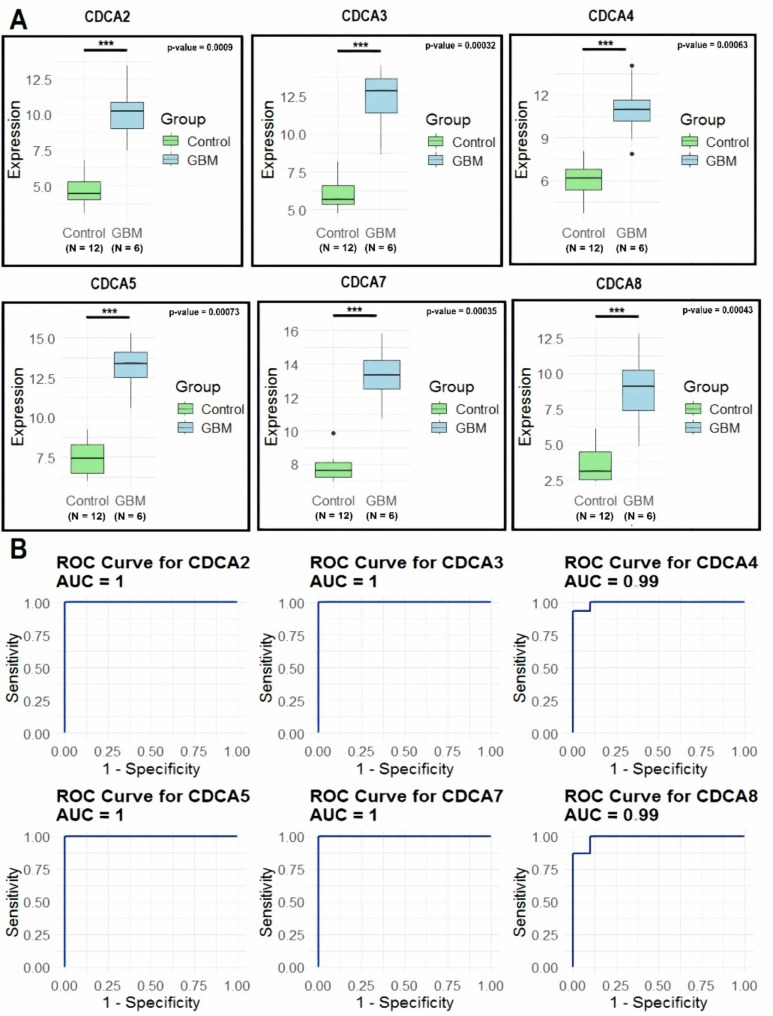
Results: The expression analysis of CDCA genes in 12 GBM cell lines and 6 normal brain cell lines revealed significant overexpression of these genes in GBM. ROC curve analysis demonstrated excellent diagnostic potential, with AUC values of 1 for most genes. This indicates that CDCA gene expression effectively distinguishes GBM cells from normal brain cells. Validation using additional TCGA data confirmed the upregulation of these genes in GBM tumors, with significant association to key cancer-related pathways. Survival analysis showed that higher expression of CDCA genes correlated with poor prognosis in GBM patients. Mutation, CNV, and methylation analyses revealed alterations in these genes, further supporting their role in GBM. Additionally, CDCA gene expression was linked to immune modulation and cell cycle-related functions, suggesting their involvement in immune evasion and tumor proliferation. Knockdown experiments of CDCA7 and CDCA8 in U87MG cells demonstrated a reduction in cell proliferation, colony formation, and migration, highlighting their potential as therapeutic targets.
Conclusion: Overall, our findings suggest that CDCA genes could serve as both diagnostic biomarkers and therapeutic targets for GBM.
HereditasBiochemistry, Genetics and Molecular Biology-Genetics
CiteScore
3.80
自引率
3.70%
发文量
0
期刊介绍:
For almost a century, Hereditas has published original cutting-edge research and reviews. As the Official journal of the Mendelian Society of Lund, the journal welcomes research from across all areas of genetics and genomics. Topics of interest include human and medical genetics, animal and plant genetics, microbial genetics, agriculture and bioinformatics.






 京公网安备 11010802042870号
京ICP备2023020795号-1
京公网安备 11010802042870号
京ICP备2023020795号-1

 分享
分享
 求助内容:
求助内容: 应助结果提醒方式:
 扫码关注我们
