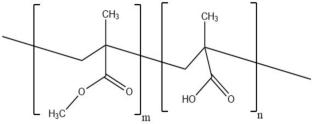
Exploring crystallinity, free volume and optical energy band gap effects on nonlinear optical properties of P(MMA-co-MA)/NiO and P(MMA-co-MA)/CuO polymer nanocomposites
M. P. Boranna, S. S. Mahesh, Neelamma B. Gummagol, Parutagouda Shankaragouda Patil, H. B. Ravikumar
{"title":"Exploring crystallinity, free volume and optical energy band gap effects on nonlinear optical properties of P(MMA-co-MA)/NiO and P(MMA-co-MA)/CuO polymer nanocomposites","authors":"M. P. Boranna, S. S. Mahesh, Neelamma B. Gummagol, Parutagouda Shankaragouda Patil, H. B. Ravikumar","doi":"10.1007/s10854-025-14613-5","DOIUrl":null,"url":null,"abstract":"<div><p>Polymer nanocomposites (PNCs) of poly(methylmethacrylate-co-methacrylic acid) (P(MMA-co-MA)) / Nickel Oxide (NiO) and P(MMA-co-MA)/Cupric Oxide (CuO) (with 0.2, 0.4, 0.6, 0.8 and 1 wt% of nanofillers) have been prepared to explore the microstructural-dependent nonlinear optical (NLO) properties. The microstructure of PNCs are characterized using Positron Annihilation Lifetime Spectroscopy (PALS), Scanning Electron Microscopy (SEM), powder X-ray Diffraction (XRD), UV–Visible spectroscopy and Z-scan techniques to investigate their structural, optical and nonlinear properties. A noticeable decrease in the optical energy band gap at 0.4 wt% of NiO nanofiller and 1.0 wt% of CuO nanofiller loading, attributed to reduced crystallinity, which is confirmed by XRD results. PALS measurements reveales the presence of bigger free volume holes, which facilitate dipole polarization and significantly boost NLO performance. The findings demonstrate that P(MMA-co-MA)/NiO and P(MMA-co-MA)/CuO PNCs exhibit tunable NLO characteristics.</p></div>","PeriodicalId":646,"journal":{"name":"Journal of Materials Science: Materials in Electronics","volume":"36 9","pages":""},"PeriodicalIF":2.8000,"publicationDate":"2025-03-28","publicationTypes":"Journal Article","fieldsOfStudy":null,"isOpenAccess":false,"openAccessPdf":"","citationCount":"0","resultStr":null,"platform":"Semanticscholar","paperid":null,"PeriodicalName":"Journal of Materials Science: Materials in Electronics","FirstCategoryId":"5","ListUrlMain":"https://link.springer.com/article/10.1007/s10854-025-14613-5","RegionNum":4,"RegionCategory":"工程技术","ArticlePicture":[],"TitleCN":null,"AbstractTextCN":null,"PMCID":null,"EPubDate":"","PubModel":"","JCR":"Q2","JCRName":"ENGINEERING, ELECTRICAL & ELECTRONIC","Score":null,"Total":0}
引用次数: 0
Abstract
Polymer nanocomposites (PNCs) of poly(methylmethacrylate-co-methacrylic acid) (P(MMA-co-MA)) / Nickel Oxide (NiO) and P(MMA-co-MA)/Cupric Oxide (CuO) (with 0.2, 0.4, 0.6, 0.8 and 1 wt% of nanofillers) have been prepared to explore the microstructural-dependent nonlinear optical (NLO) properties. The microstructure of PNCs are characterized using Positron Annihilation Lifetime Spectroscopy (PALS), Scanning Electron Microscopy (SEM), powder X-ray Diffraction (XRD), UV–Visible spectroscopy and Z-scan techniques to investigate their structural, optical and nonlinear properties. A noticeable decrease in the optical energy band gap at 0.4 wt% of NiO nanofiller and 1.0 wt% of CuO nanofiller loading, attributed to reduced crystallinity, which is confirmed by XRD results. PALS measurements reveales the presence of bigger free volume holes, which facilitate dipole polarization and significantly boost NLO performance. The findings demonstrate that P(MMA-co-MA)/NiO and P(MMA-co-MA)/CuO PNCs exhibit tunable NLO characteristics.
期刊介绍:
The Journal of Materials Science: Materials in Electronics is an established refereed companion to the Journal of Materials Science. It publishes papers on materials and their applications in modern electronics, covering the ground between fundamental science, such as semiconductor physics, and work concerned specifically with applications. It explores the growth and preparation of new materials, as well as their processing, fabrication, bonding and encapsulation, together with the reliability, failure analysis, quality assurance and characterization related to the whole range of applications in electronics. The Journal presents papers in newly developing fields such as low dimensional structures and devices, optoelectronics including III-V compounds, glasses and linear/non-linear crystal materials and lasers, high Tc superconductors, conducting polymers, thick film materials and new contact technologies, as well as the established electronics device and circuit materials.



 京公网安备 11010802042870号
京ICP备2023020795号-1
京公网安备 11010802042870号
京ICP备2023020795号-1

 分享
分享
 求助内容:
求助内容: 应助结果提醒方式:
 扫码关注我们
