Mina Mounir, Giuliano Bernardi, Toon van Waterschoot
{"title":"Robust and early howling detection based on a sparsity measure.","authors":"Mina Mounir, Giuliano Bernardi, Toon van Waterschoot","doi":"10.1186/s13636-025-00399-1","DOIUrl":null,"url":null,"abstract":"<p><p>Despite recent advances in audio technology, acoustic feedback remains a problem encountered in many sound reinforcement applications, ranging from public address systems to hearing aids. Acoustic feedback occurs due to the acoustic coupling between a loudspeaker and microphone, creating a closed-loop system that may become unstable and produce an acoustic artifact referred to as <i>howling</i>. One solution to the acoustic feedback problem, known as notch-filter-based howling suppression (NHS), consists in detecting and suppressing howling components hence stabilizing the closed-loop system and removing audible howling artifacts. The key component of any NHS method is howling detection (HD), which is typically based on the calculation of temporal and/or spectral features that allow to discriminate howling from desired audio signal components. In this paper, three contributions to HD research are presented. Firstly, we propose a novel howling detection feature, coined as NINOS <math><mmultiscripts><mrow></mrow> <mrow></mrow> <mn>2</mn></mmultiscripts> </math> -Transposed (NINOS <math><mmultiscripts><mrow></mrow> <mrow></mrow> <mn>2</mn></mmultiscripts> </math> -T), that exploits the particular time-frequency structure of a howling artifact. The NINOS <math><mmultiscripts><mrow></mrow> <mrow></mrow> <mn>2</mn></mmultiscripts> </math> -T feature is shown to outperform common state-of-the-art HD features, to be more robust to detection threshold variations, and to allow for the detection of early howling and ringing by discarding the often used concept of howling candidates selection. Secondly, a new annotated dataset for HD research is introduced which is significantly larger and more diverse than existing datasets containing realistic howling artifacts. Thirdly, a new HD performance evaluation procedure is proposed that is suitable when using HD features that do not rely on a howling candidates selection. This procedure opens the door for the evaluation of early howling and ringing detection performance and can handle the high class imbalance inherent in the HD problem by using precision-recall (PR) instead of receiver operating characteristic (ROC) curves.</p>","PeriodicalId":49202,"journal":{"name":"Eurasip Journal on Audio Speech and Music Processing","volume":"2025 1","pages":"14"},"PeriodicalIF":1.9000,"publicationDate":"2025-01-01","publicationTypes":"Journal Article","fieldsOfStudy":null,"isOpenAccess":false,"openAccessPdf":"https://www.ncbi.nlm.nih.gov/pmc/articles/PMC11950036/pdf/","citationCount":"0","resultStr":null,"platform":"Semanticscholar","paperid":null,"PeriodicalName":"Eurasip Journal on Audio Speech and Music Processing","FirstCategoryId":"94","ListUrlMain":"https://doi.org/10.1186/s13636-025-00399-1","RegionNum":3,"RegionCategory":"计算机科学","ArticlePicture":[],"TitleCN":null,"AbstractTextCN":null,"PMCID":null,"EPubDate":"2025/3/27 0:00:00","PubModel":"Epub","JCR":"Q2","JCRName":"ACOUSTICS","Score":null,"Total":0}
引用次数: 0
Abstract
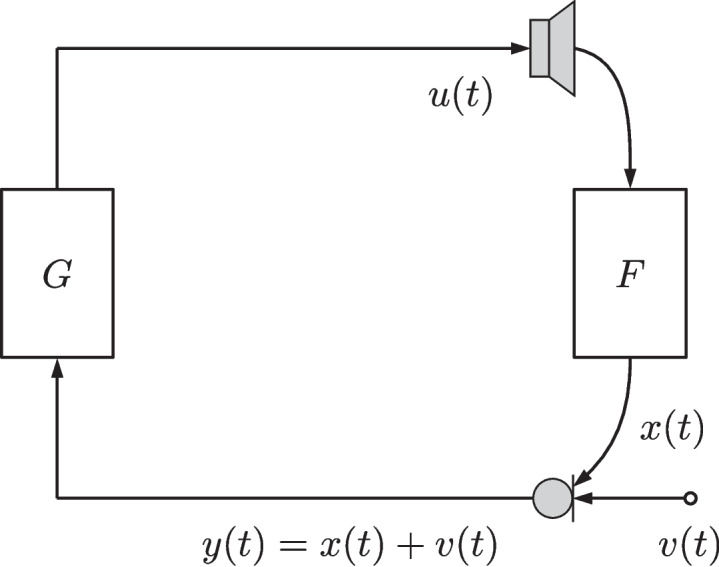
Despite recent advances in audio technology, acoustic feedback remains a problem encountered in many sound reinforcement applications, ranging from public address systems to hearing aids. Acoustic feedback occurs due to the acoustic coupling between a loudspeaker and microphone, creating a closed-loop system that may become unstable and produce an acoustic artifact referred to as howling. One solution to the acoustic feedback problem, known as notch-filter-based howling suppression (NHS), consists in detecting and suppressing howling components hence stabilizing the closed-loop system and removing audible howling artifacts. The key component of any NHS method is howling detection (HD), which is typically based on the calculation of temporal and/or spectral features that allow to discriminate howling from desired audio signal components. In this paper, three contributions to HD research are presented. Firstly, we propose a novel howling detection feature, coined as NINOS -Transposed (NINOS -T), that exploits the particular time-frequency structure of a howling artifact. The NINOS -T feature is shown to outperform common state-of-the-art HD features, to be more robust to detection threshold variations, and to allow for the detection of early howling and ringing by discarding the often used concept of howling candidates selection. Secondly, a new annotated dataset for HD research is introduced which is significantly larger and more diverse than existing datasets containing realistic howling artifacts. Thirdly, a new HD performance evaluation procedure is proposed that is suitable when using HD features that do not rely on a howling candidates selection. This procedure opens the door for the evaluation of early howling and ringing detection performance and can handle the high class imbalance inherent in the HD problem by using precision-recall (PR) instead of receiver operating characteristic (ROC) curves.
期刊介绍:
The aim of “EURASIP Journal on Audio, Speech, and Music Processing” is to bring together researchers, scientists and engineers working on the theory and applications of the processing of various audio signals, with a specific focus on speech and music. EURASIP Journal on Audio, Speech, and Music Processing will be an interdisciplinary journal for the dissemination of all basic and applied aspects of speech communication and audio processes.



 京公网安备 11010802042870号
京ICP备2023020795号-1
京公网安备 11010802042870号
京ICP备2023020795号-1

 分享
分享
 求助内容:
求助内容: 应助结果提醒方式:
 扫码关注我们
